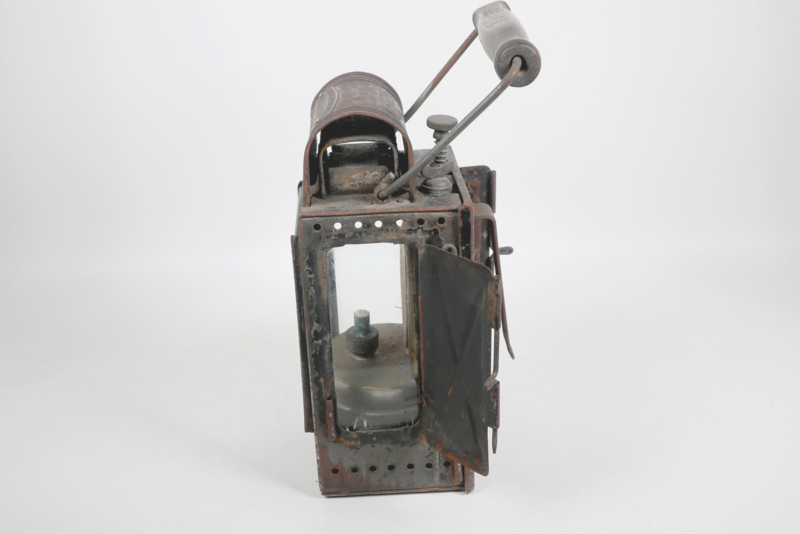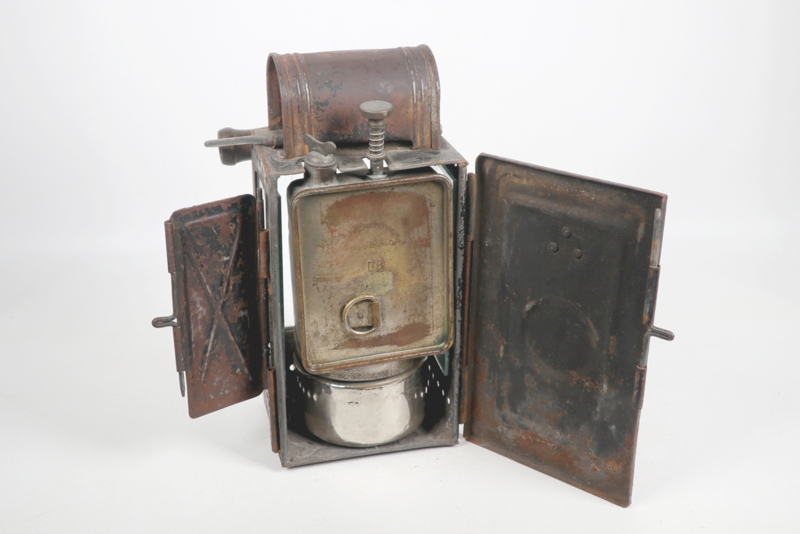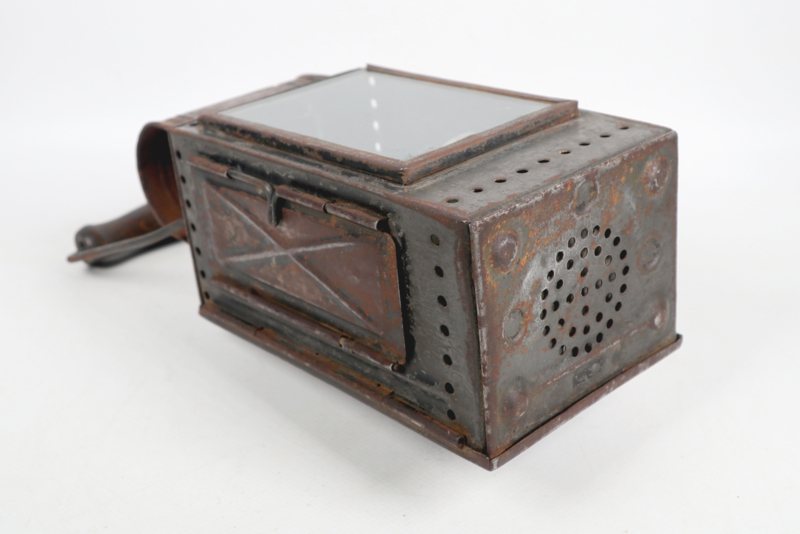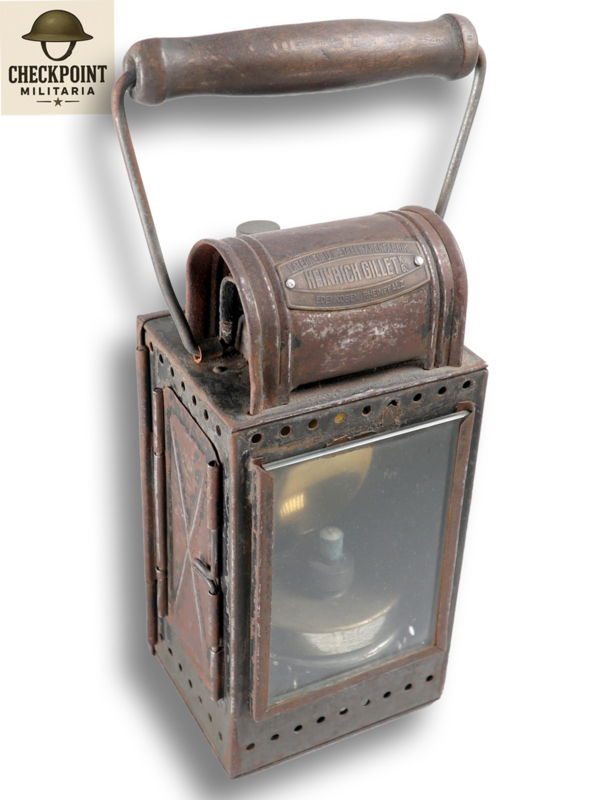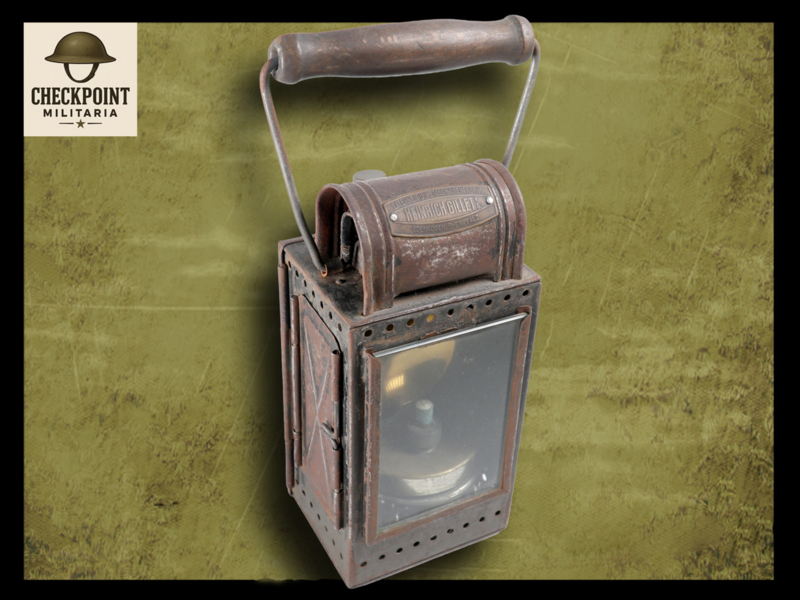
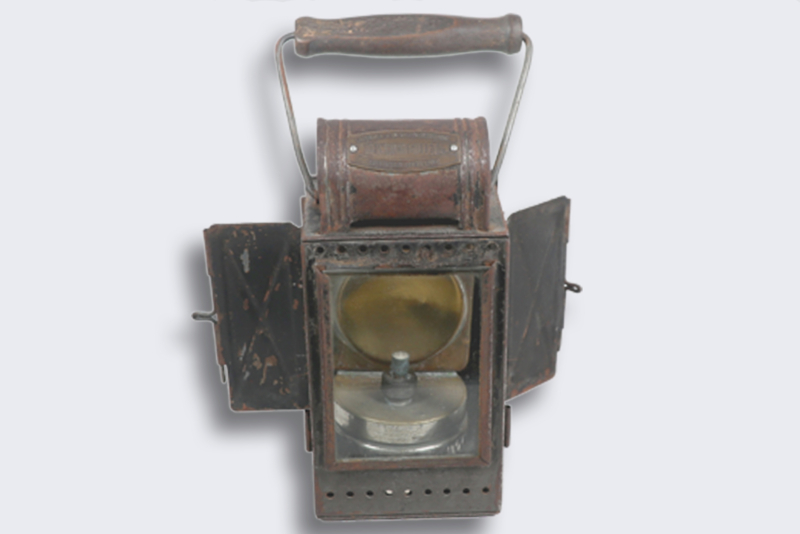
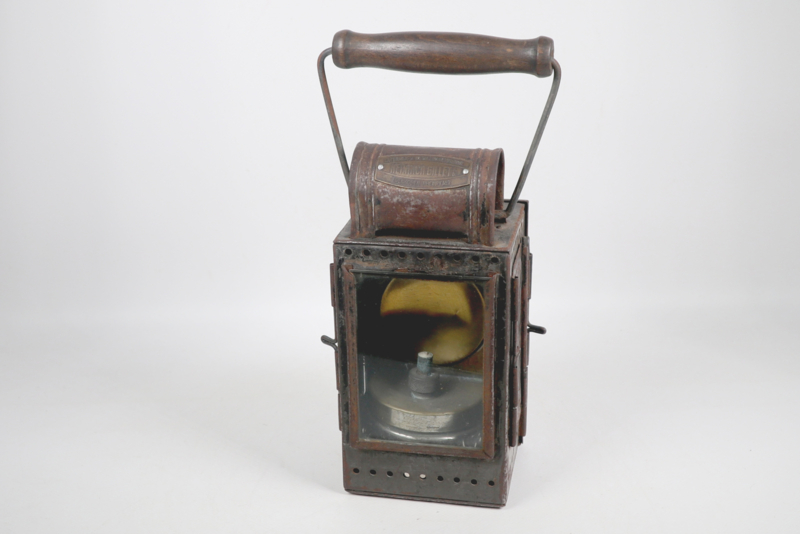
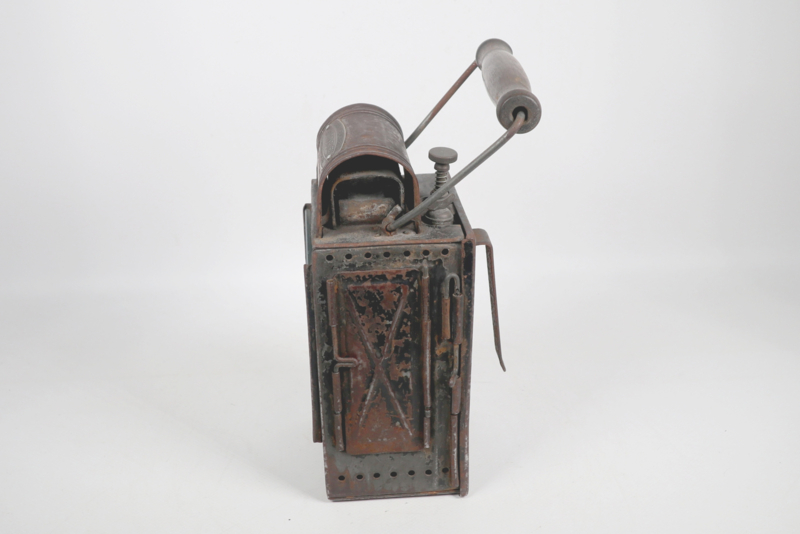

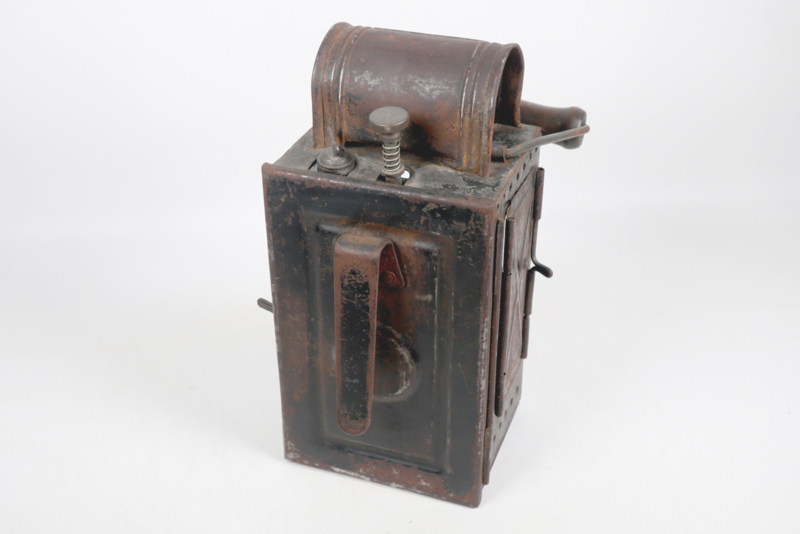
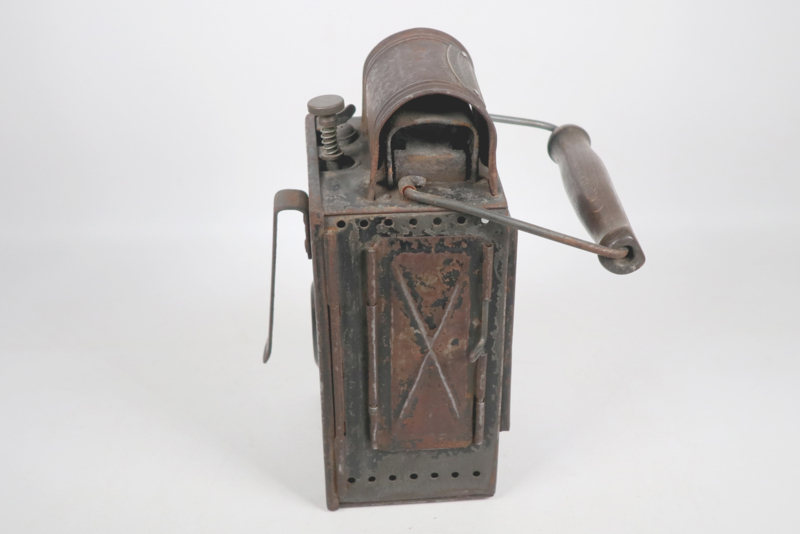
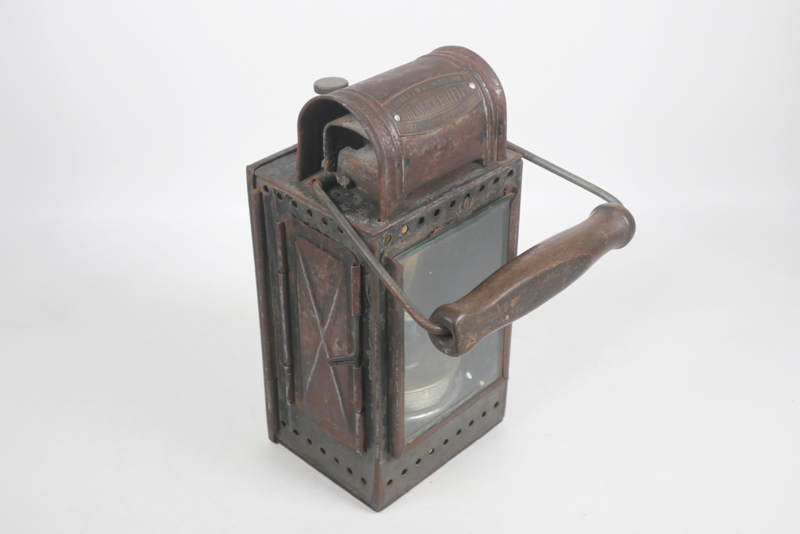
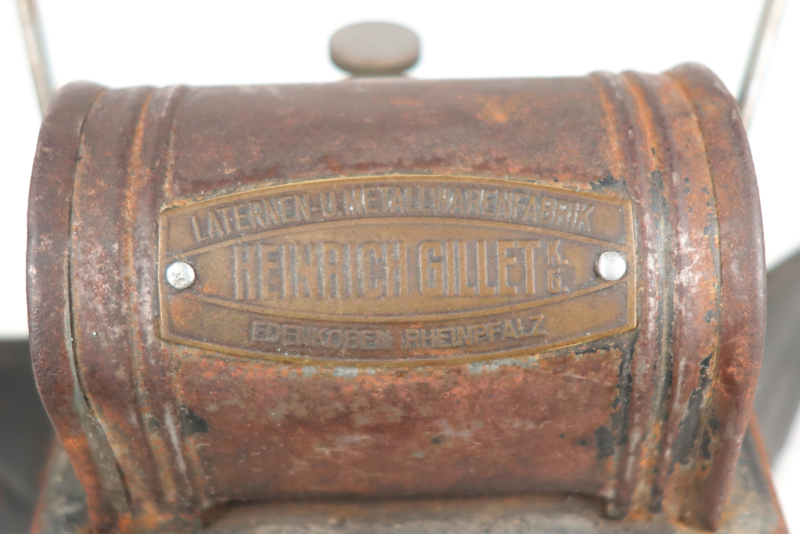
WW II Period German Carbide Railroad Lantern.
The Laternenfabrik Heinrich Gillet company based in Edenkoben, Germany (Pfalz region), manufactured highly sought-after carbide railroad lanterns during World War II and the post-war reconstruction period.
These portable hand lamps served as vital signalling and utility lighting for railway workers, train crews, and station agents.
Overview & Mechanics
- Chemical Reaction: These lamps produced a brilliant, steady light by mixing calcium carbide with water. Water from the top reservoir slowly dripped onto the carbide stones in the bottom container, generating highly flammable acetylene gas that traveled up to a burner tip where it was lit.
- Construction: The lanterns were built tough out of iron stampings or sheet steel to withstand harsh weather and daily, intensive abuse on the rails. They typically feature a large, heat-insulated wooden handle on top.
- Signalling Windows: The casing usually contains glass panes on three sides. Many variants were equipped with sliding color filters (red or green) or metal blackout plates to change railway signals or dim the light during air raids.
- The Manufacturer Stamp: Original models feature a distinct stamp or a riveted metal plate on the curved upper cap reading: Laternenfabrik Heinrich Gillet, Edenkoben (Rheinpfalz).
- Post-War Components: Because these reliable lamps were used long after the war by the Deutsche Bundesbahn (DB), collectors frequently find World War II casings that contain post-war replacement parts (such as burners or water reservoirs stamped with later years like 1951, 1956, or 1959).