U.S. Vietnam War M1 Helmet Shell "Stress Crack"
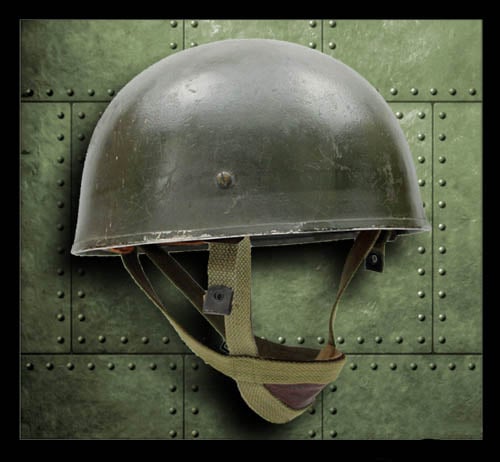
A US M1 helmet with a rear seam and swivel bales typically indicates production from November 1944through the end of WWII and into the 1950s/60s. Stress cracks on these helmets, particularly on the back radiating up from the rim, are a well-documented phenomenon known as "age cracking" or "service cracking".
Causes of Stress Cracks
- Manufacturing Process: The M1 was shaped from a flat steel disc using "cold working" (pressing without heat). This process left the Hadfield Manganese steel under massive residual stress—recorded at 80,000 to 90,000 psi in some areas.
- Material Imperfections: If the steel wasn't heat-treated perfectly during production, it formed brittle pockets of undissolved carbides that eventually gave way under the shell's internal tension.
- Stacking and Storage: Helmets stored in heavy piles, especially those at the bottom of the stack, were prone to developing these cracks due to the added weight bearing down on the stressed metal.
- Trimming Notches: Small nicks left by dull trimming dies on the helmet's edge acted as "stress raisers," providing a starting point for cracks to propagate upward.
Impact on Value and Rarity
- Frequency: While common on early front-seam helmets, stress cracks are also frequently found on later rear-seam examples from manufacturers like RJ Stampings.
- Collectibility: Most collectors view hairline stress cracks as part of the helmet's "charm" or proof of its wartime/period manufacturing. However, deep or penetrating cracks can reduce the overall market value compared to a "mint" shell.
- Restoration: Experts generally advise against repairing these cracks. Welding can be difficult and often ruins the original finish, and hammering out dents near these cracks risks shattering the brittle manganese steel.