American M1 Helmet - Vietnam War - Infantry
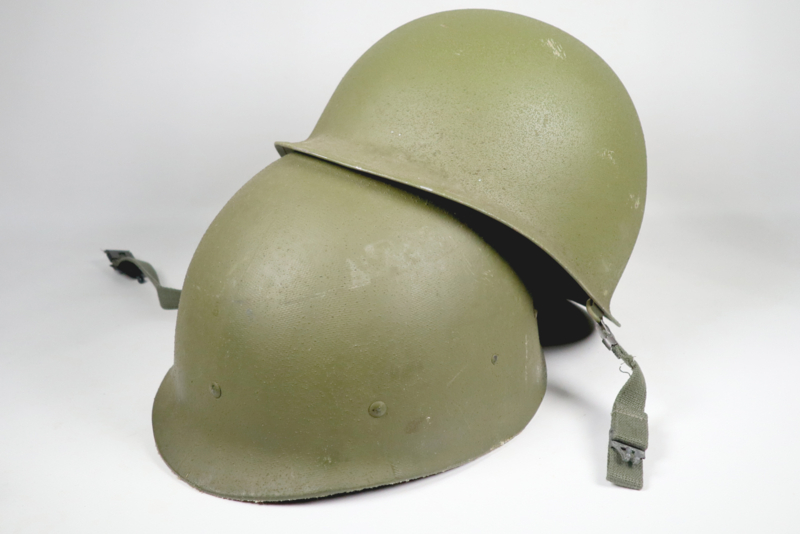
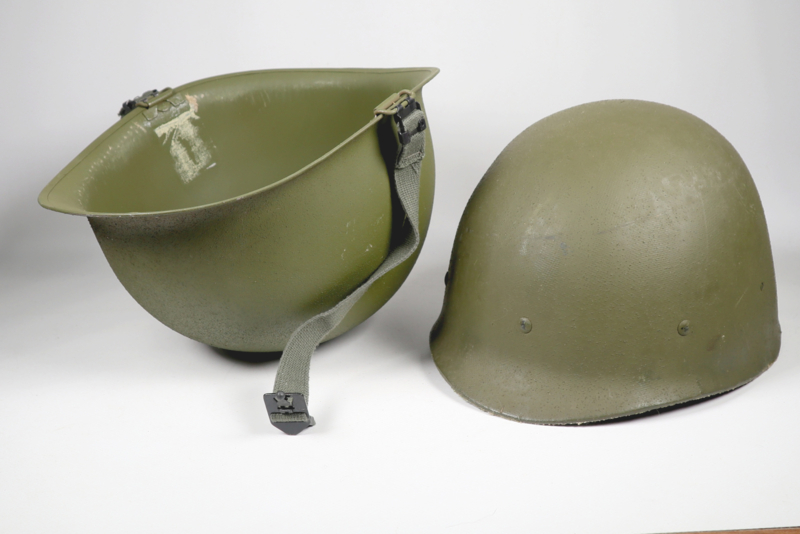
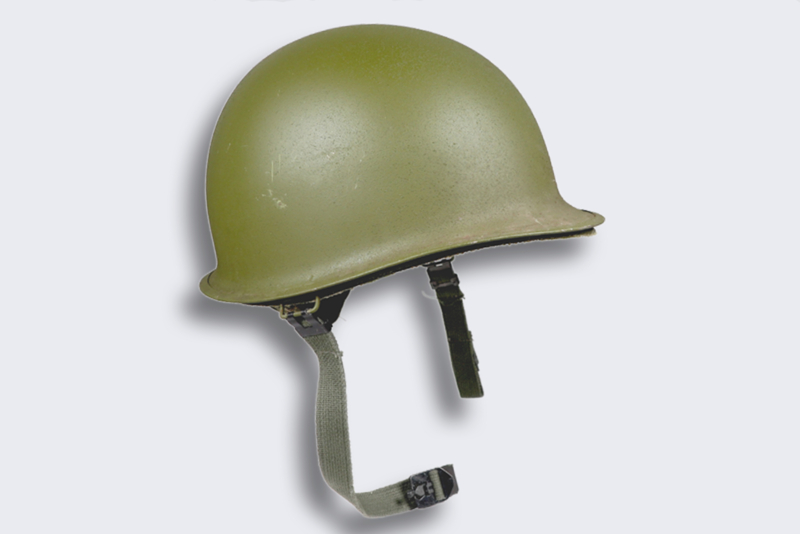
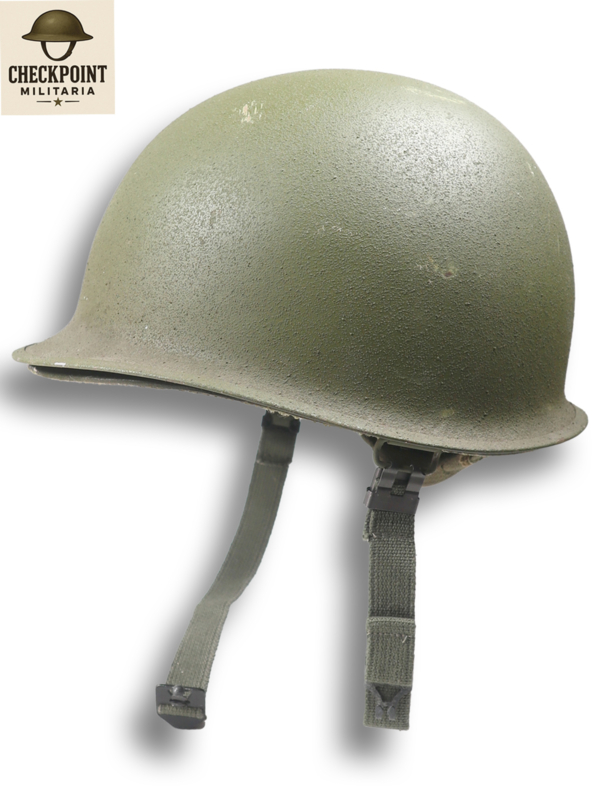
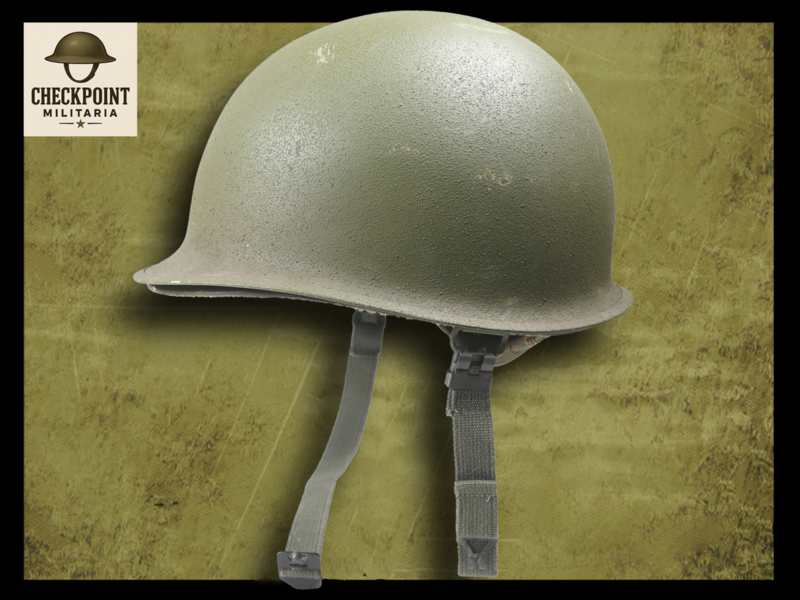
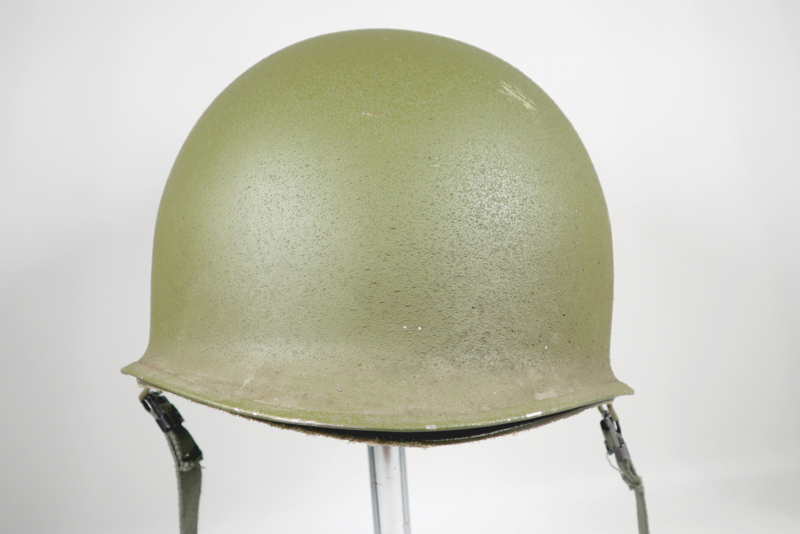
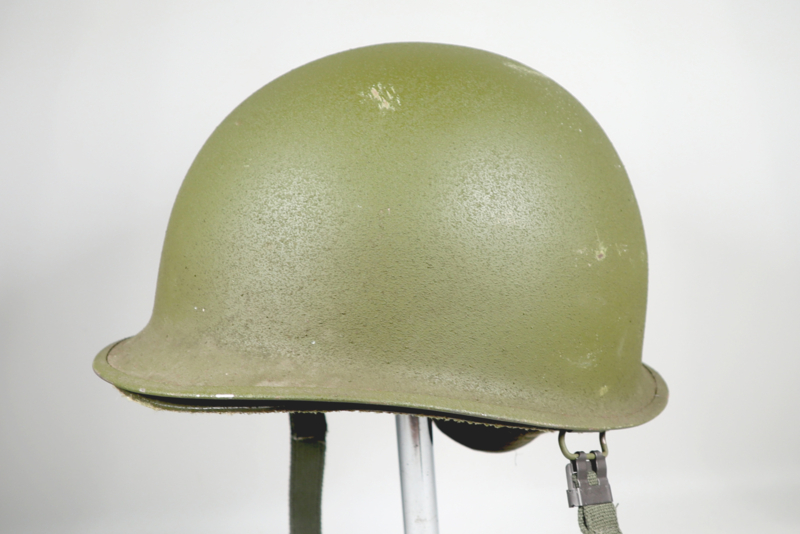
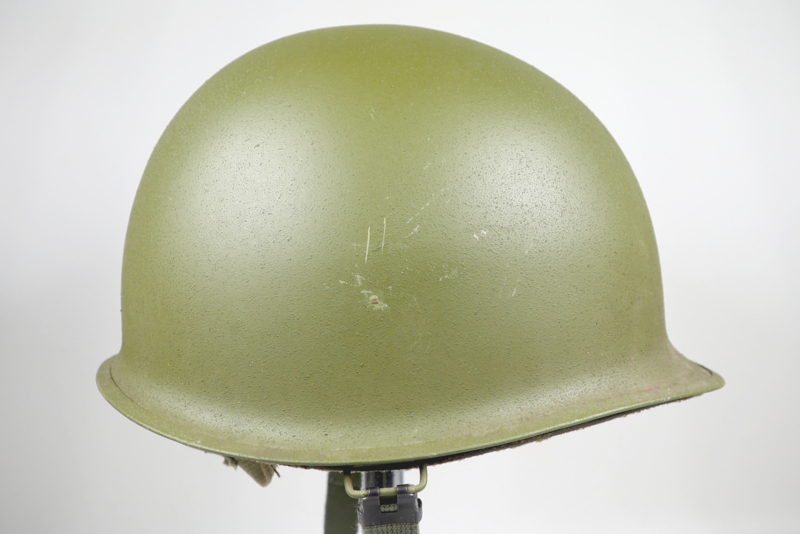
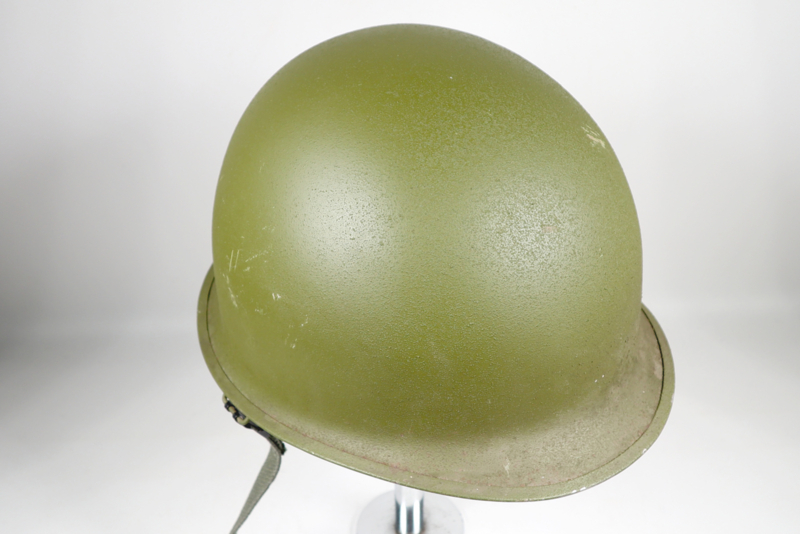
While 99% of US infantry photos from the Vietnam War show the M1 helmet with a camouflage cover, the bare "steel pot" itself had a distinct appearance. Removing the Mitchell cover revealed a helmet that was technically and visually different from its WWII predecessors.
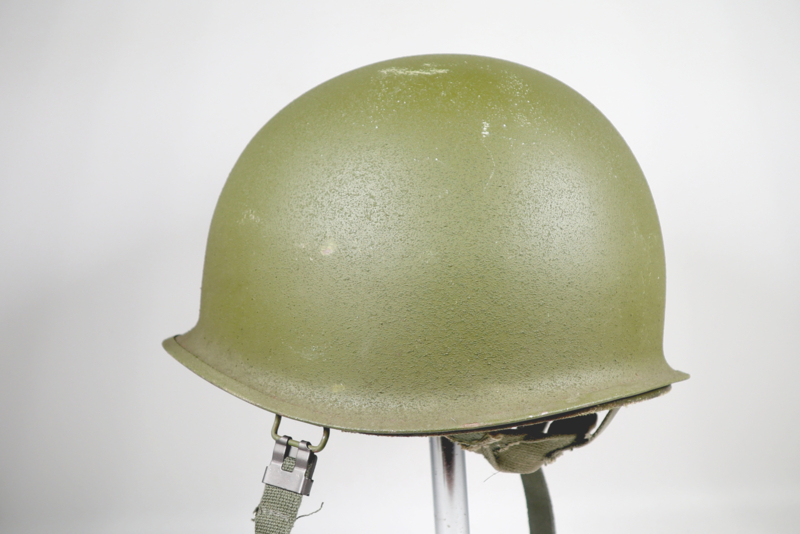
The "Bare" Steel Shell (Steel Pot)
- Color: Vietnam-era shells featured a lighter, "lime" olive green or jungle olive drab paint compared to the dark olive used in WWII.
- Texture: The surface was coated with a fine silica sand texture. This was smoother than the coarse "cork" texture found on WWII-issue helmets.
- Low Dome Profile: Post-WWII production helmets often had a "low dome" profile, sitting about an inch lower than earlier models.
- Raised Rear Rim: Second-run helmets (produced around 1966–1967) had a noticeably raised rear rim to provide better clearance for backpacks.
- Rear Seam: The metal rim (the "edge") of a Vietnam-era helmet met at a rear seam. WWII shells often featured a front seam.
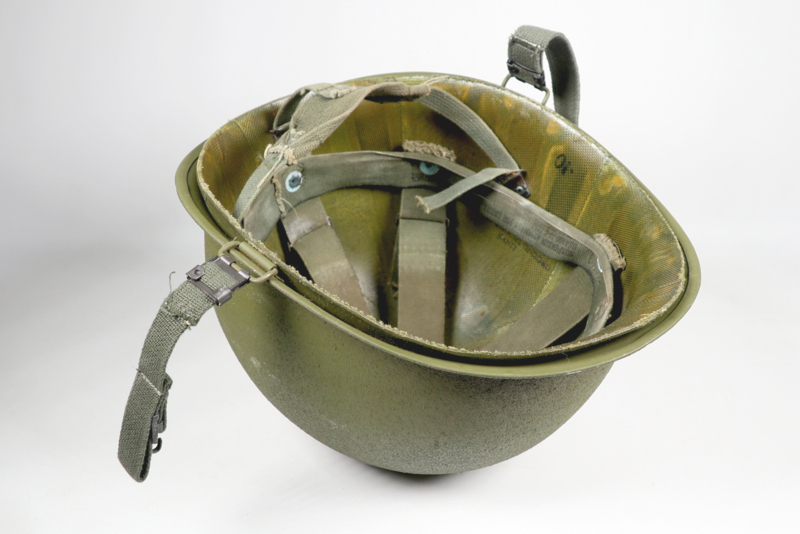
- Swivel Bales: The loops for the chinstraps were hinged (swivel bales) rather than fixed.
The Helmet Liner
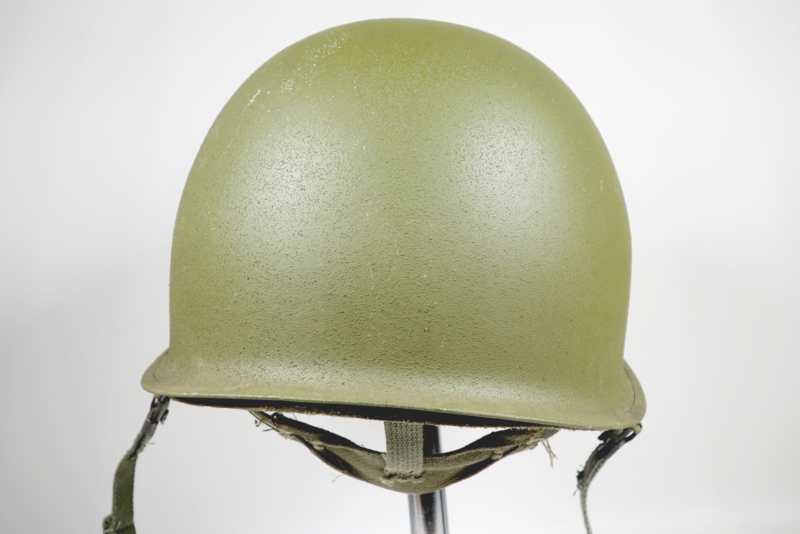
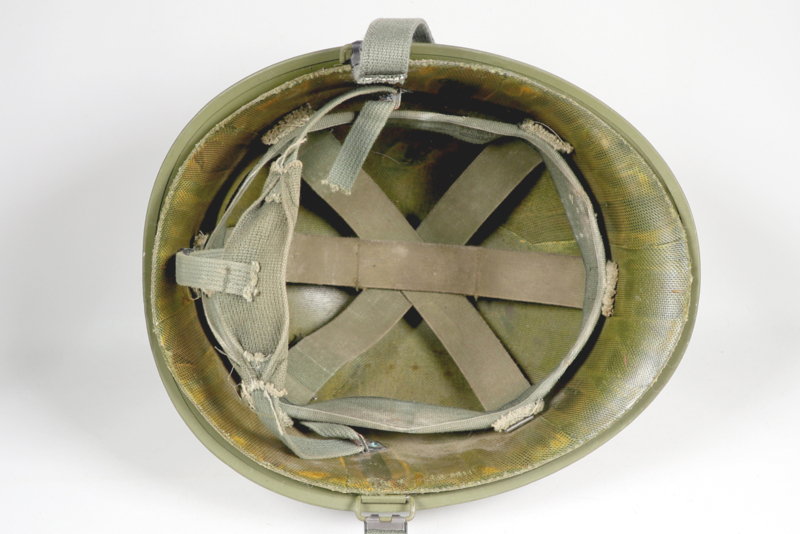
Without a cover, the edge of the liner is visible where it nests inside the steel shell.
- Laminated Nylon: Starting in 1964, the P64 liner was made of laminated nylon (replacing cotton duck/fiber), giving it a more "plastic" look.
- Simplified Interior: The suspension system inside was often a distinct "asterisk" shape that did not require a central string for adjustment.
Reasons for Wearing it "Bare"
Infantrymen rarely went without covers because the bare steel reflected sunlight, making them easier targets. However, you might see them without covers in specific contexts:
- Worn Out Gear: Covers frequently rotted or fell apart in the humid jungle environment, forcing troops to go bare until a replacement was issued.
- Early War (1965): Some Marines arriving early in the war were seen wearing just the liners (without the steel shell) to deal with the extreme heat, though this was quickly banned once casualties mounted.
- Rear-Echelon Duty: Military Police (MPs) or staff at rifle ranges often wore the liner alone, sometimes painted white or chromed for ceremonial use.