

American M1 Helmet - Vietnam War - Infantry
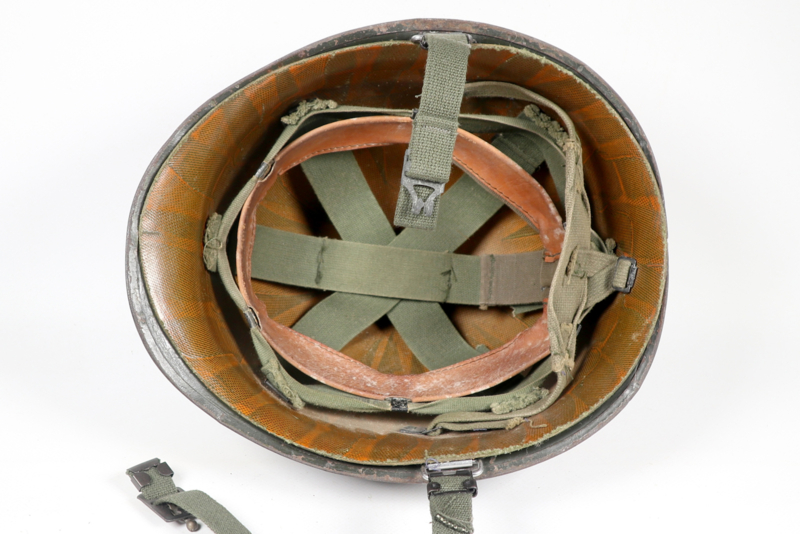
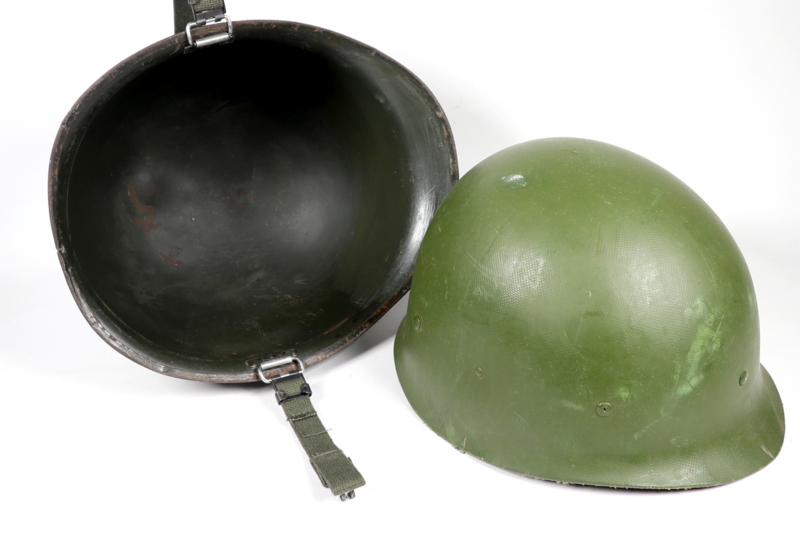
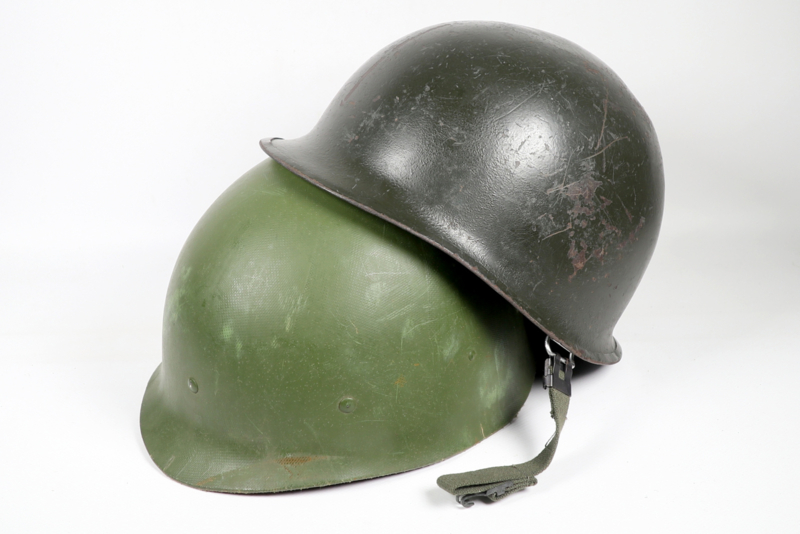
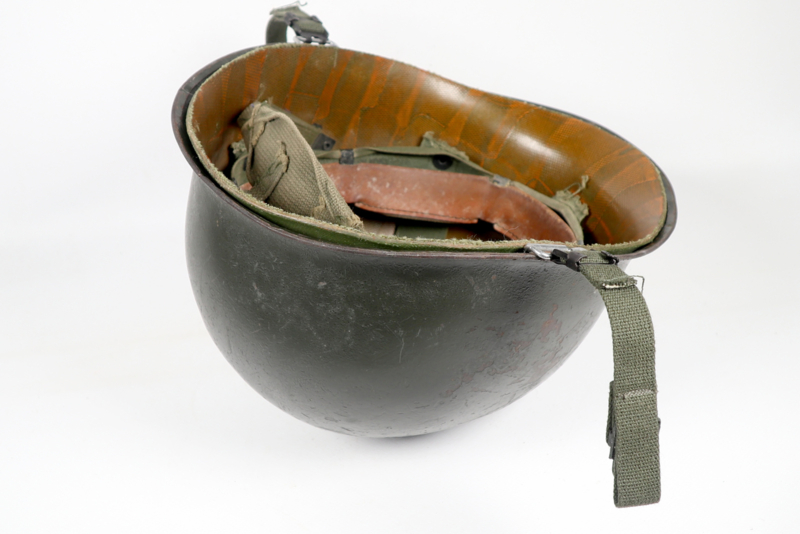
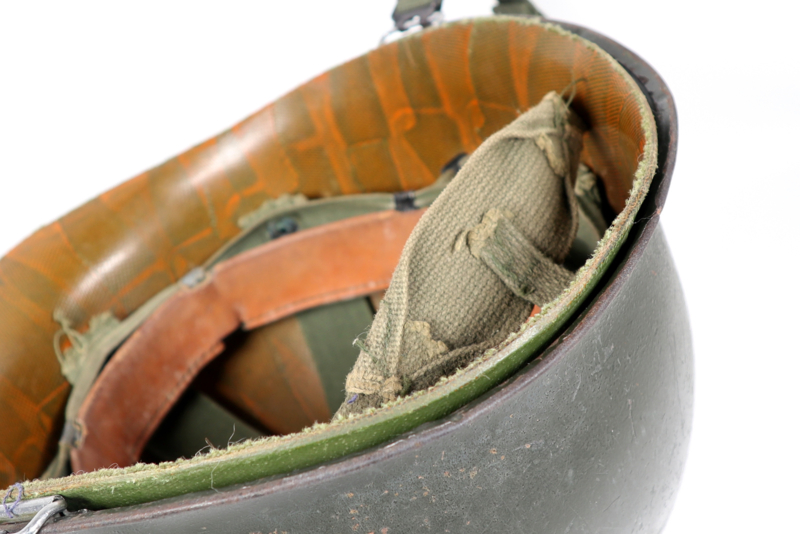
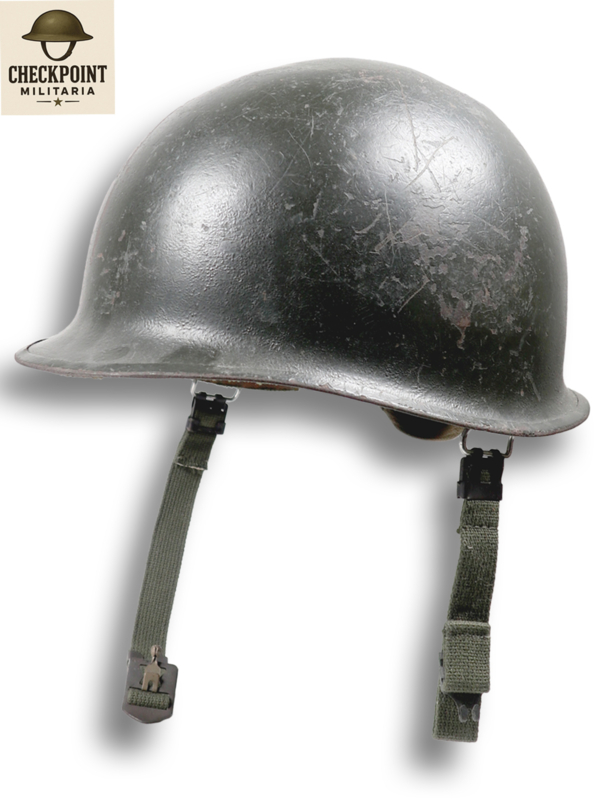
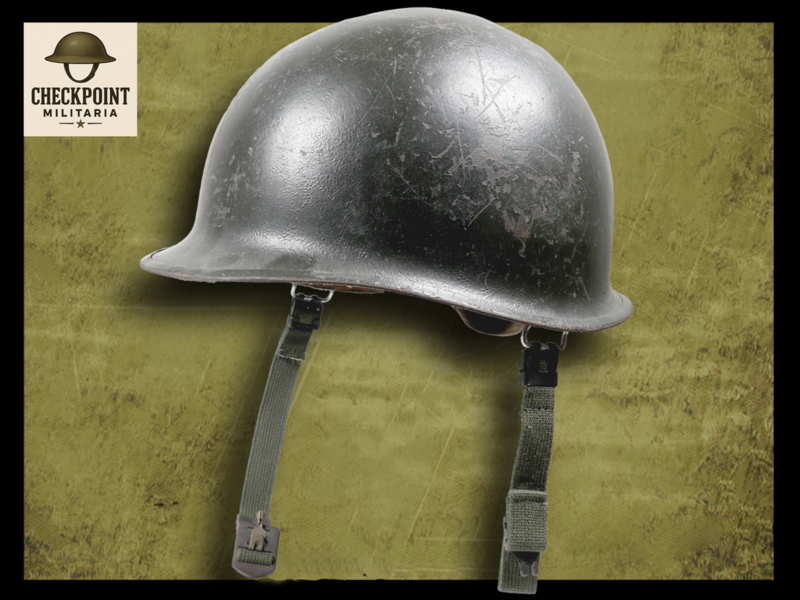
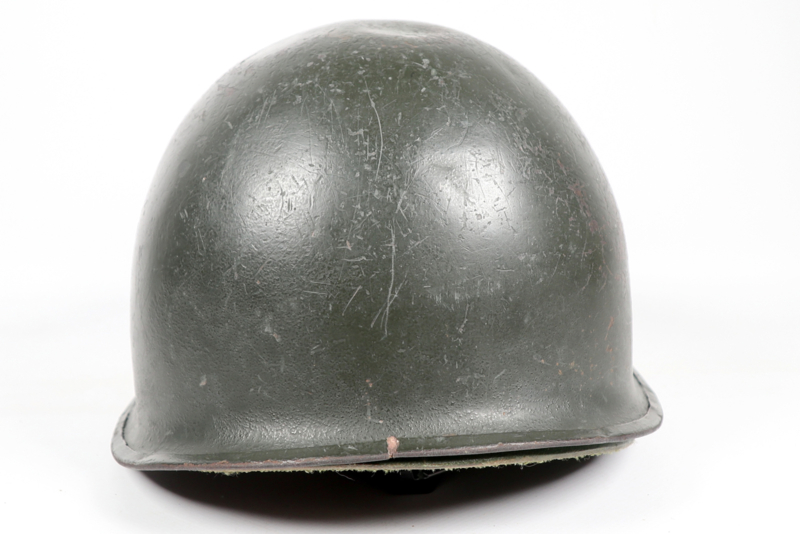
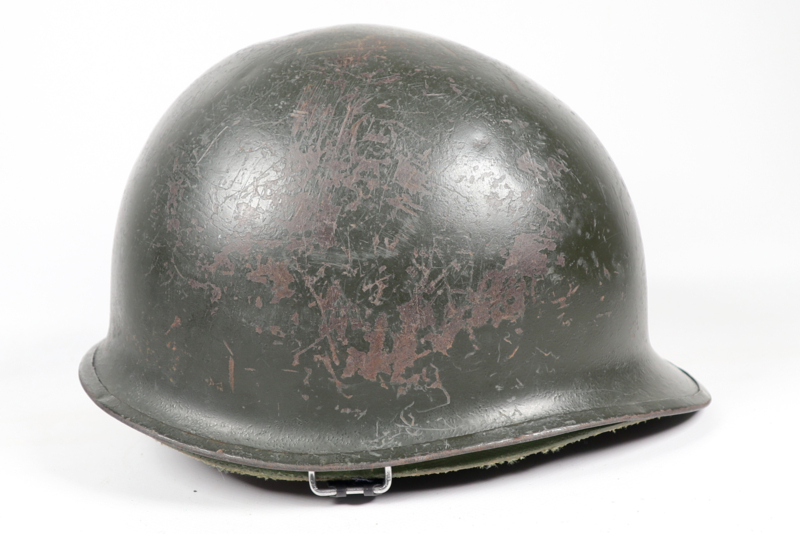
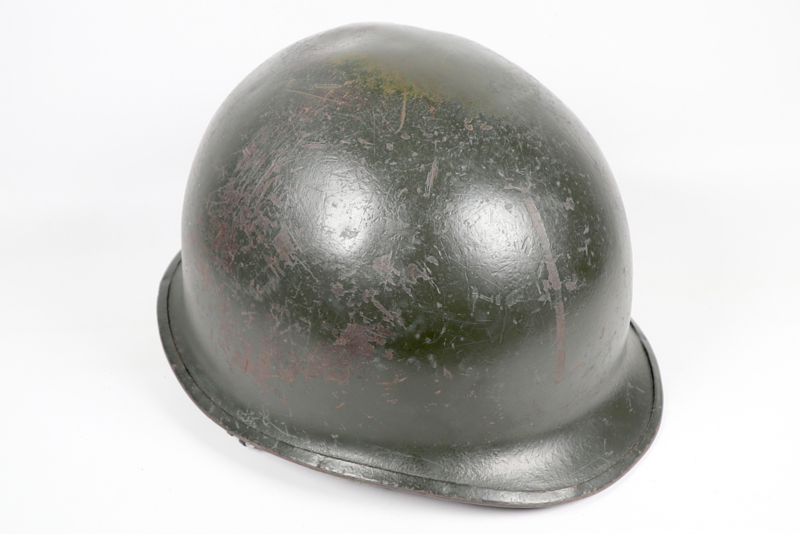
The M1 helmet, commonly nicknamed the "steel pot," was the standard head protection for U.S. infantry during the Vietnam War. It consisted of a manganese steel outer shell and a removable liner with an adjustable suspension system.
Key Components of the Infantry Version
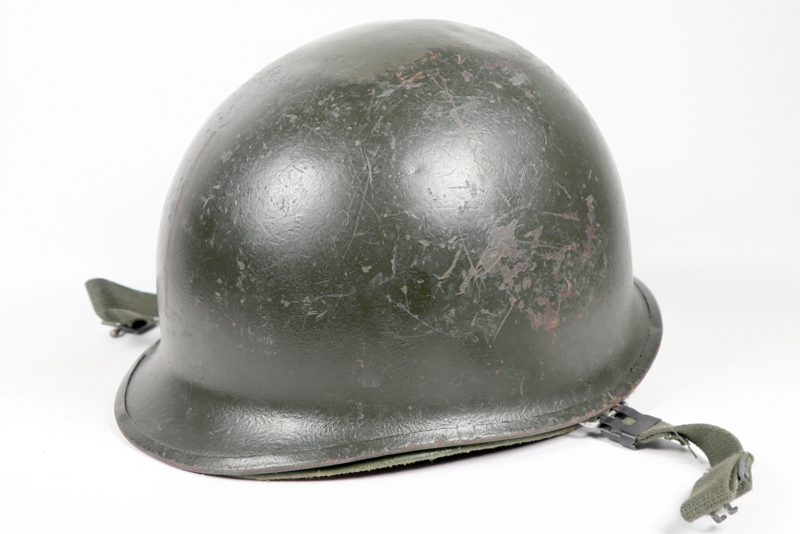
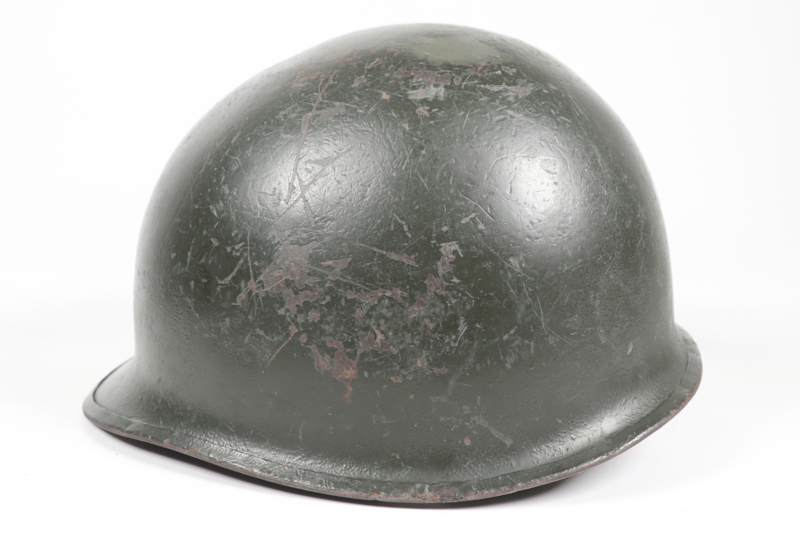
- Steel Outer Shell ("Steel Pot"): Weighing approximately 1.4 kg (3 lbs), it was painted olive green with a grainy texture to prevent reflection. In the field, it was often used as a washbasin, a stool, or even a cooking pot for coffee.
- Helmet Liner: Most liners from this era (P55 or P64 models) were made of laminated nylon or plastic. Unlike the paratrooper version, the standard infantry liner did not have extra chinstrap holders (A-yokes).
- Chinstrap Habits: Many soldiers let their chinstraps hang loose or fastened them to the back of the helmet.
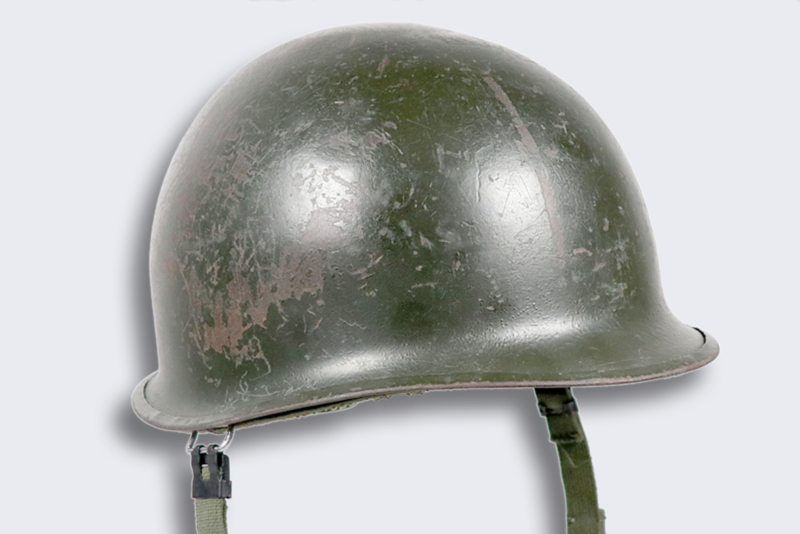
Although the Mitchell cover was iconic for Vietnam, the M1 helmet also appeared "bare" (without a cover) among the infantry, though this was less common at the front. In this form, the specific finish of the steel pot and the chinstraps are definitive for the era.
Appearance of the Steel Pot
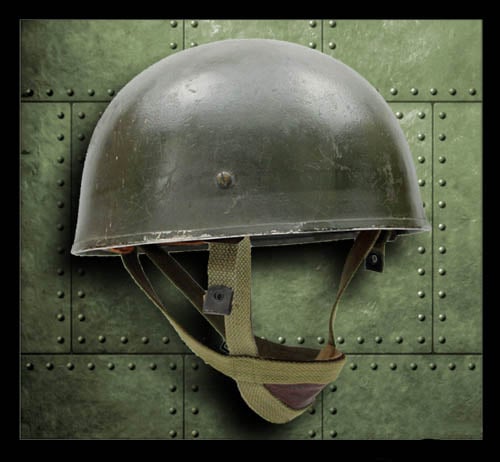
- Color and Texture: Vietnam-era helmets were painted in an olive green color (often referred to as "apple green" or "jungle green"). The texture was achieved by mixing silica sand into the paint to prevent glare in the sun. This differs from the cork texture used on WWII helmets.
- The Rim: The helmets had a "rear seam" (the join at the back) and were made of manganese steel. The edge was rolled over to prevent sharp edges.
- Swivel Bales: The metal loops where the chinstraps were attached could move (swivel bales), unlike the fixed loops of early WWII models.
Chinstraps
Without a cover, the chinstraps are fully visible. For the Vietnam period, these are the characteristics:
- Color: The straps were made of dark green cotton webbing (Olive Drab #7).
- Attachment: They were secured with metal clips clamped around the bales, rather than being sewn on.
- Closure: The closure was a ball-and-hook system, designed to release under a certain amount of pressure so the wearer's neck wouldn't break during an explosion.
Use Without a Helmet Cover
- Rarity: In combat situations, a cover was almost always present to dampen reflections and the sound of branches tapping against the metal. A helmet without a cover was usually only seen among rear-echelon troops, during training in the US, or when a cover had been completely destroyed in the jungle and not yet replaced.
- Other "Covers": Sometimes soldiers used a simple helmet net (like in WWII) or a plain green cover without a camouflage pattern, but this was rare.