
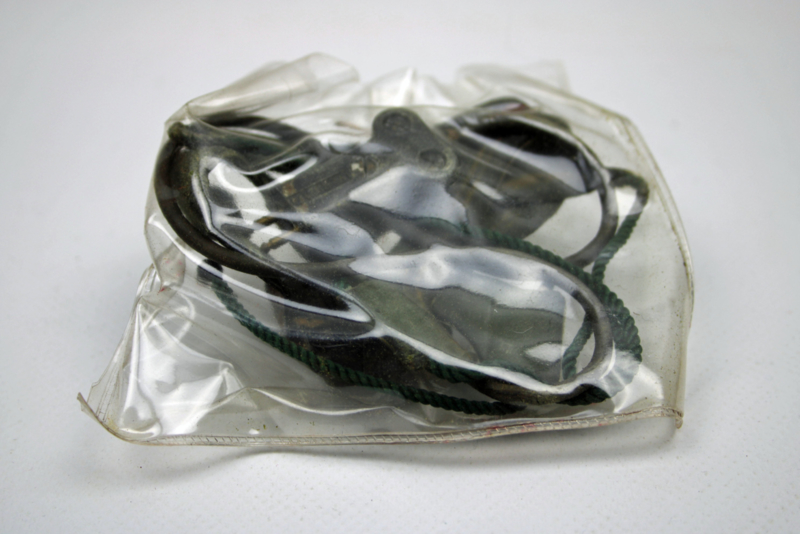

U.S. Army T-45 Microphone
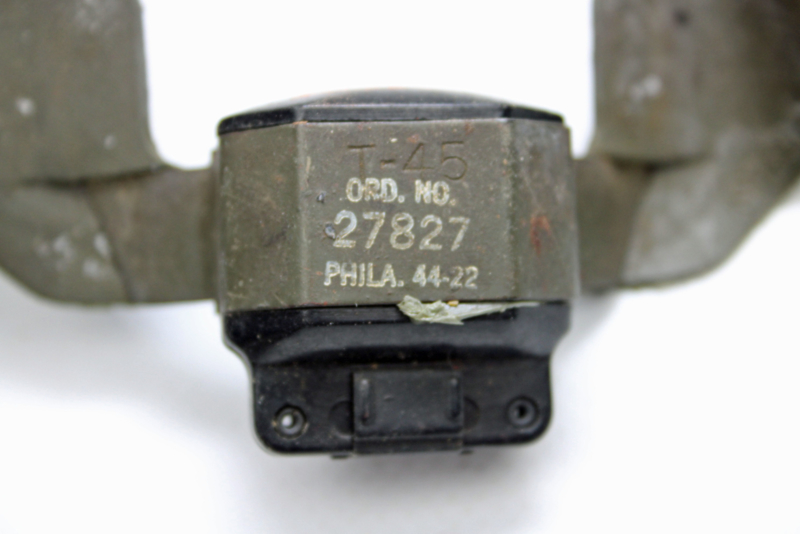
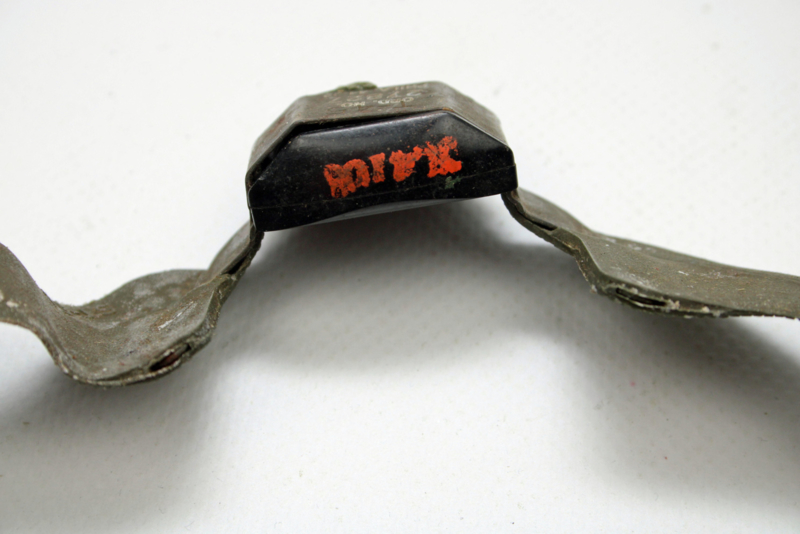
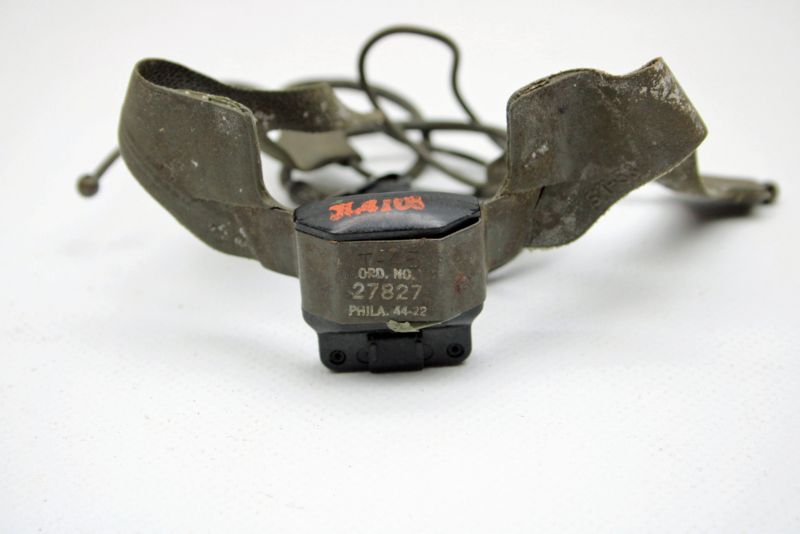
The U.S. T-45 microphone is a specialized carbon lip-microphone from World War II. The model was introduced in 1944 to suppress extreme background noise in combat situations. The microphone was developed by Electro-Voice and specifically designed to be worn directly on the user's upper lip. This ensured clear communication and kept the hands free.
Key Specifications and Design
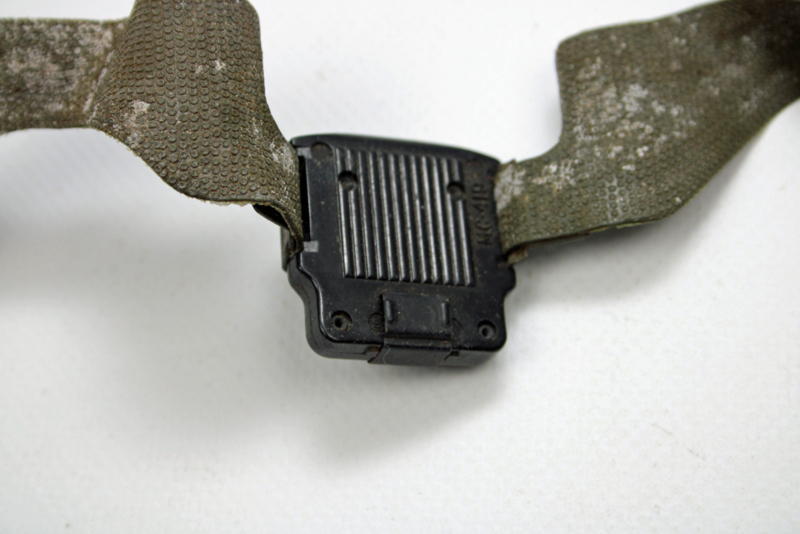
- Microphone type: Single-button carbon capsule (officially the MC-419 unit).
- Noise cancellation: Works via a differential system. Because the microphone sits tightly against the mouth, it captures the voice directly. Ambient noise (such as engines, wind, or explosions) enters both sides of the diaphragm simultaneously and cancels itself out.
- Electrical ratings: Operates on a nominal current of 50 milliamperes. The electrical resistance is between 50 and 125 Ohms at 1,000 Hz.
- Frequency range: Virtually flat from 200 to 4,000 Hz. This is strictly optimized for the intelligibility of the human voice, not for sound quality.
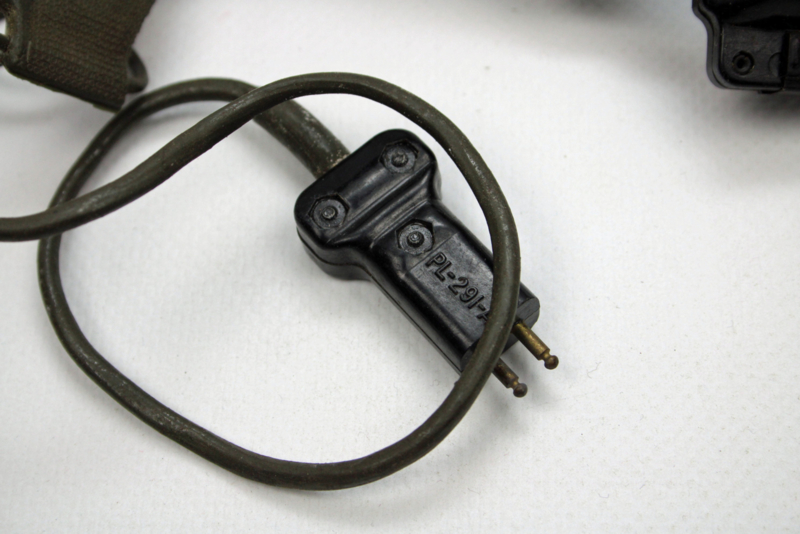
- Mounting and connection: Held in place by an ST-53 plastic headband that runs behind the ears. The cable terminates in a 2-pin PL-291-A plug.
Historical Military Use
The T-45 was primarily deployed in high-noise environments where hand microphones or throat microphones did not work well:
- Crews of tanks and armored vehicles: Widely used by drivers and commanders in loud, rattling vehicles.
- Army Air Forces (USAAF): Used by crews of transport and bomber aircraft at lower altitudes where oxygen masks (with built-in microphones) were not required. Pilots did often complain that the tight plastic band became uncomfortable during long flights.
- Compatibility: The T-45 worked perfectly with standard American wartime radios, such as the BC-1000 (walkie-talkie), BC-1306, and SCR-694/GRC-9. The microphone was usually combined with the HS-30 miniature headphones and an SW-141 push-to-talk (PTT) chest switch.