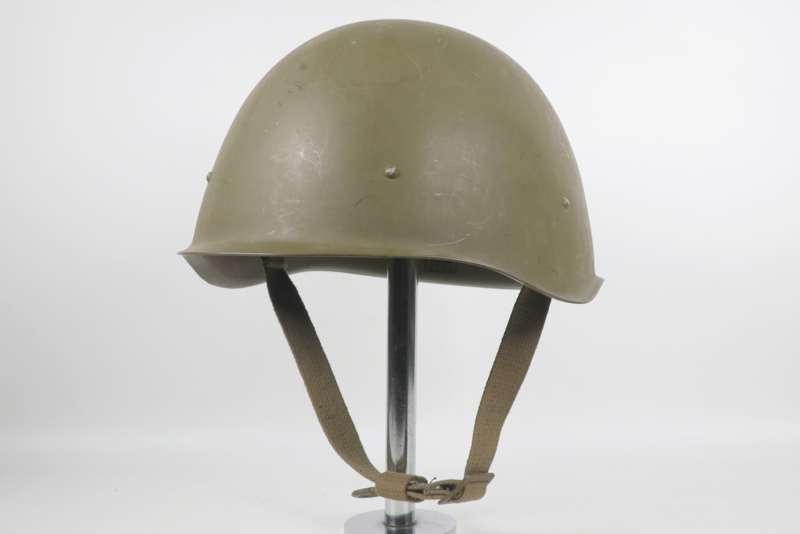
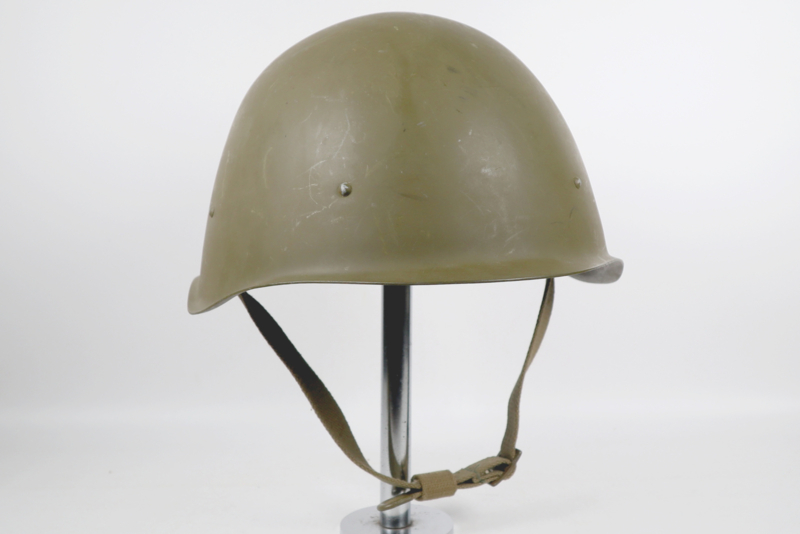
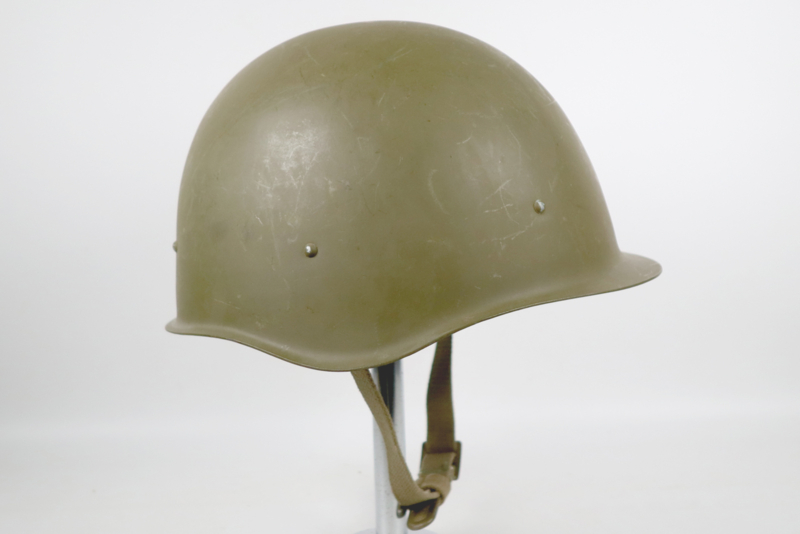
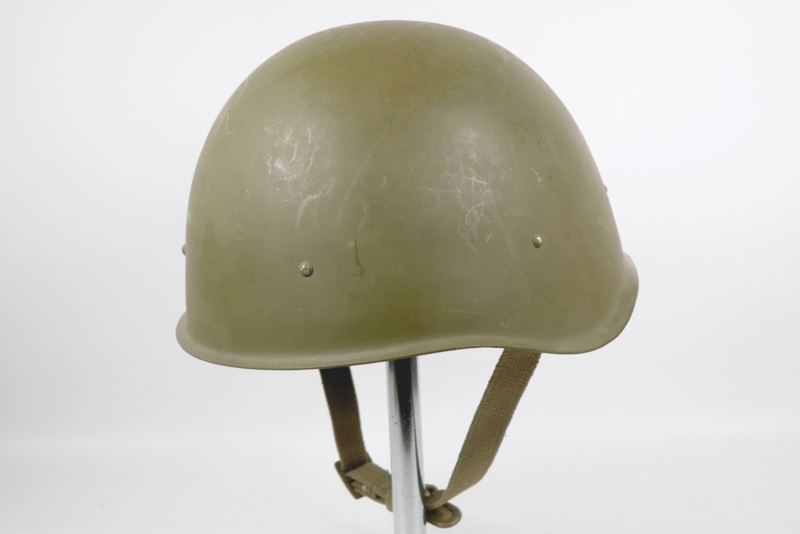
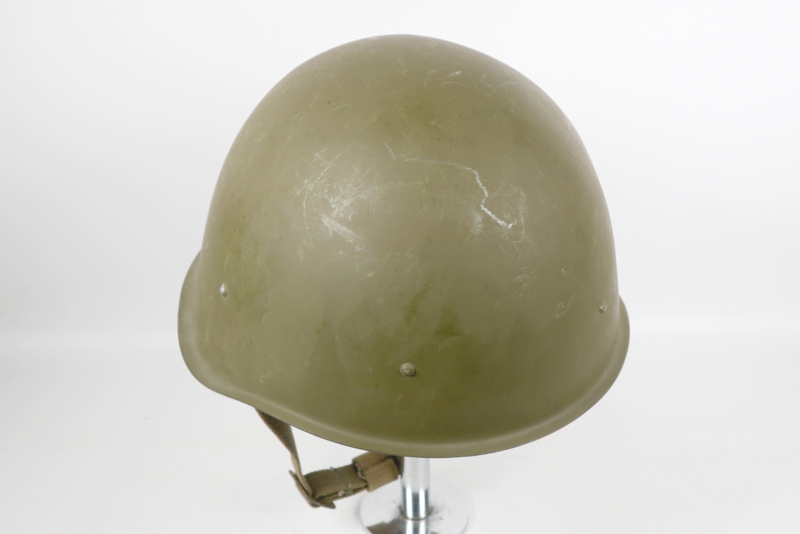
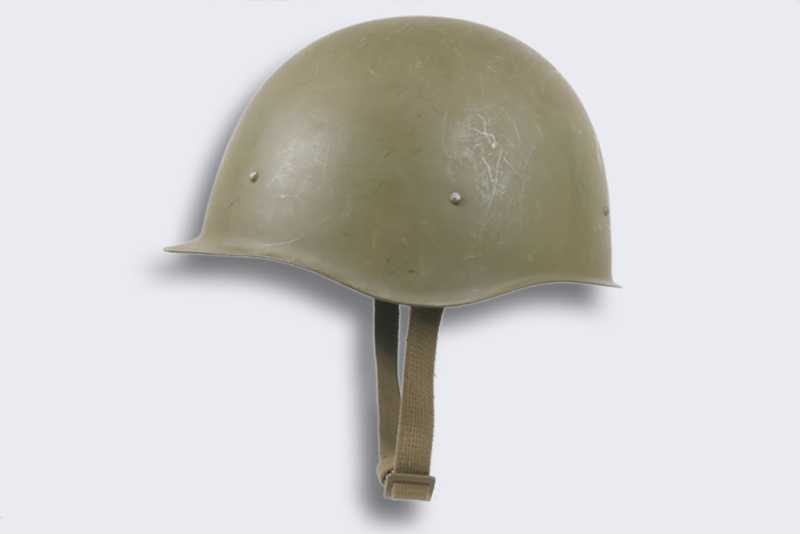
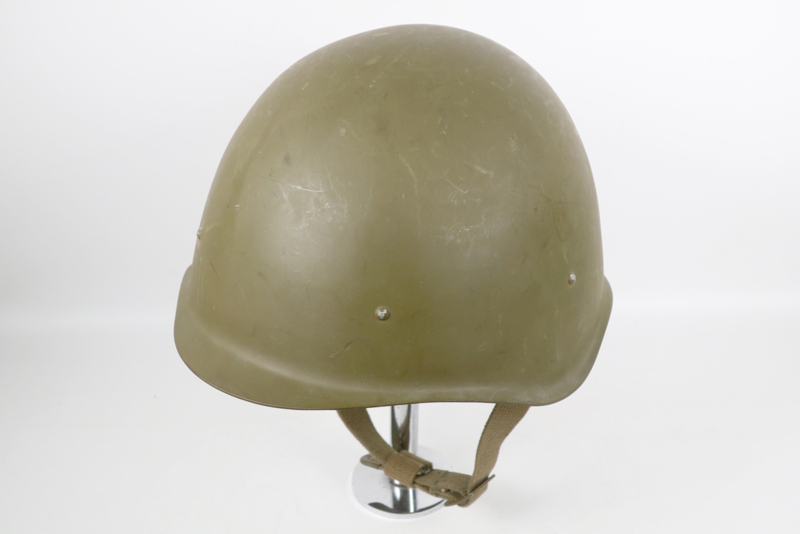

Russian Ssh-40 Helmet
The Russian SSh-40 (Stal'noy Shlem 1940) was the standard helmet of the Red Army during World War II and remained in service well into the 1960s. It was an evolution of the SSh-39, featuring an improved liner designed to be worn comfortably over a winter hat (ushanka).
Key Features
The SSh-40 is easily recognizable by specific physical details:
- Six Rivets: These are located low on the shell (three on each side) to secure the liner. This is the primary difference from the SSh-39, which had three rivets positioned higher up.
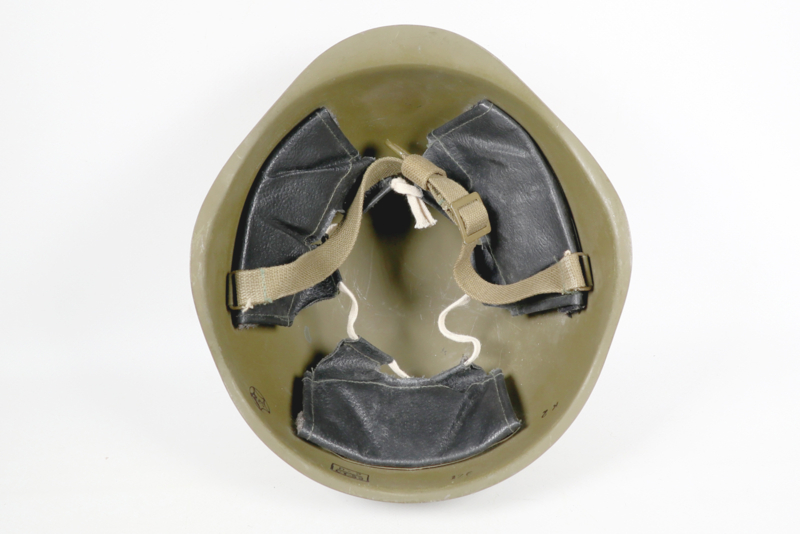
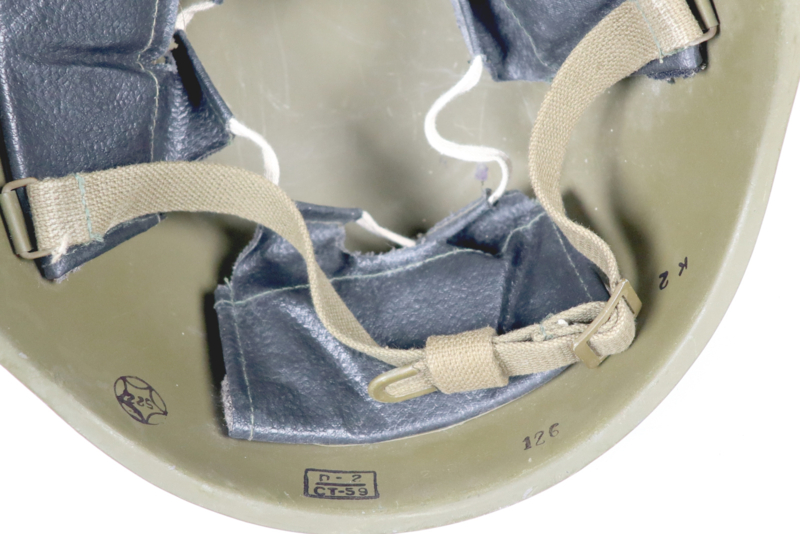
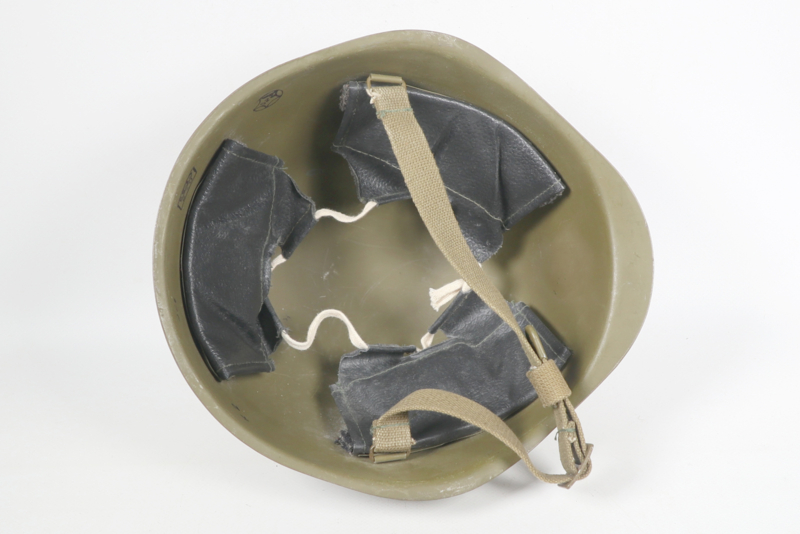
- Liner: Consists of three pads made of tar-treated canvas (gralek) or imitation leather, connected by a white cotton drawstring.
- Chinstrap: Usually made of simple khaki or white cotton canvas with a metal buckle.
- Shape: A dome-like design that sits lower over the ears for protection, while the back is flared to allow movement when firing from a prone position.
Identification and Markings
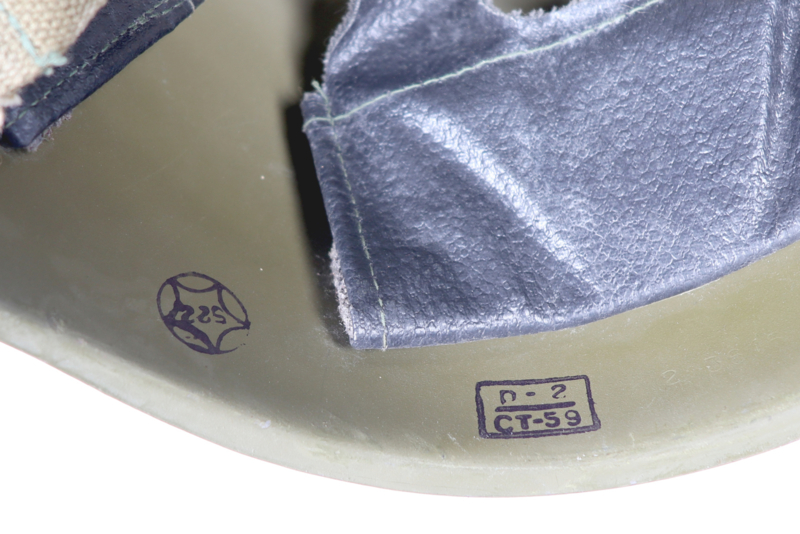
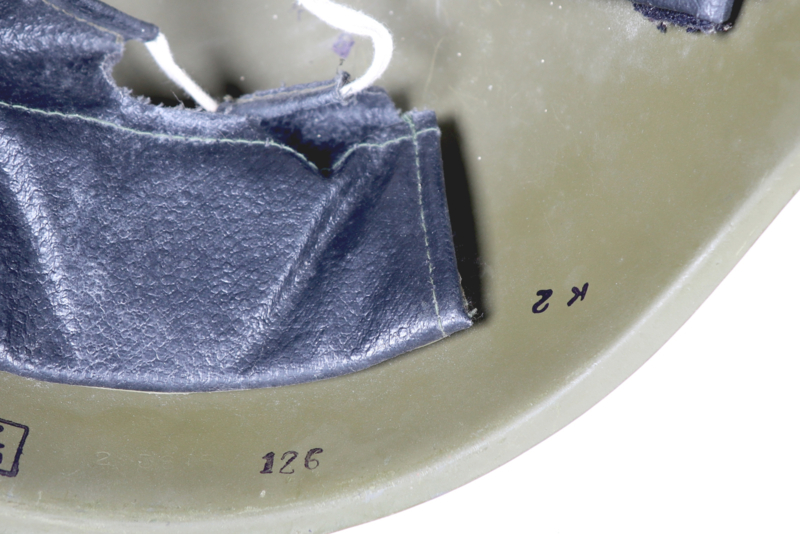
- Size: Marked as P1 (small, up to size 58), P2 (medium, 58–60), or P3 (large, 60+).
- Production Stamp: Often an ink stamp in a box indicating the factory (e.g., "CT" for Lysva) and the year.
- Lot Number: A number stamped into the metal rim indicating the shell size and production batch.
- The Star: Some helmets (especially post-war or from the Lysva factory) feature a small five-pointed star under the front brim, signifying a passed ballistic test.
Differences Between WWII and Post-War
While the design remained largely unchanged until 1960, there are subtle differences:
- Color: WWII models often feature a darker, dull olive drab paint. Post-war helmets are typically a brighter, more vibrant green.
- Successors: The SSh-40 was succeeded by the SSh-60 (identifiable by 4 rivets and 4 pads) and later the more conical SSh-68.