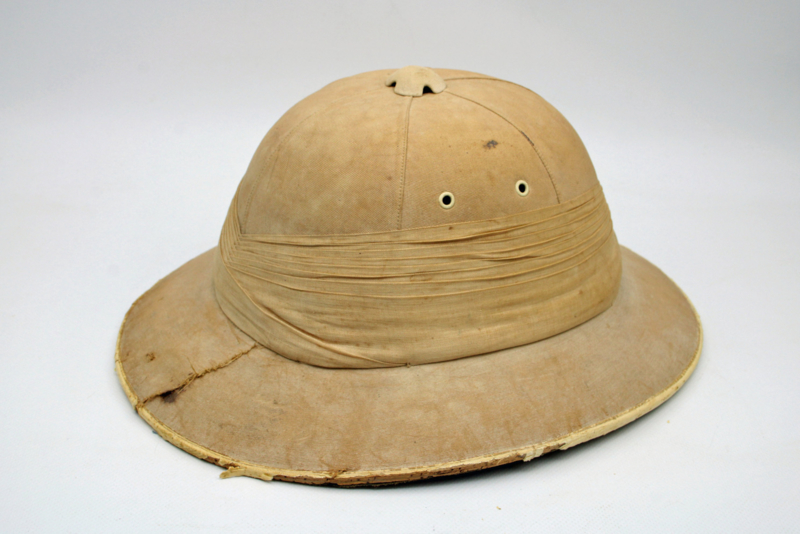


Pre-WWII British Pith Helmet "Wolseley pattern"
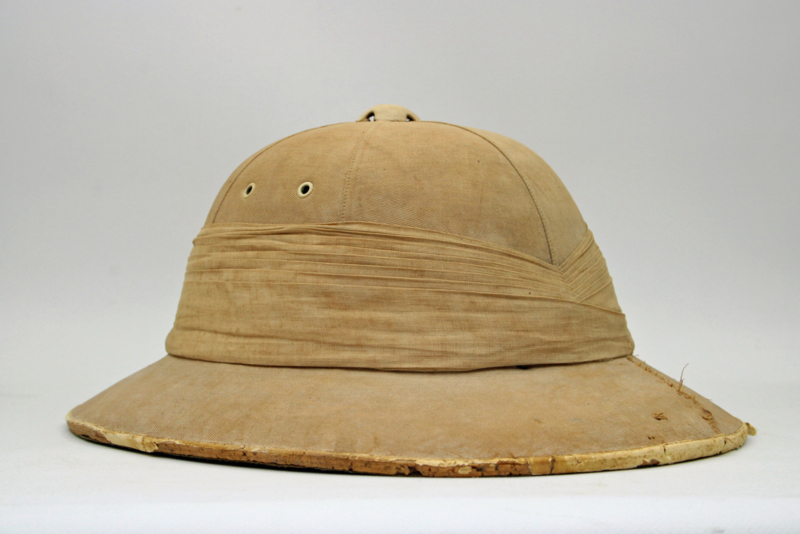
The pre-WWII British pith helmet—most notably the Wolseley pattern—was the quintessential headgear for British forces serving in tropical climates from the late Victorian era until the early 1940s. While designed for protection against the sun rather than combat, it became a lasting symbol of the British Empire.
Core Designs
The British military primarily utilized two major patterns before and during the early years of World War II:
- Wolseley Pattern (1899–1948): Named after Field Marshal Garnet Wolseley, this was the universal sun helmet of the British Army. It featured a distinctive swept-back brim that provided enhanced protection for the neck and shoulders compared to earlier models.
- Foreign Service / Colonial Pattern (Late 19th Century): An earlier, taller design with a smaller brim, famously worn during the Anglo-Zulu War (1879). It was often dyed with tea or mud for camouflage in the field.
- Home Service Helmet: A dark blue cloth version (sometimes green or grey) of a similar shape, used for ceremonial and full-dress duties within the UK rather than tropical service.
Construction & Features
- Materials: Originally made from the pith of the Indian shola plant, most later military versions used corkcovered in white or khaki cloth. Due to wartime shortages around 1942, some were produced using felt as a cheaper alternative.
- Insulation: The thick cork or pith (about 1/4 inch) acted as an insulator, keeping the inner air space at body temperature while allowing ventilation through holes at the top.
- Decorations: Ceremonial versions often included a puggaree (a pleated cloth band), regimental metal plates, and sometimes a brass spike or ball-shaped finial on top.
- Civilian Use: Simplified, less decorative versions were widely worn by Western civilians in the tropics for protection against "sunstroke" until the mid-20th century.
Decline and Legacy
The pith helmet was phased out of active combat service during WWII as modern warfare required the ballistic protection of steel helmets, like the Brodie helmet. By 1948, it was largely replaced by the slouch hat for field use.
Today, the Wolseley pattern survives as a part of the ceremonial dress for the Royal Marines and certain other Commonwealth units.