



EASCO Life Jacket Light
The EASCO Life Jacket Light
This was primarily issued during the Second World War to personnel of the British Royal Air Force (RAF), the Fleet Air Arm, and the Merchant Navy. These emergency signal lights were developed by Easco Electrical Ltd. of London. They were designed to clip onto life jackets (better known as "Mae West" vests) so that rescue teams could locate shipwrecked sailors or downed airmen in pitch darkness.
Key Features and Design
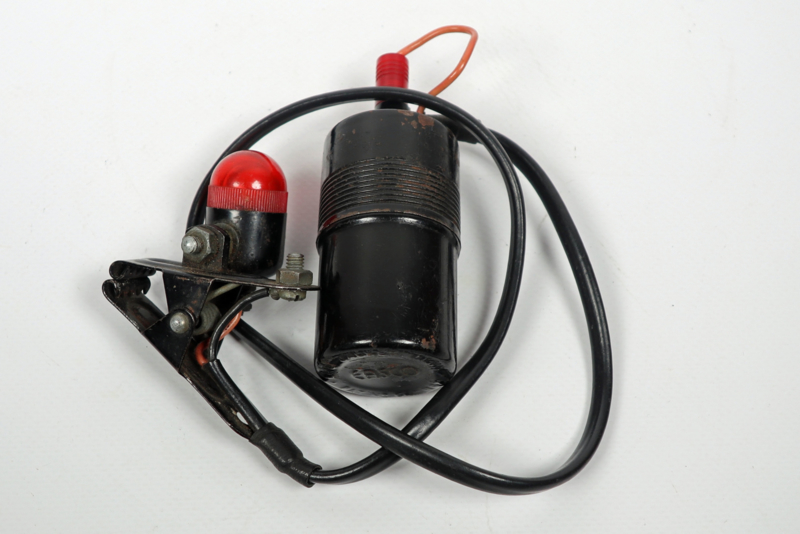
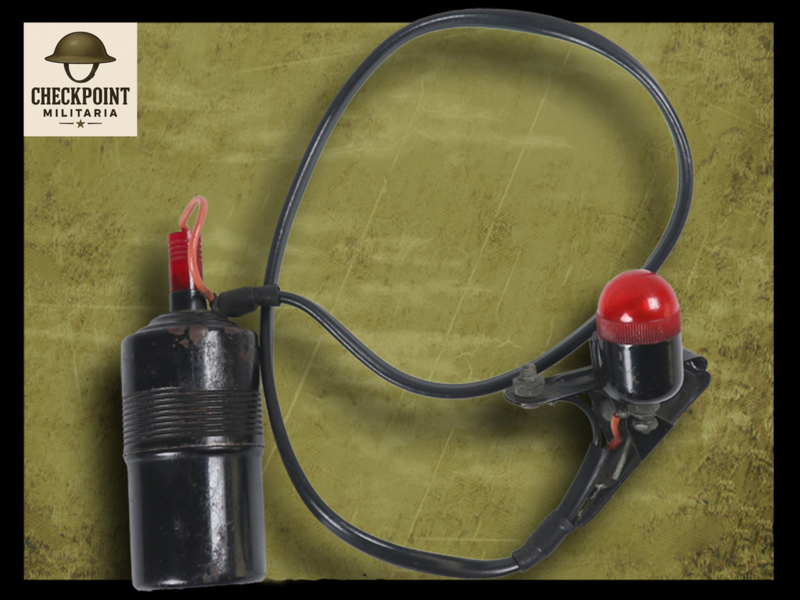
The device was cheap, robust, and highly effective. It consisted of several specific parts:
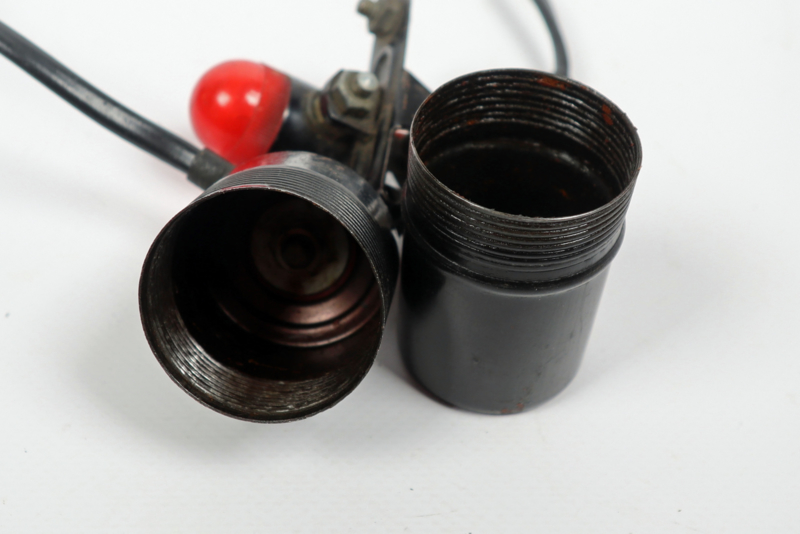
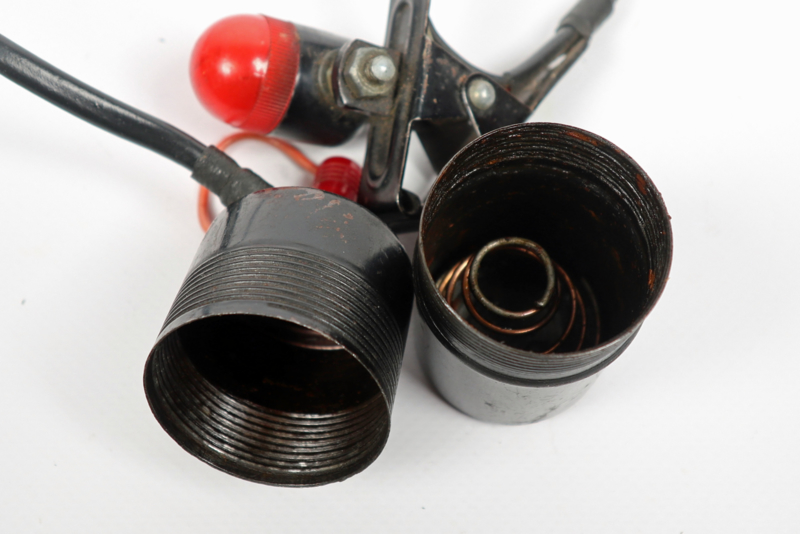
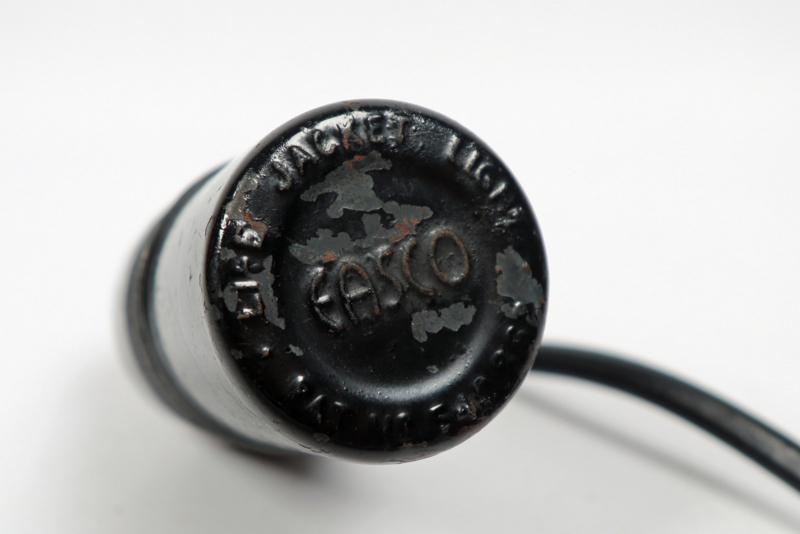
- The battery container: A cylinder of pressed metal—usually finished with a black lacquer or a dull military green color. Stamped on the bottom were the text "EASCO LIFE JACKET LIGHT" and the patent details. The cylinder could be unscrewed in the middle to accommodate a standard battery.
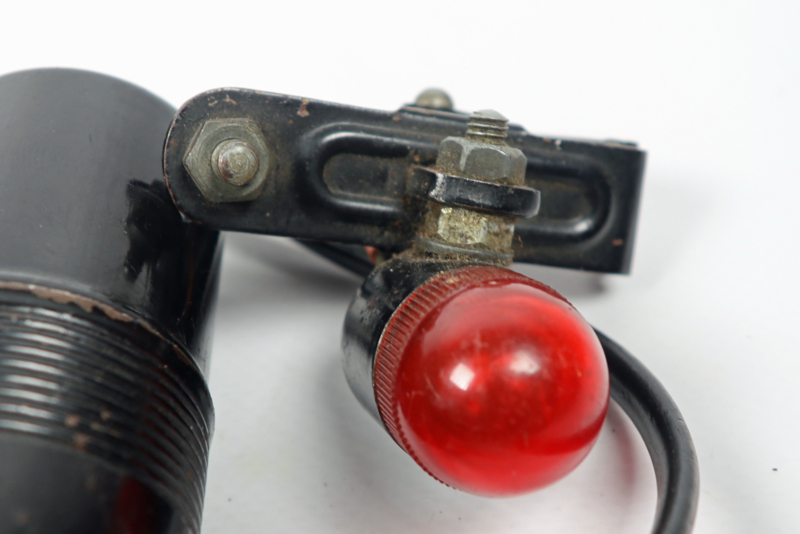
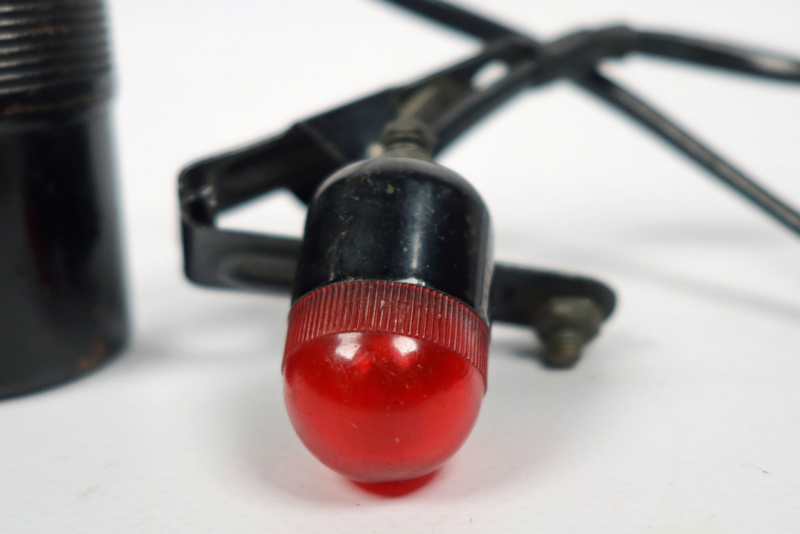
- The lamp housing: A small light under a translucent red plastic cap/lens. Red light was chosen because it did not disrupt the night vision of rescue teams and was visible from a great distance.
- The attachment clip: Both the battery container and the lamp were usually fitted with strong, spring-loaded alligator clips to secure them firmly to the thick canvas fabric of a life jacket.
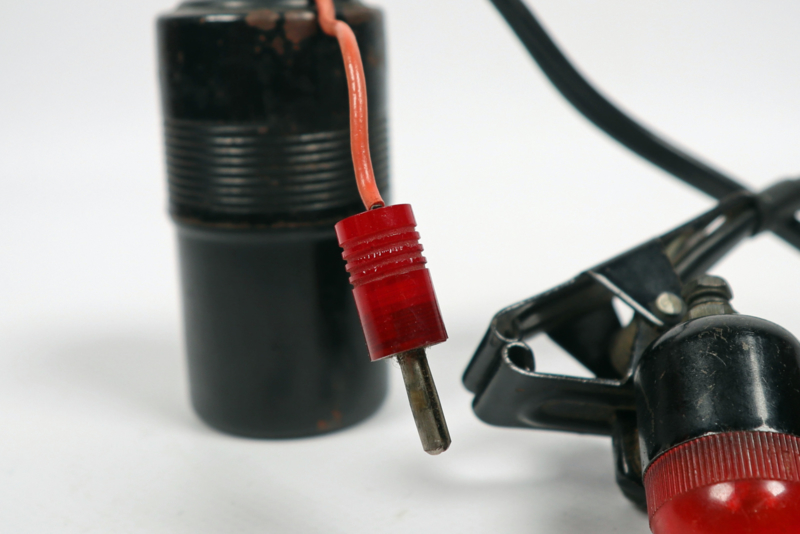
- The wiring: The two parts were connected to each other via a durable, insulated, and waterproof wire. On early models, the electrical circuit was closed manually by plugging a pin into the battery container as soon as rescue was in sight. Later versions featured water-activated systems or push buttons.
Historical Significance
During the first six weeks following its introduction in the Second World War, Easco credited the rescue of more than 400 lives to these tiny points of light. Because they were part of the standard issue equipment, they remained in use well into the post-war period.