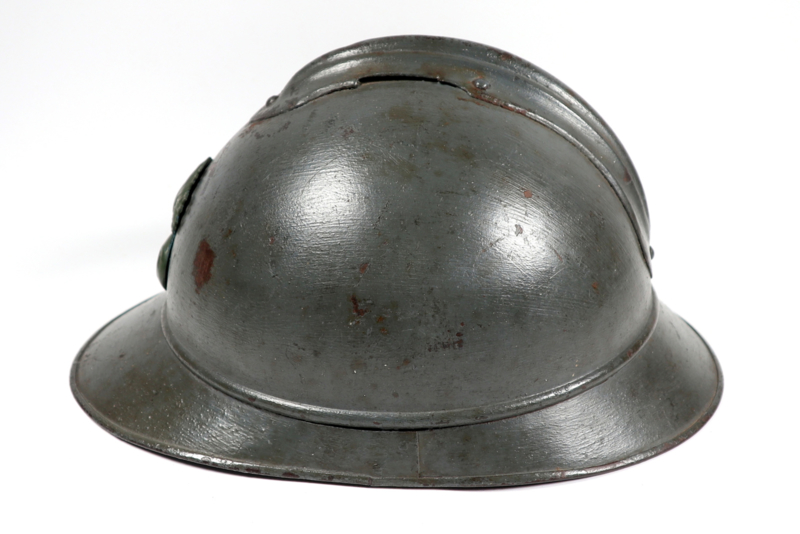
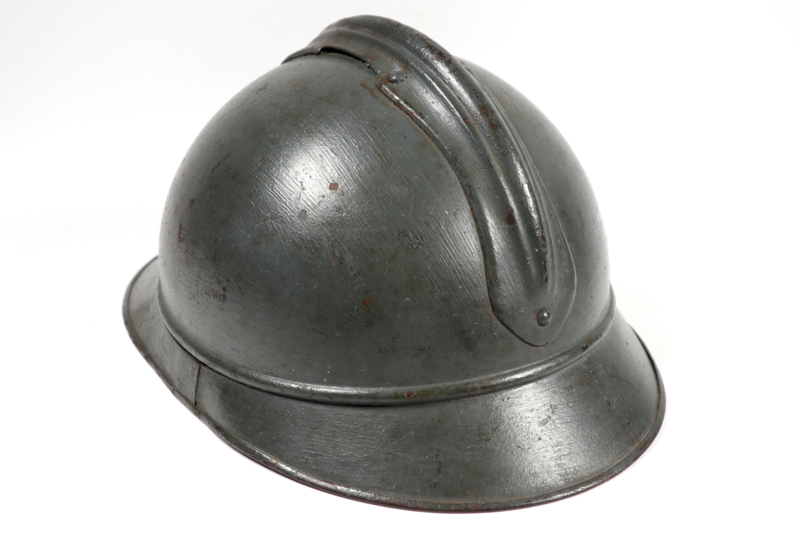
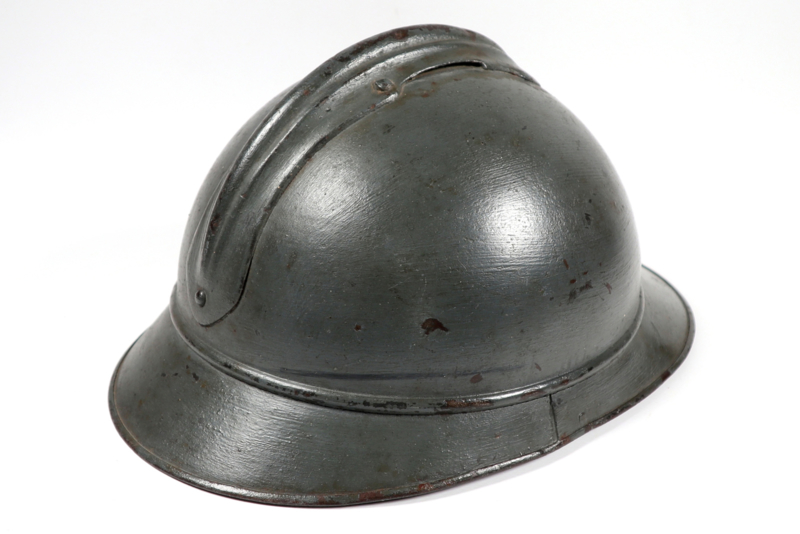
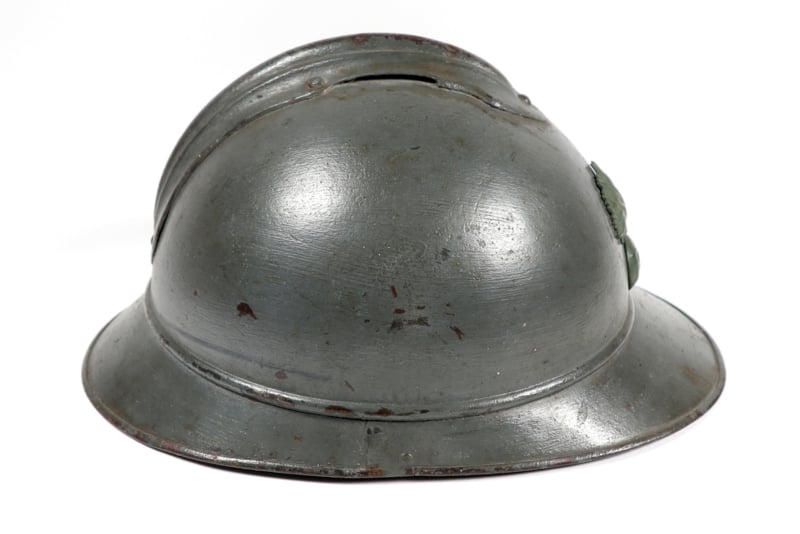

French M1915 "Adrian" Helmet
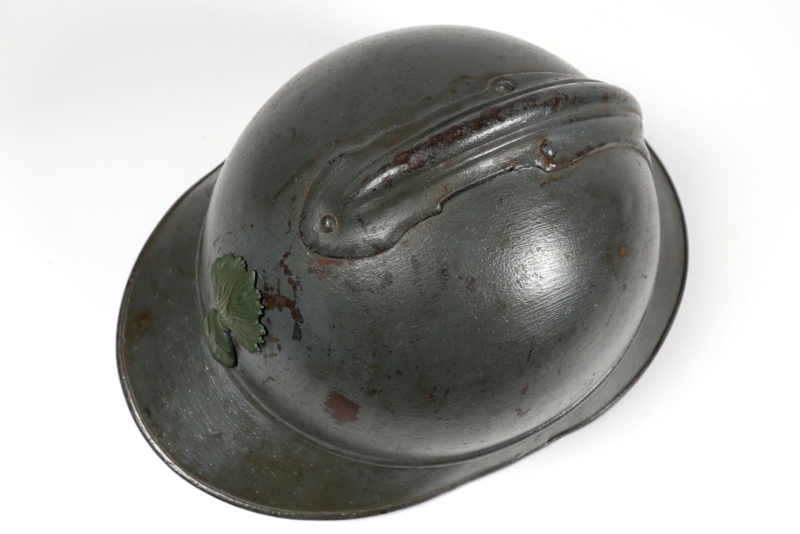
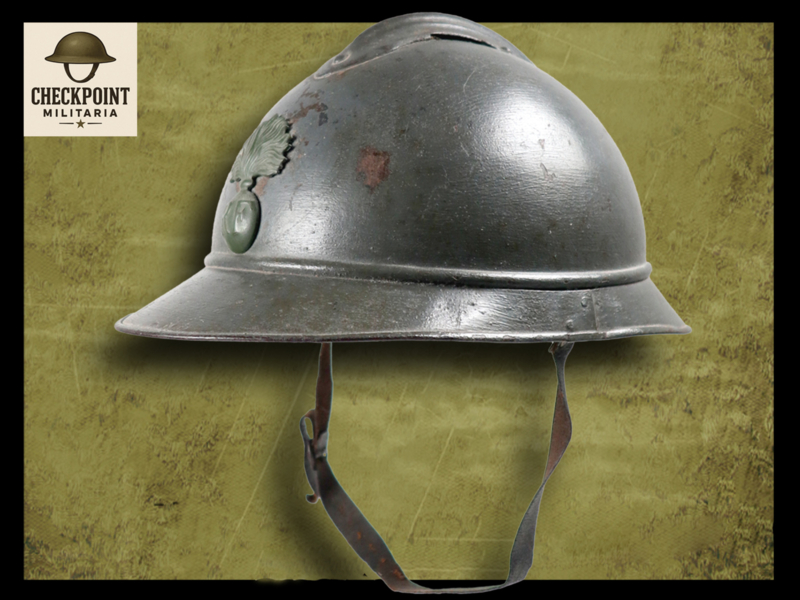
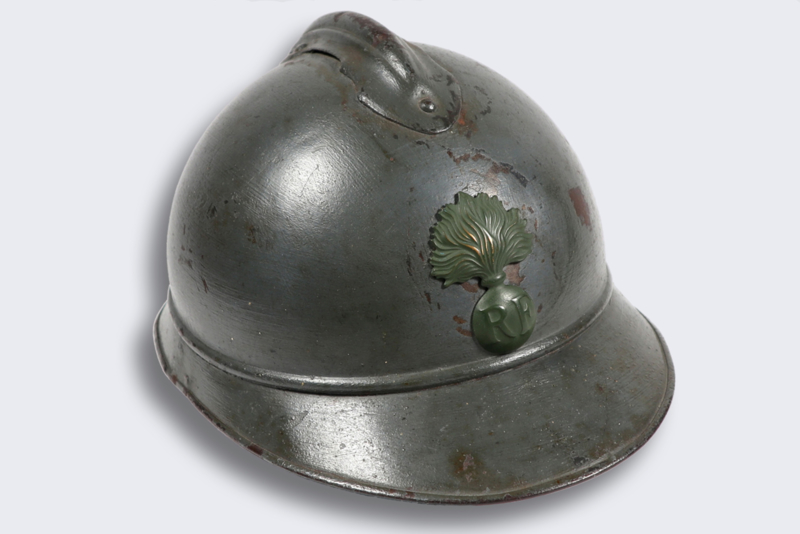
The French Adrian M15 steel helmet (Casque Adrian modèle 1915) was the first modern steel combat helmet to be introduced on a large scale during World War I. Designed by Intendant-General Louis Auguste Adrian, the helmet was issued starting in the summer of 1915 to combat the horrific number of fatal head injuries caused by shrapnel.
Key Features and Design
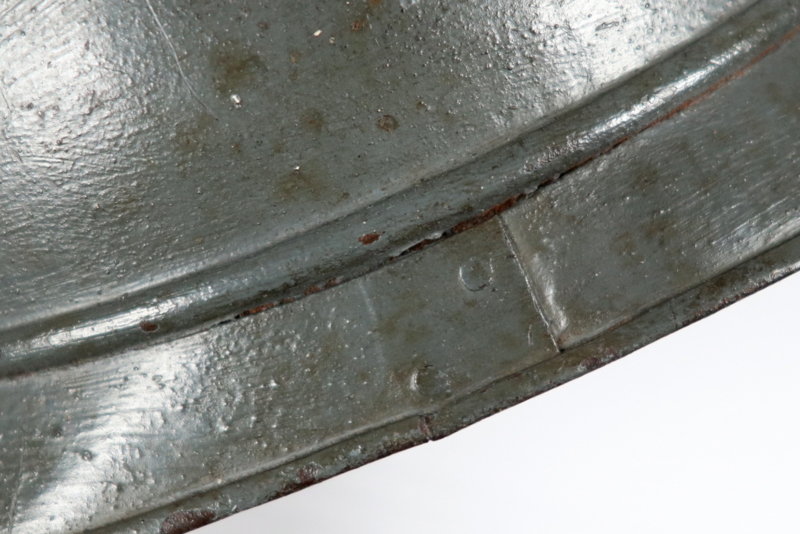
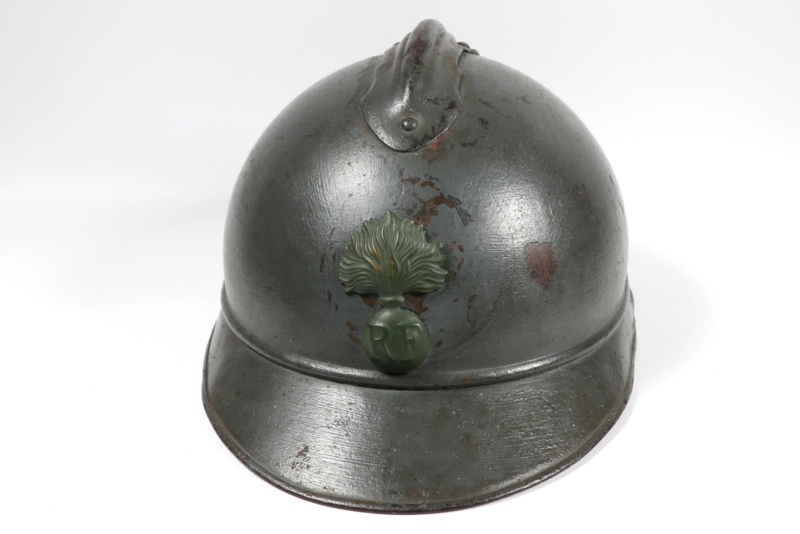
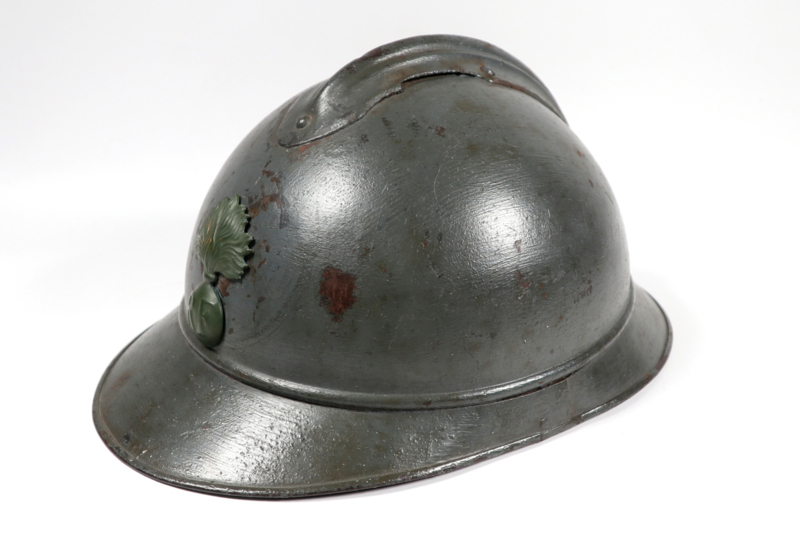
- Multi-piece construction: Unlike later helmets, the M15 consisted of four separate components: the helmet shell, the front visor, the neck guard, and the distinctive crest on top. The parts were welded and riveted together.
- The crest (Ridge): The striking crest on top had a dual function. It served to absorb and deflect the impact of falling shrapnel, and it also covered the ventilation slots.
- Material and weight: Made of mild steel with a thickness of only 0.7 mm. Weighing approximately 700 to 765 grams, it was significantly lighter and more comfortable than the later British Brodie helmet or German Stahlhelm, although this meant it offered less ballistic protection against direct rifle bullets.
- Color: Originally sprayed in a glossy, light blue color (Bleu Horizon) to match the French uniforms. Due to high visibility in the trenches, this was quickly replaced by a matte, dark blue/gray-blue paint.
Army Badges on the Front
A characteristic feature of the Adrian helmet was the metal badge on the front, which indicated the branch of service. These almost always contained the letters "RF" (République Française).
- Infantry: A burning grenade (flaming bomb).
- Artillery: Crossed cannons behind a burning grenade.
- Engineers: A breastplate with an antique-style helmet.
- Medical troops: A shield with a red cross or an Aesculapian staff.
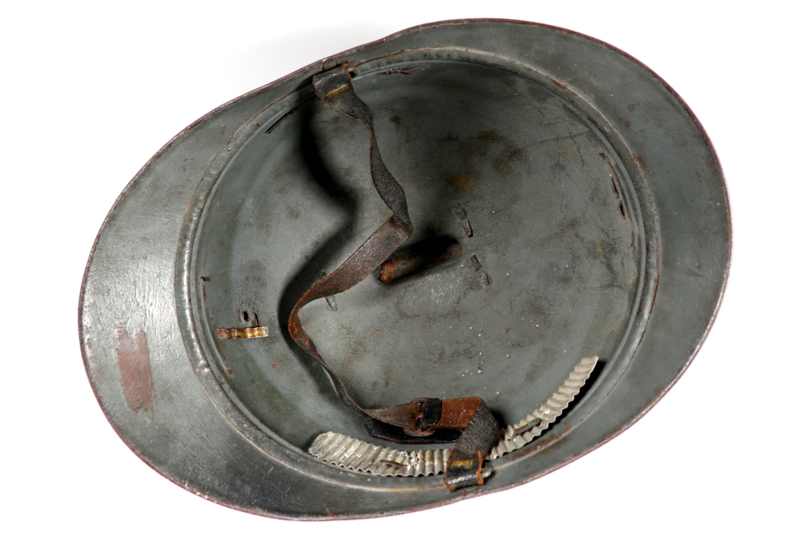
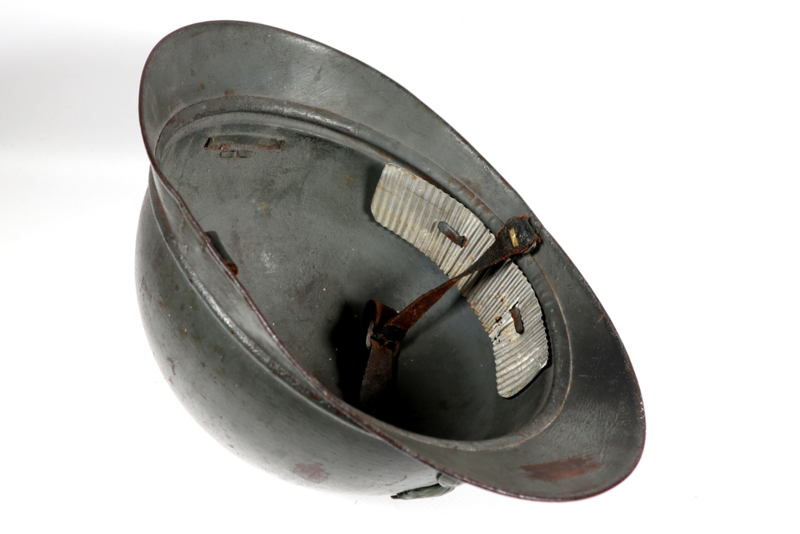
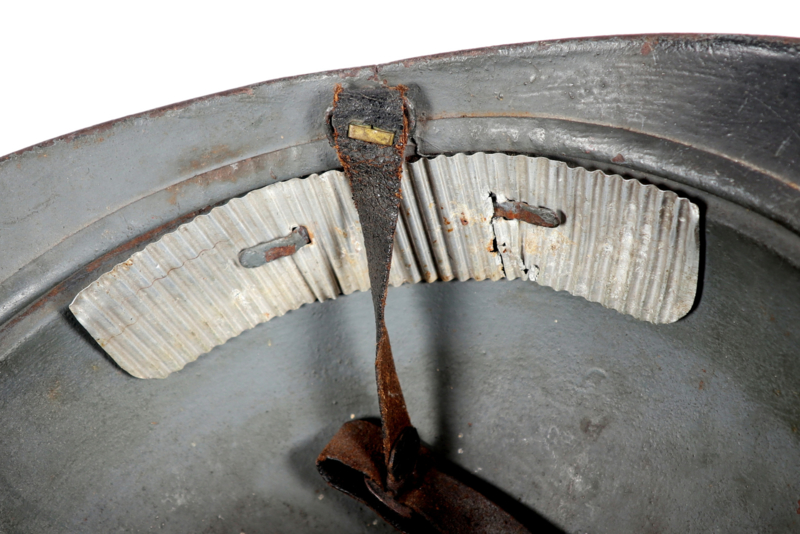
The Liner (No longer present on this helmet)
The liner of the first models (first pattern) was often made from repurposed old military coats (wool) combined with sheepskin or goatskin. This leather was cut into finger-like strips held together by a drawstring. Corrugated aluminum strips were placed between the leather and the steel shell to provide natural ventilation and extra shock absorption.
International Success and Succession
The helmet was so successful in reducing head injuries that it was adopted or ordered by numerous allies, including Belgium (in a mustard/khaki color with a lion's head), Russia, Romania, Italy, and Serbia. Ultimately, more than 20 million M15 helmets were produced. In 1926, the helmet was succeeded by the M26 Adrian, which was simpler (made from a single piece of steel) and constructed from stronger material.