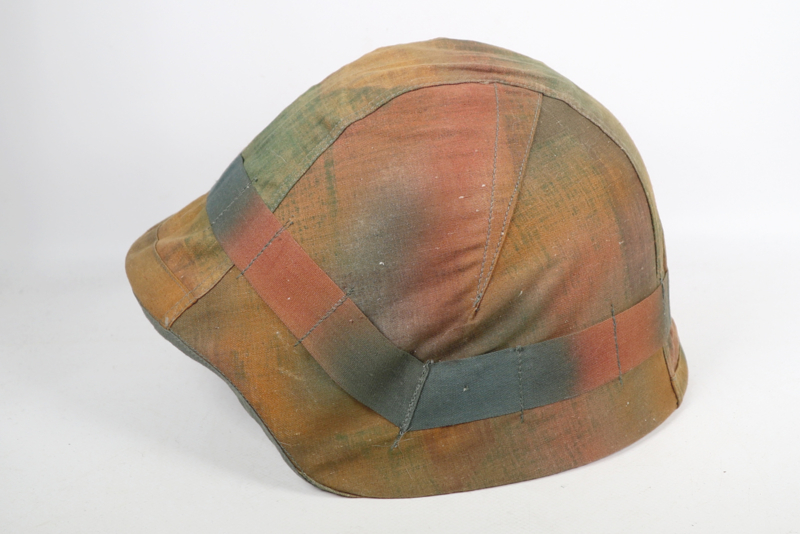
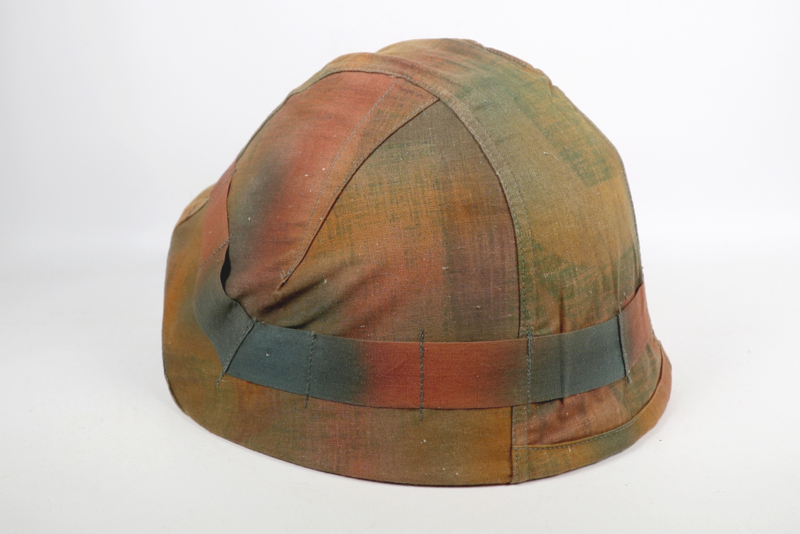
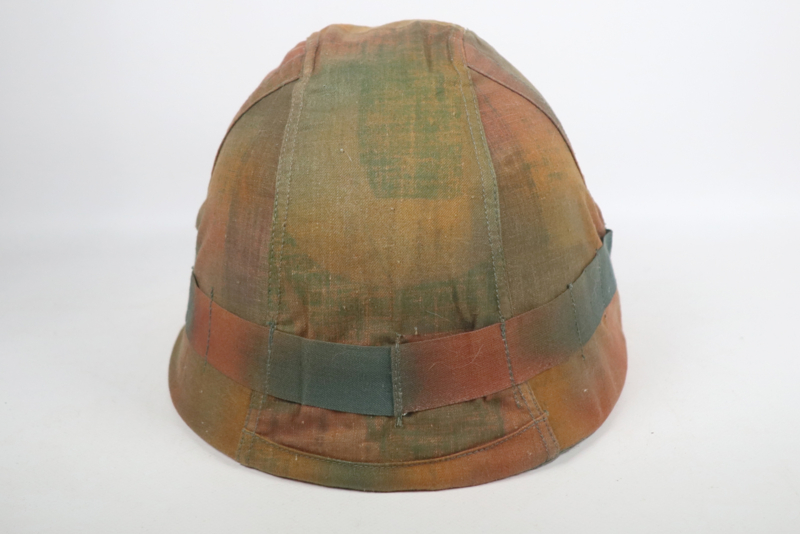
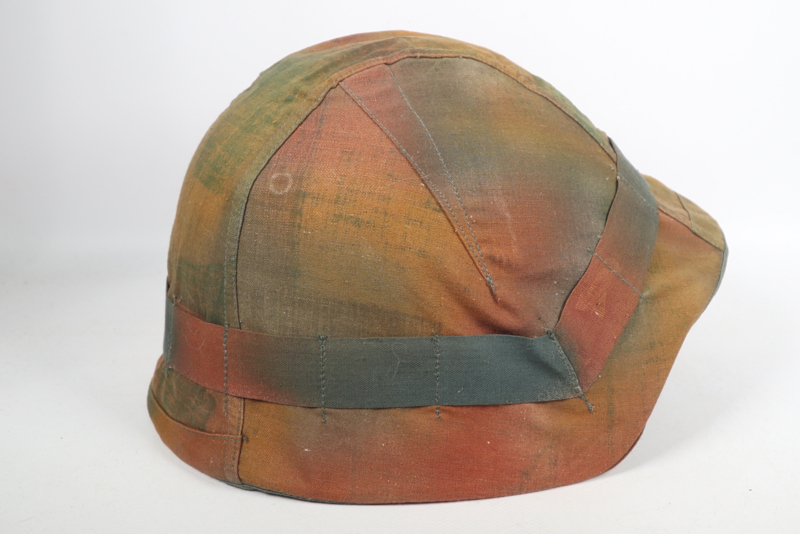
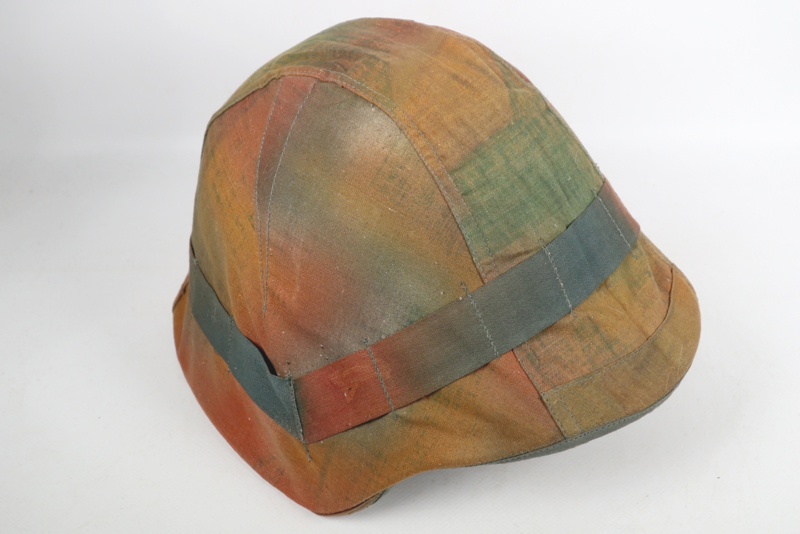
Swiss M1918/40 Helmet & Autumn Camo Cover
The Swiss M1918/40 steel helmet with the autumn camouflage cover represents a unique era in Swiss military history, combining a World War II design with Cold War camouflage experiments.
The Swiss M1918/40 Helmet
The M1918/40 is an upgraded version of the original Swiss M1918 combat helmet from World War I.
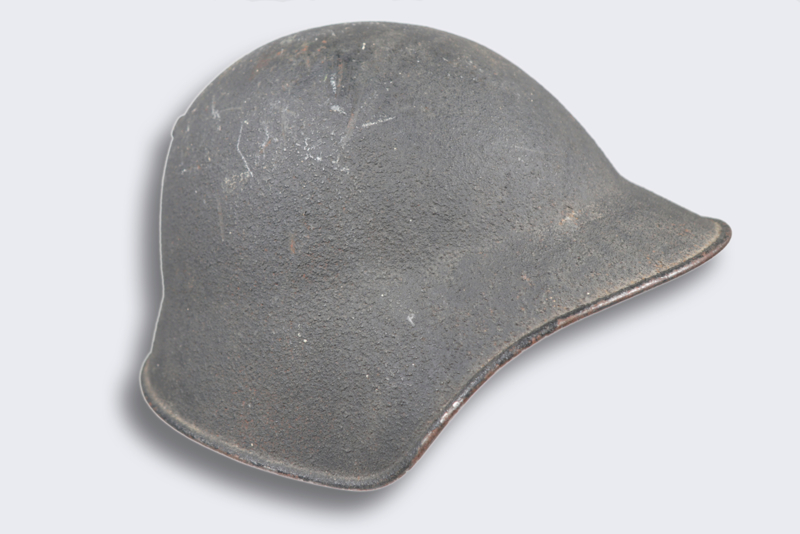
- Modifications: The front brim was shortened for better visibility and a lower profile.
- Design: The iconic, deep "coal scuttle" shape and rolled edge were retained.
- Finish: The helmet featured an anthracite or dark grey textured paint.
- Texture: The paint was mixed with sawdust or sand to reduce glare in the mountains.
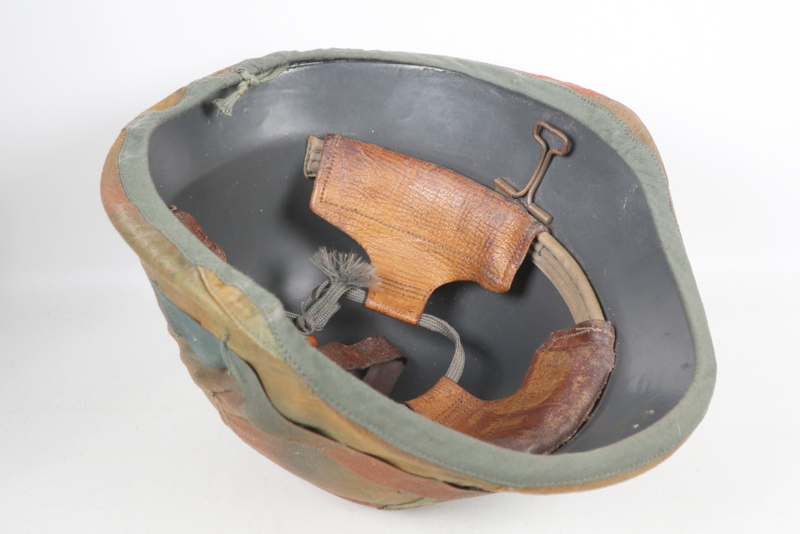
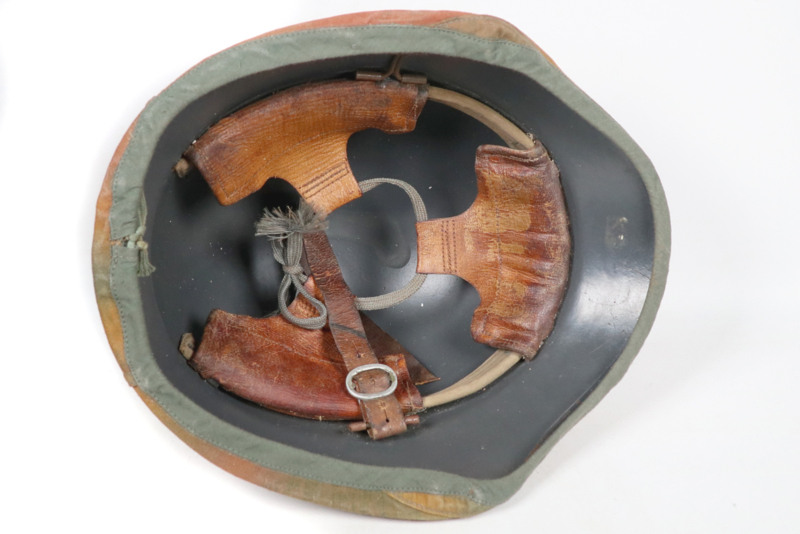
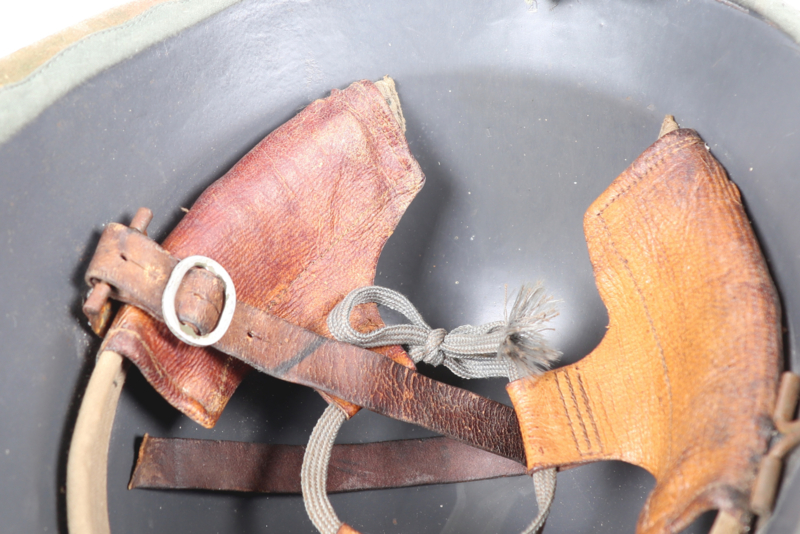
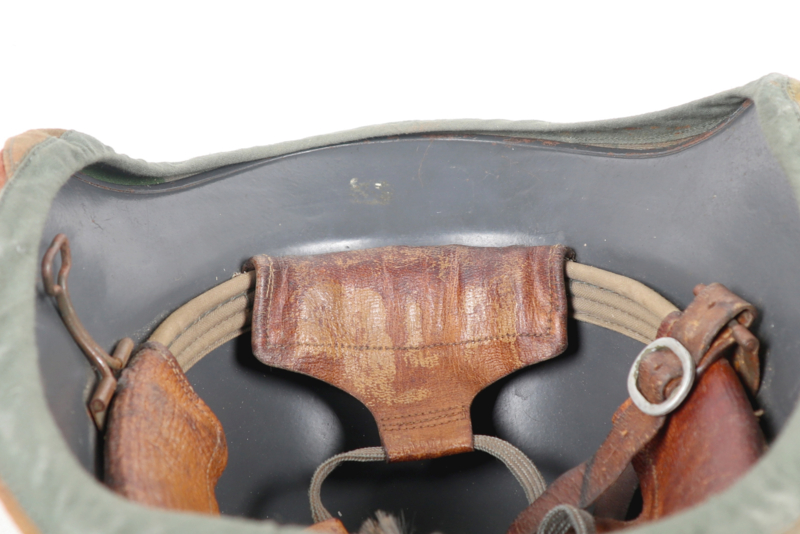
- Liner: The system uses three leather pads.
- Attachment: These pads are attached with rivets directly to a metal band inside the steel shell.
The Autumn Camouflage Helmet Cover
The Swiss Army introduced fabric covers to break up the distinct silhouette of the steel helmet. Collectors usually encounter two types of "autumn" covers for this model:
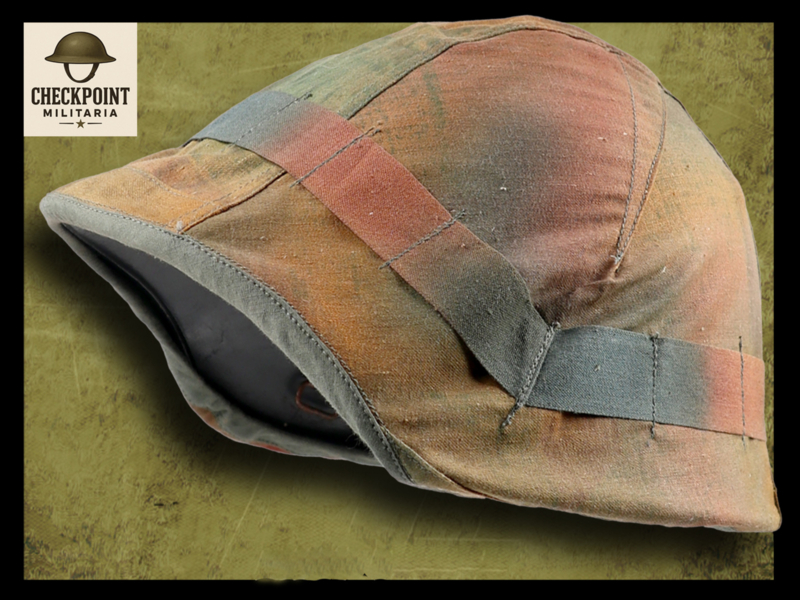
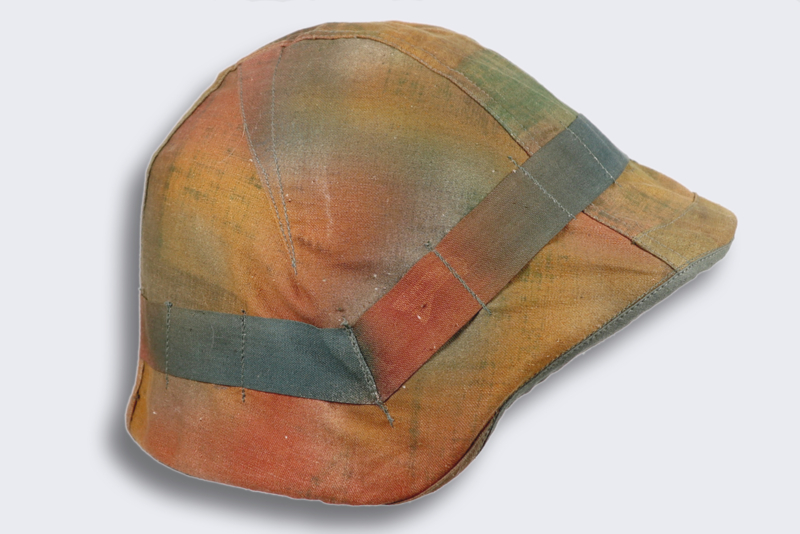
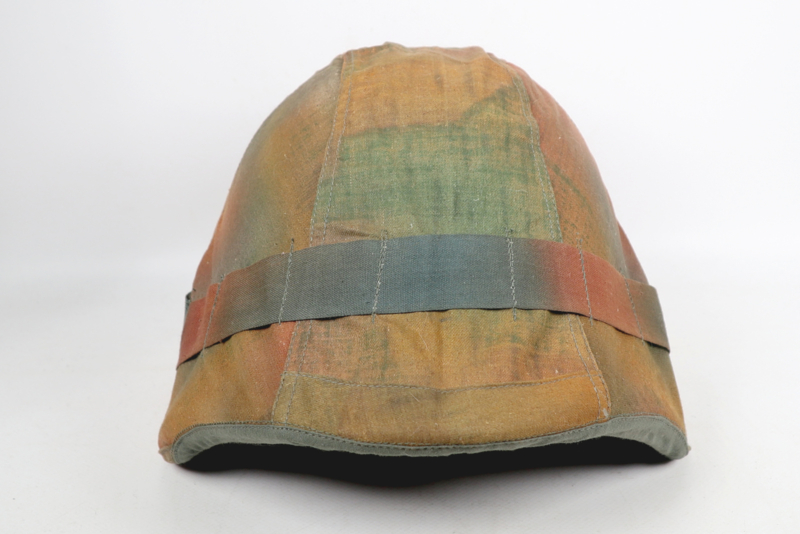
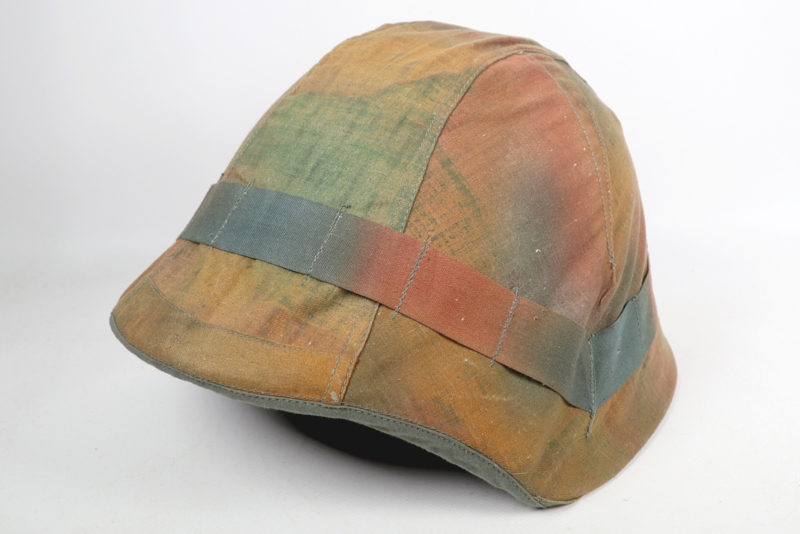
The Reversible "Tschako" Style Cover
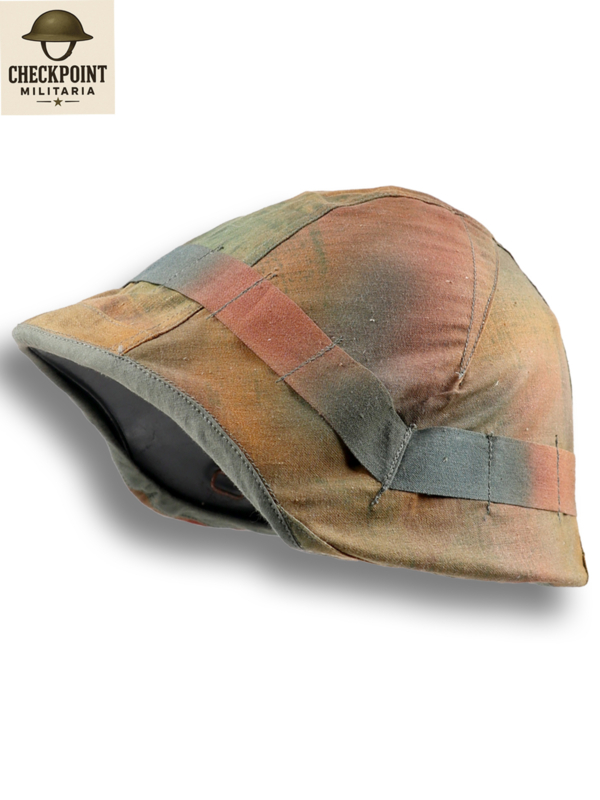
- Pattern: This early canvas cover features a soft, blurry, abstract design tailored to the seasons.
- Autumn side: The autumn configuration highlights deep orange, earthy browns, and matte ochre.
- Summer side: The reverse side features a green summer configuration.
- Fit: The cover consists of multiple panels that fit tightly around the helmet.
- Folks loops: It includes a thick band around the circumference for inserting branches or foliage.
The TAZ 57 / Alpenflage (Leibermuster) Cover
- Pattern: Introduced in 1957, collectors often call this pattern Alpentarn or Alpenflage.
- Colors: It uses a high-contrast mix of red, brown, green, and black patches on an alpine-beige background.
- Camouflage: The bright red and orange-brown colors were scientifically developed by the Swiss.
- Effect: The design perfectly mimics autumn colors of bushes, moss, and dead leaves in alpine forests.
Stamped IX and K by the manufacturer Carl Kyburz, Bern.
Broken chin strap