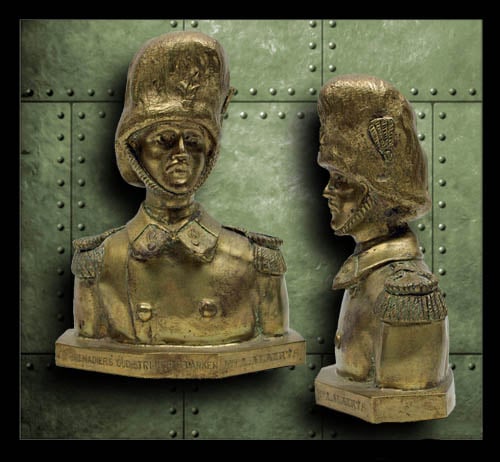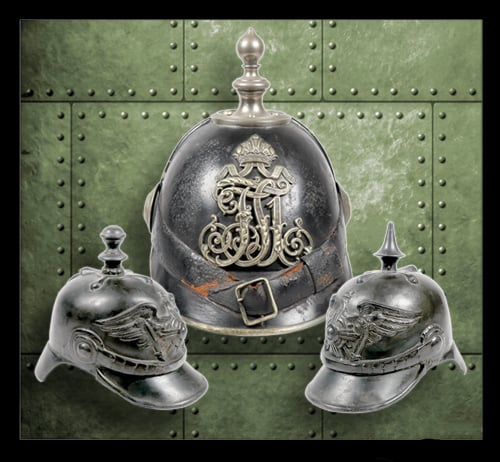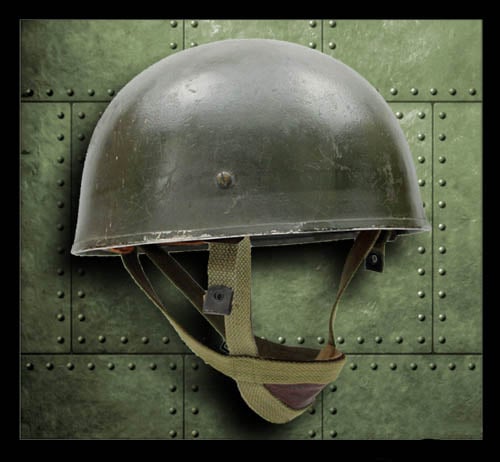


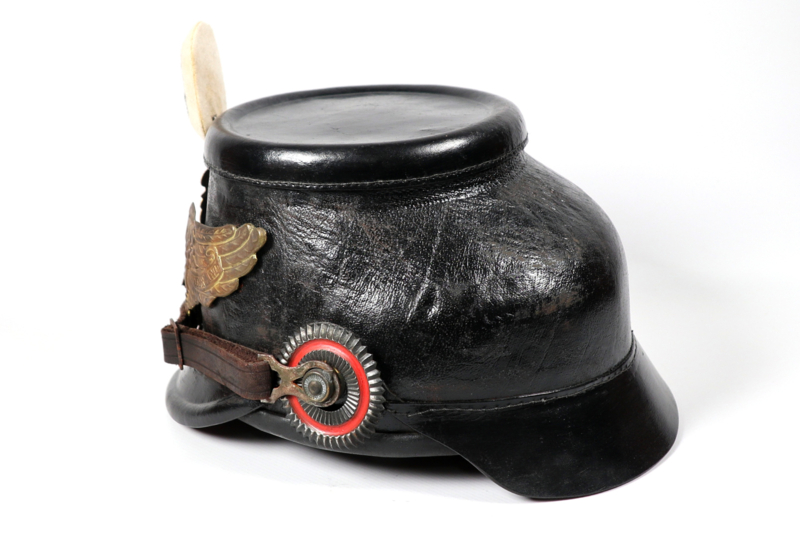

German "Prussia" Tschako
The Prussian grenadier shako for enlisted men is an iconic military headgear that underwent a specific historical development within the Prussian infantry.
While the regular infantry (musketeers) and elite grenadiers in the 18th century primarily wore the well-known copper pointed caps (Grenadiermütze), the shako (or Tschako) was introduced from the early 19th century.
Below is an overview of the key features, the various models, and the specific components of the enlisted men's shako.
1. Key Features (Enlisted Men)
In contrast to officer models, which were often made of fine felt or high-quality leather with silver or gold details, the enlisted men's shako was more functional and austere in design:
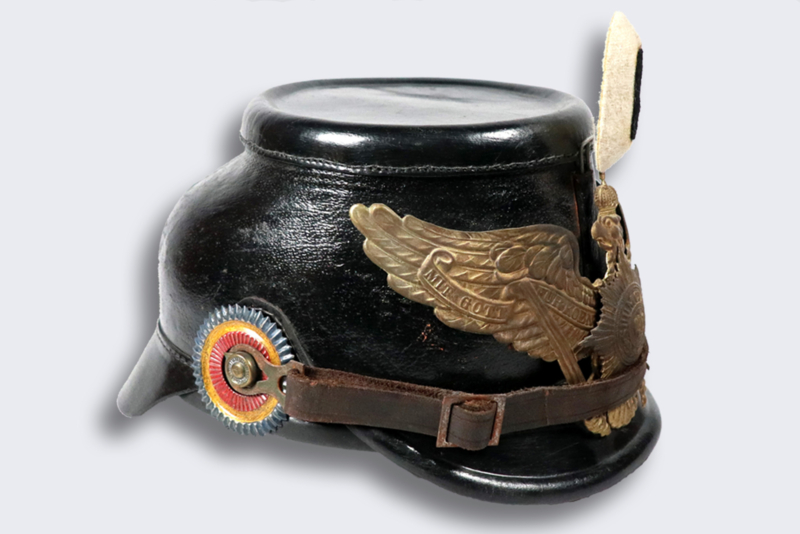
- Material: The base consisted of heavy, black-colored boiled leather or sturdy felt with a leather top and visor.
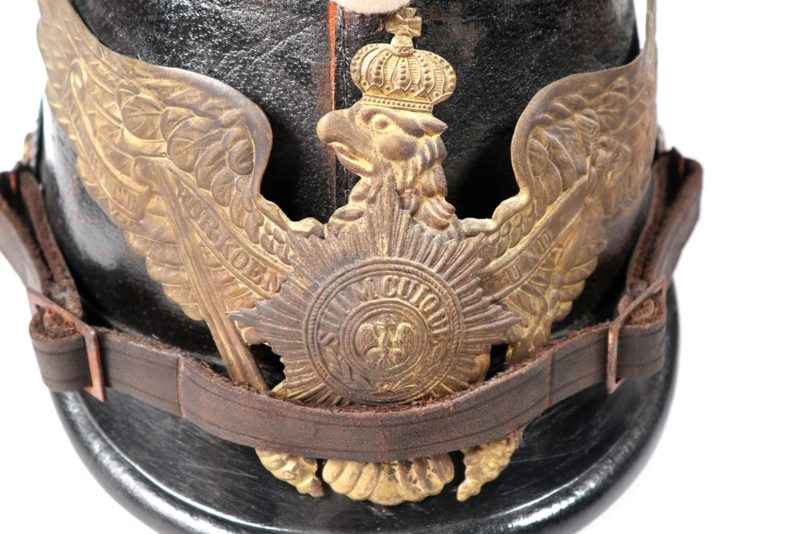
- Fittings: Metal parts (such as the front plate and the chin strap buckles) for enlisted men were usually made of simple brass or plain iron (later field grey), instead of gilded or silver-plated metal.
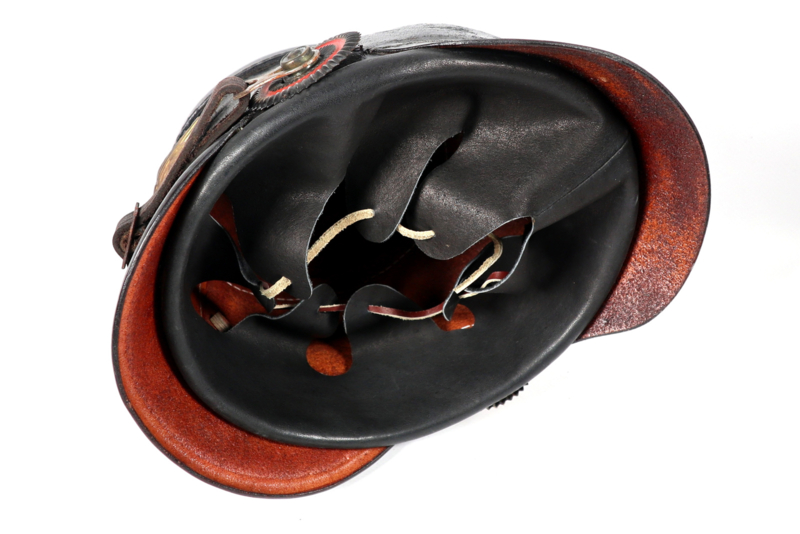
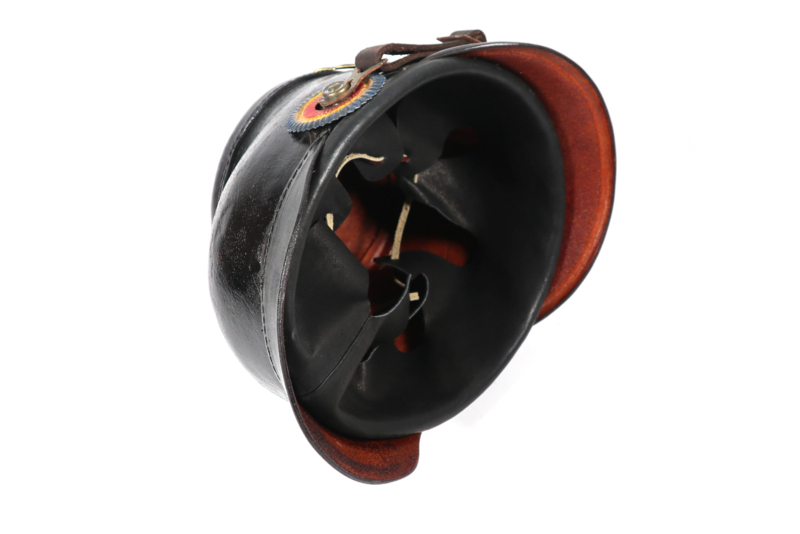
- Interior: The inside was fitted with a robust brown or black leather sweatband with leather flaps ("fingers") that could be tied to size with a cord.
2. Historical Development of the Grenadier Shako
The Napoleonic Wars (Models 1807 - 1815)
During the army reforms following the defeat against Napoleon in 1806, Prussia switched to the shako for the regular line infantry and the grenadiers.
- Shape: A tall, cylindrical model that flared slightly towards the top.
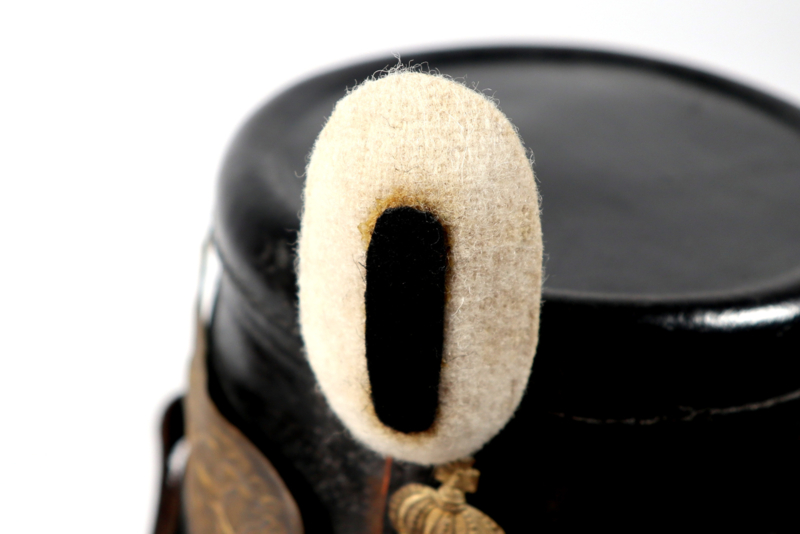
- Details for Grenadiers: Grenadier companies distinguished themselves from ordinary musketeers by a white pompom (woolen ball) or a red hair plume (Stutz) on top of the shako.
- Frontplate: Enlisted men often wore a simple copper or brass plate, or during campaigns, a plain black oilcloth cover for protection against the rain, with the regiment sometimes indicated on the cover by paint or a stencil.
The German Empire (Models 1895 - 1915)
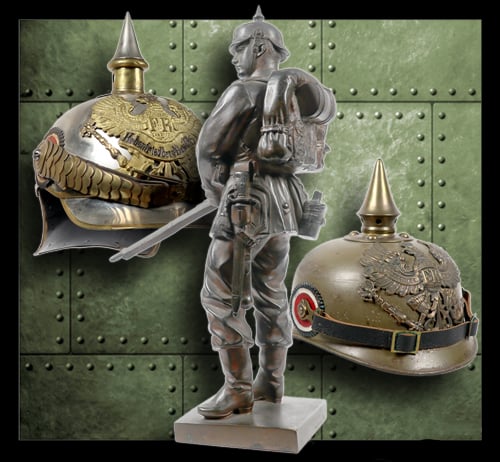
Towards the First World War, most Prussian grenadier regiments wore the well-known Pickelhaube (spiky helmet), but the shako remained the standard headgear for specific units such as the Jäger (light infantry) and certain Guard units.
- Model 1895: Made of black lacquered leather with a brass Prussian eagle or the Guard star (for elite grenadiers) on the front.
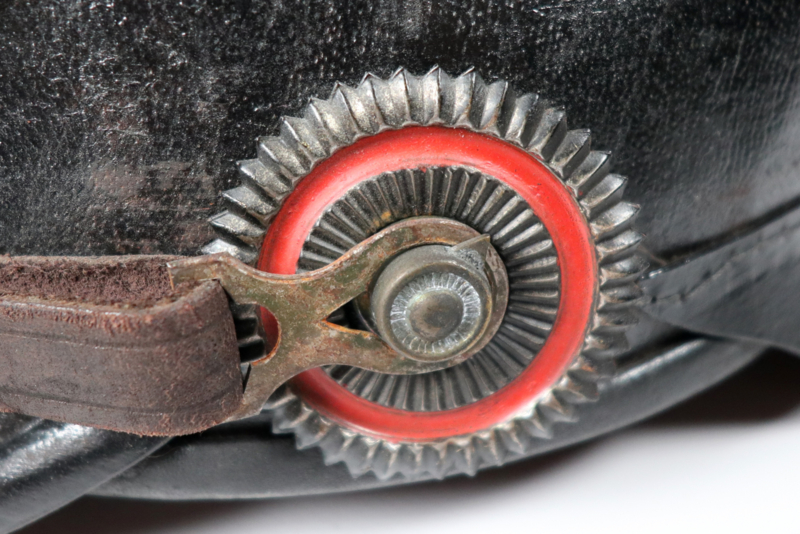
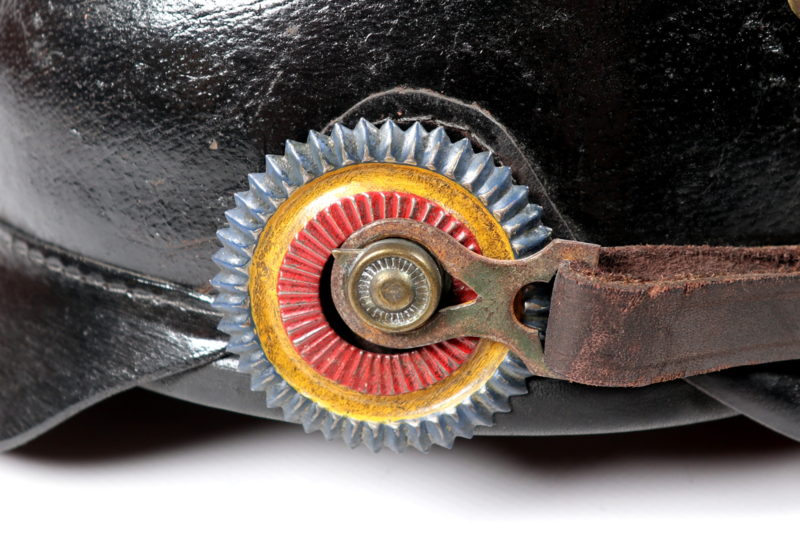
- The two-coloured cockades were attached to the sides: the black-and-white Prussian cockade and the red-and-white-and-black Imperial cockade.
- Model 1915 (War model): Due to material shortages and camouflage requirements in the trenches, the brass parts were replaced by matte, field-grey painted iron or zinc, and the shako was covered in the field with a dull, reed-green or grey textile cover.
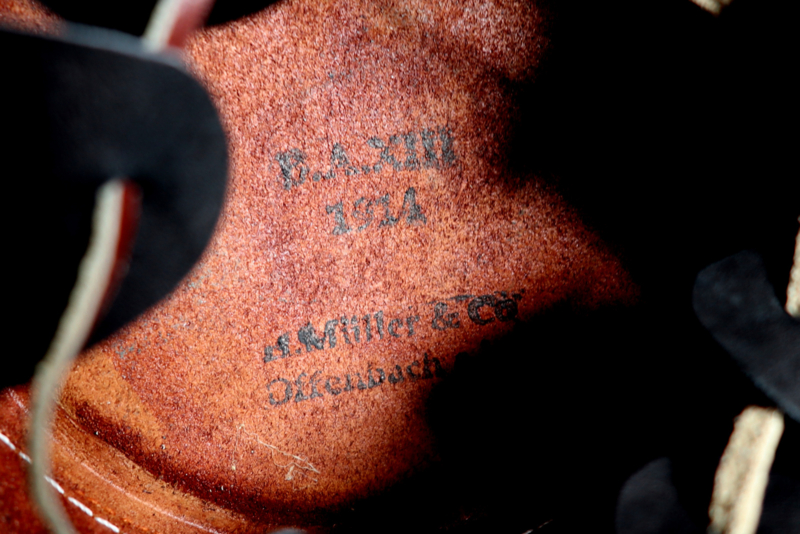
Reproduction.
Size: 59