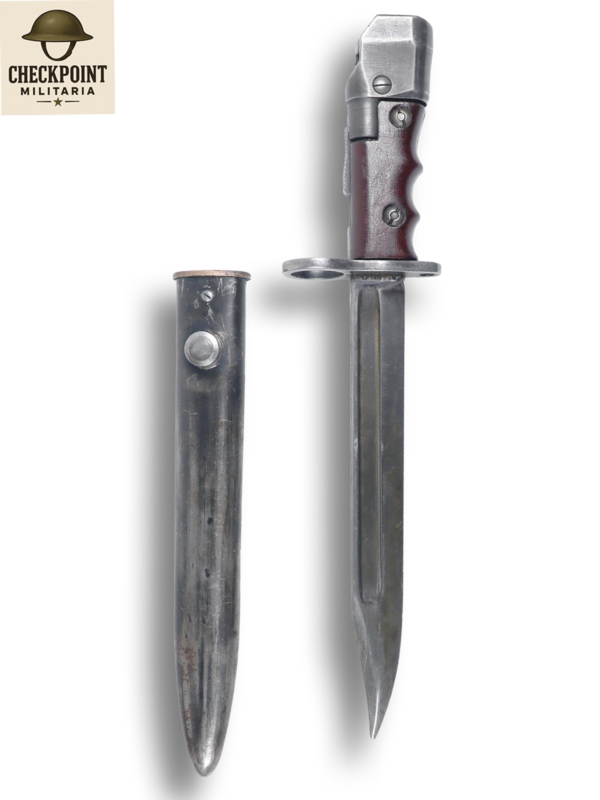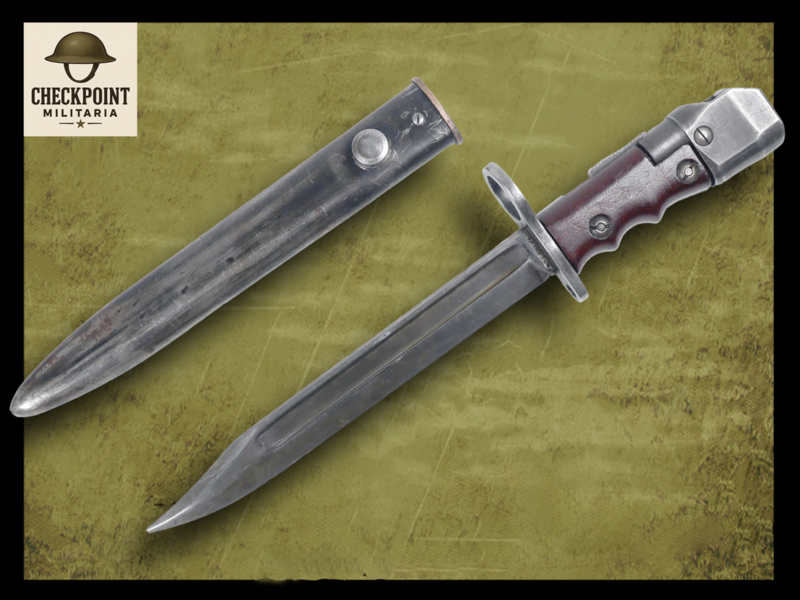
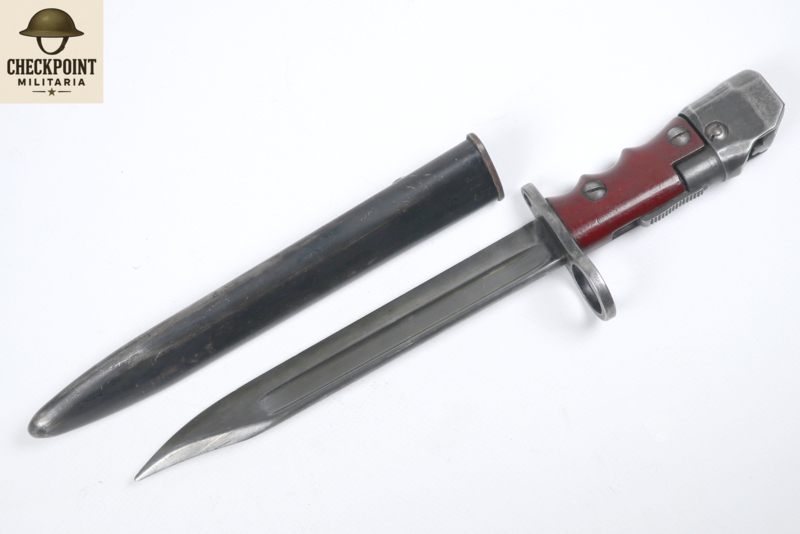
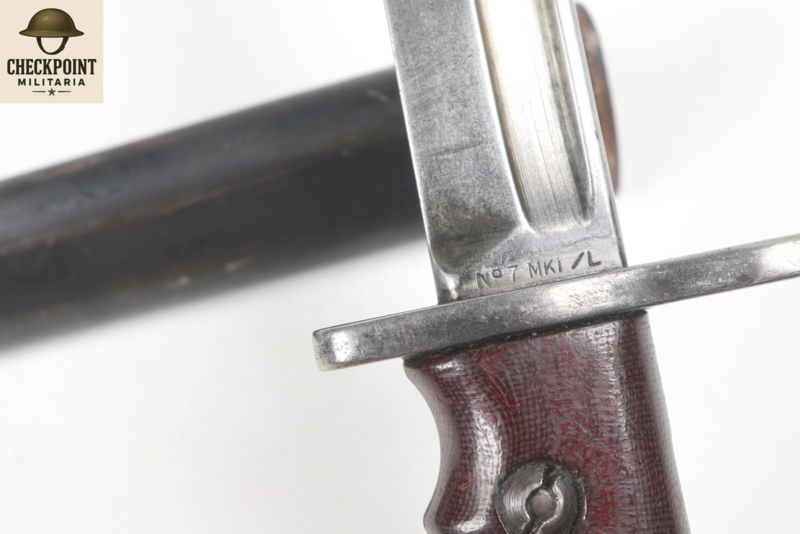
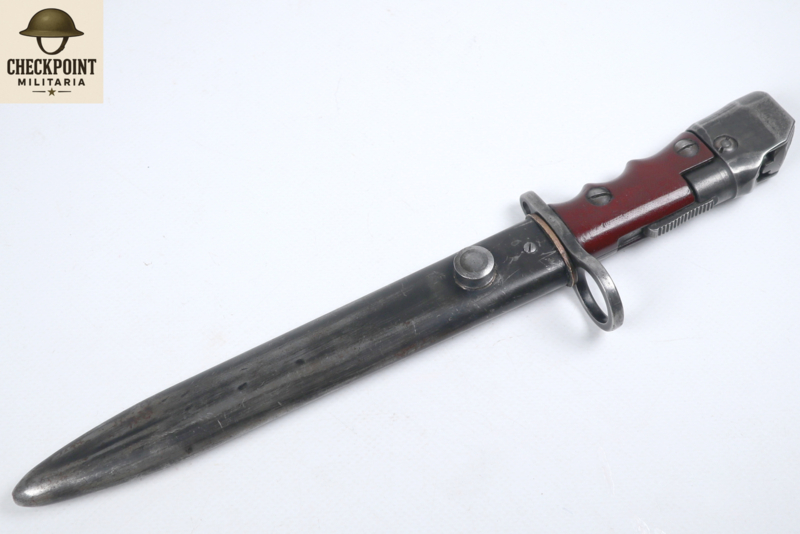
British No. 7 Mk. I/L Bayonet
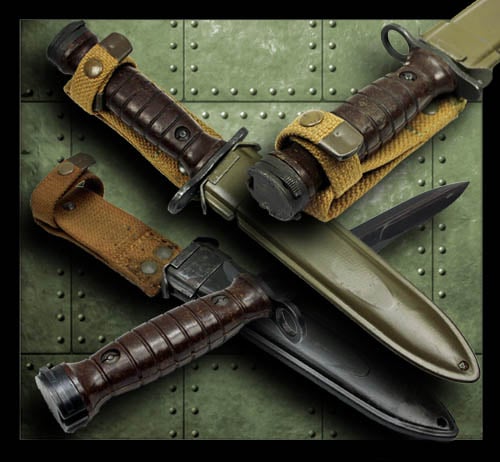
The British No. 7 Mk. I/L Land Service Bayonet is one of the most unique and mechanically complex edged weapons ever fielded by the British military. Designed in 1944 by the Wilkinson Sword Company, it was intended to serve as a universal hybrid weapon that could seamlessly transition between a firearm-mounted bayonet and a standalone combat knife.
Design & Innovation
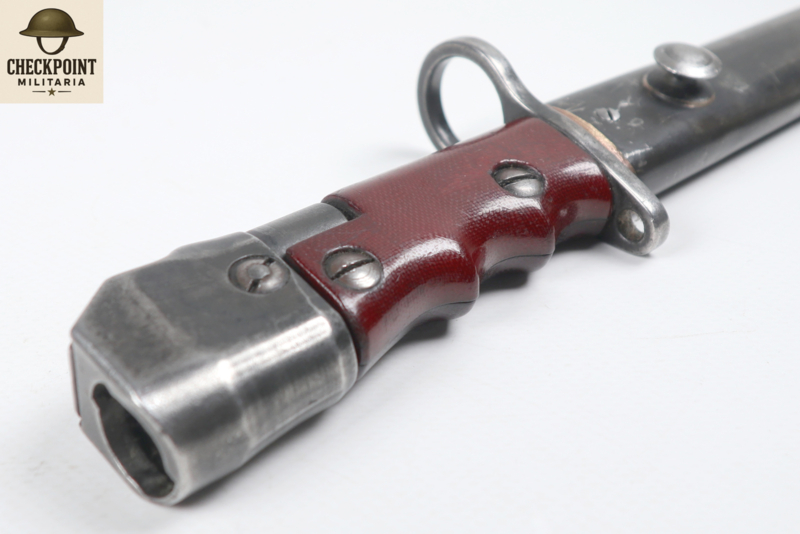
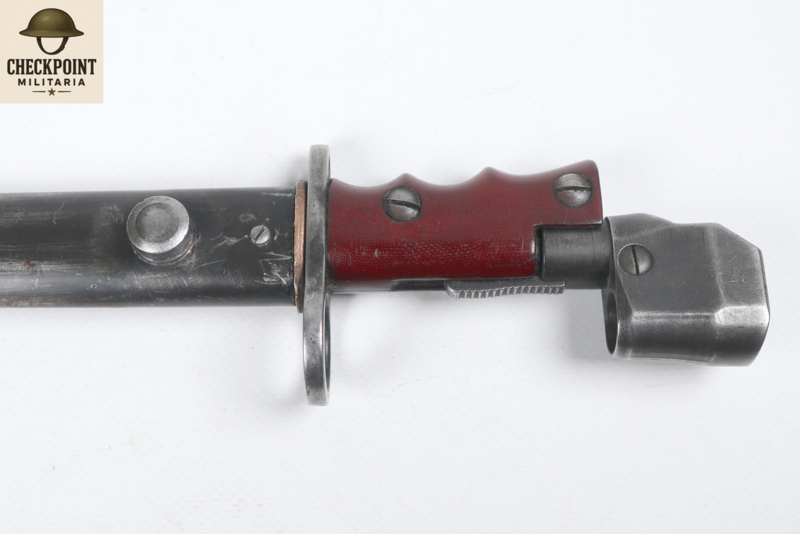
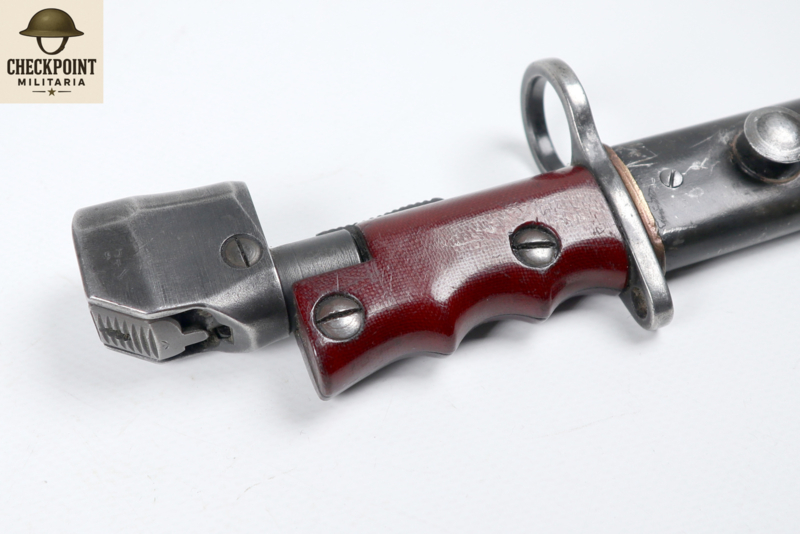
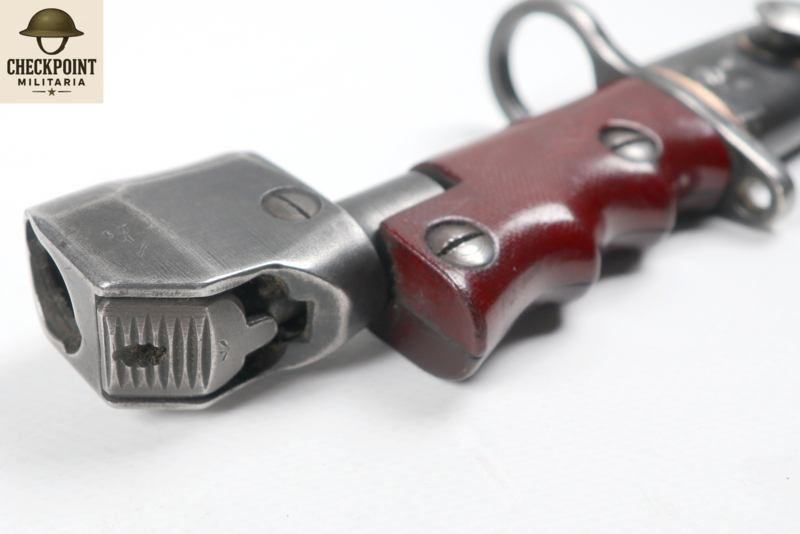
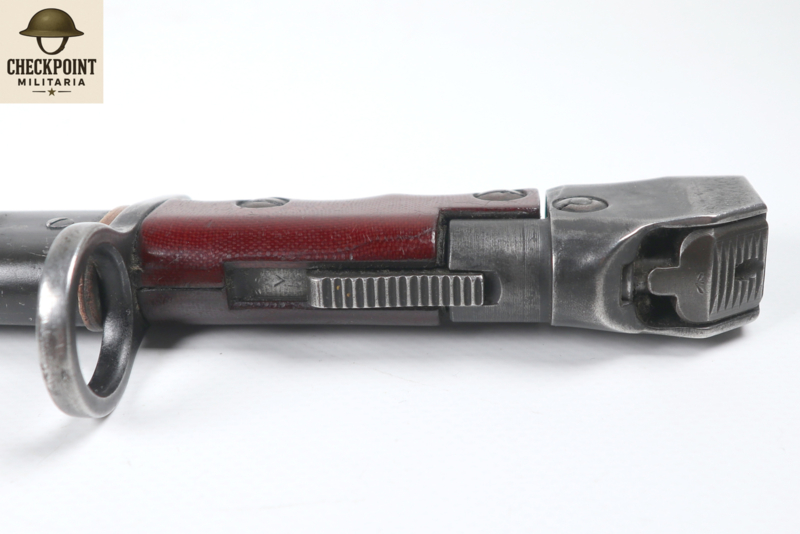
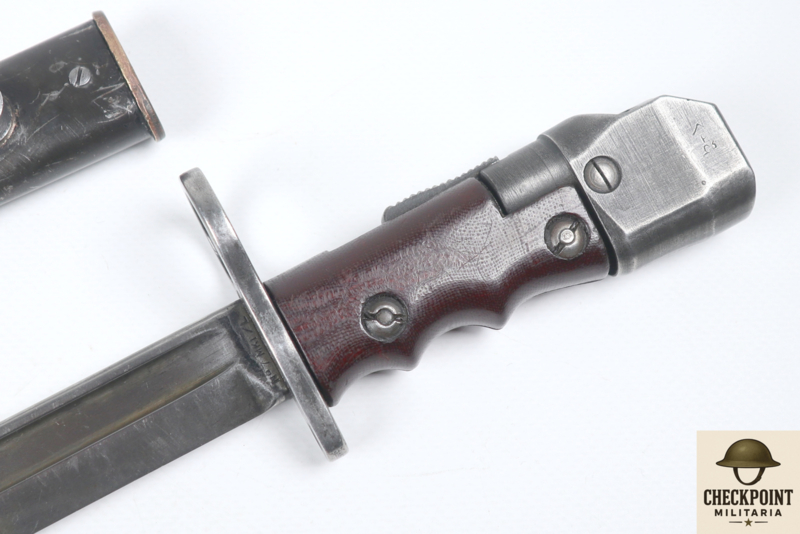
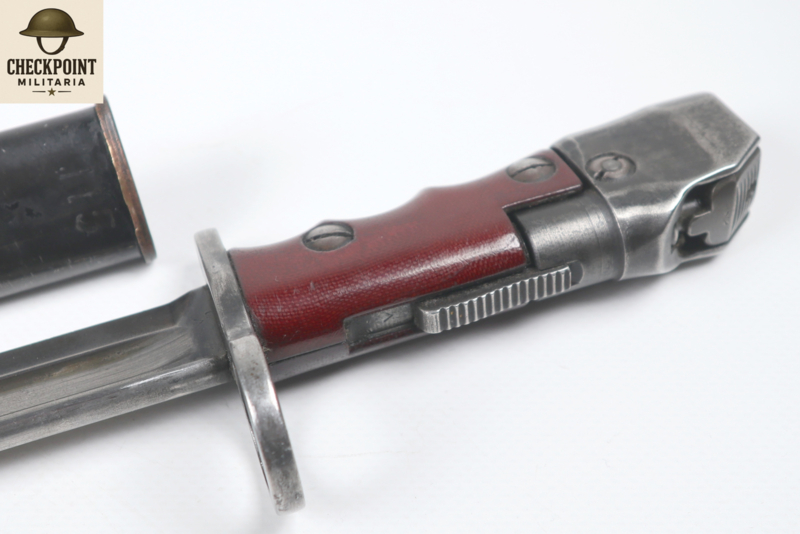
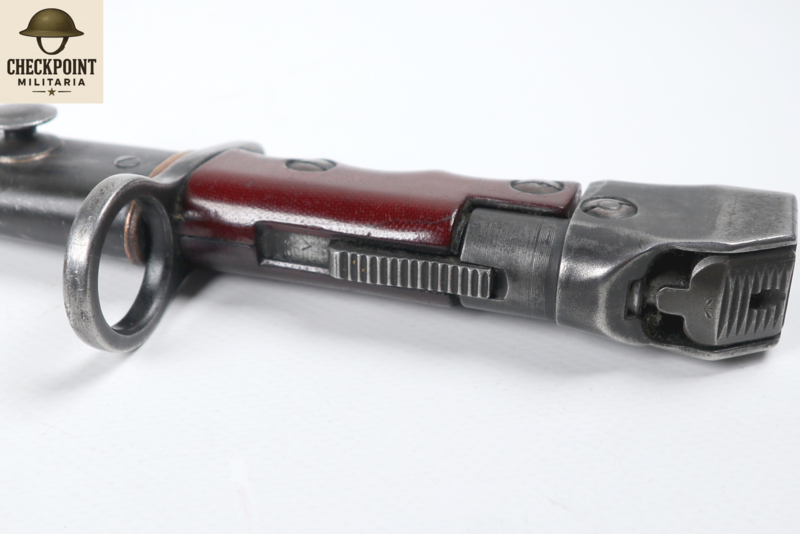
The defining trait of the No. 7 Mk. I/L is its innovative, rotating muzzle ring socket inside the pommel. A standard socket bayonet cannot easily be held comfortably as a knife because the mounting sleeve disrupts a normal handgrip. To circumvent this, the designers integrated a spring-loaded, rotating socket inside the pommel.
- As a knife: The socket sits flush inside the hilt, allowing the user to utilize the deep finger-grooved grip scales comfortably.
- As a bayonet: The user presses a catch button on the pommel, causing the rifle-mounting socket to rotate out of the grip so it can be slipped over the barrel.
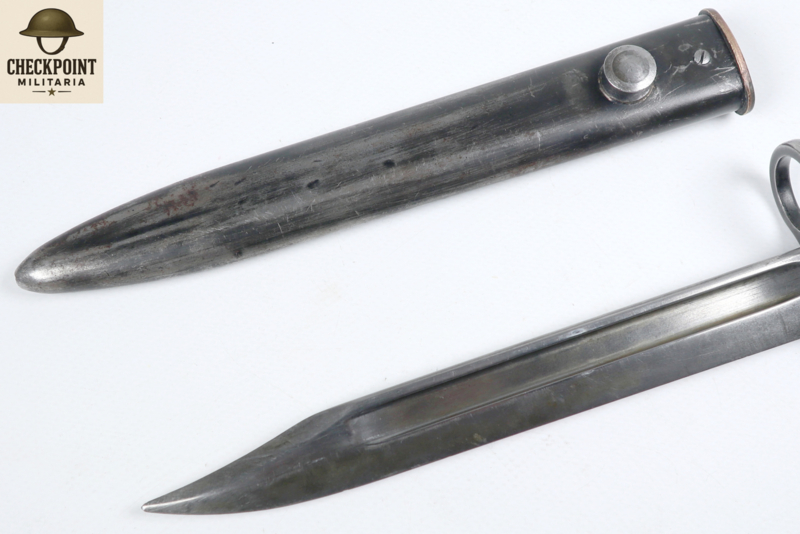
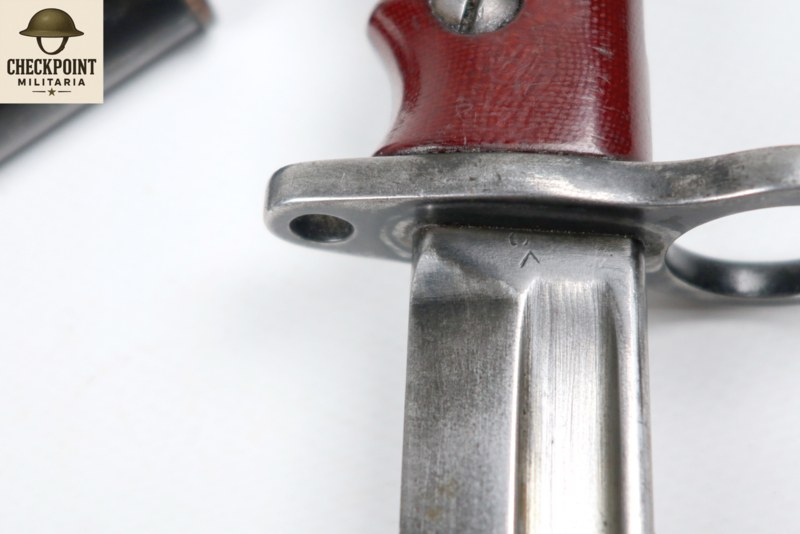
The bayonet utilized the identical clip-point Bowie-style blade, crossguard, and deep fuller of the famous No. 5 "Jungle Carbine" bayonet. The grip scales were primarily constructed from Paxolin (a resin-impregnated cloth composite material), most commonly appearing in deep red, orange-brown, or black variants.
Firearm Compatibility & Limitations
While the design was intended to streamline logistics by fitting multiple primary firearms, it met mixed success in practice:
- Sten Mk V Submachine Gun: This was the primary firearm cleared for the No. 7. The bayonet mounted securely to the heavy lugs of the Sten Mk V barrel without interfering with its operation.
- Lee-Enfield No. 4 Rifle: Although the bayonet technically locked onto the muzzle lugs of the Lee-Enfield No. 4, its large muzzle ring sat directly in front of the barrel opening. As a result, firing the rifle risked a bullet strike where the .303 round could hit the ring. Consequently, it was only cleared for ceremonial and parade purposes when attached to the No. 4 rifle.
Production History & Manufacturers
Due to its mechanical complexity and structural issues regarding the bullet path, the original orders for over 300,000 units were drastically scaled down. Only 176,000 units were produced between 1944 and 1948, making it a highly sought-after piece for militaria collectors today.
Apart from the 1,000 pre-production prototypes crafted by Wilkinson Sword in 1944, mass production following the Second World War was split among four principal manufacturers:
- Royal Ordnance Factory (ROF) Newport
- Royal Ordnance Factory (ROF) Poole
- Birmingham Small Arms Co. (BSA)
- Elkington & Co.