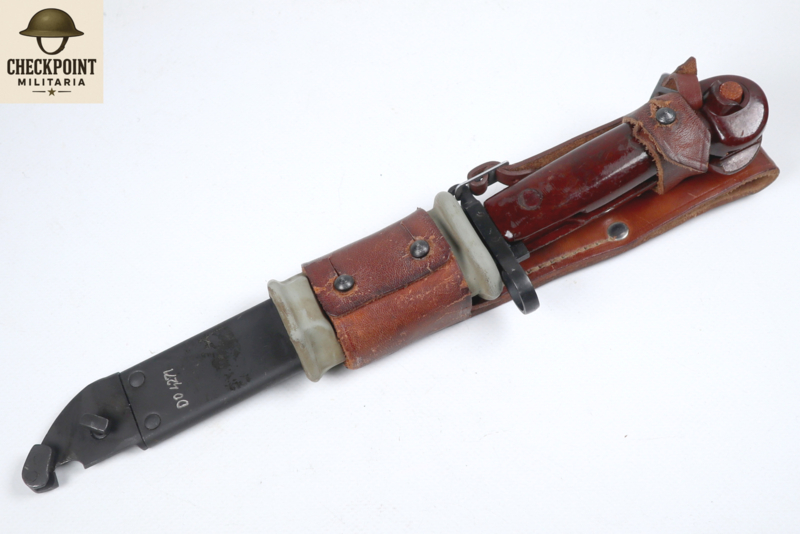
Romanian AKM Type I Bayonet
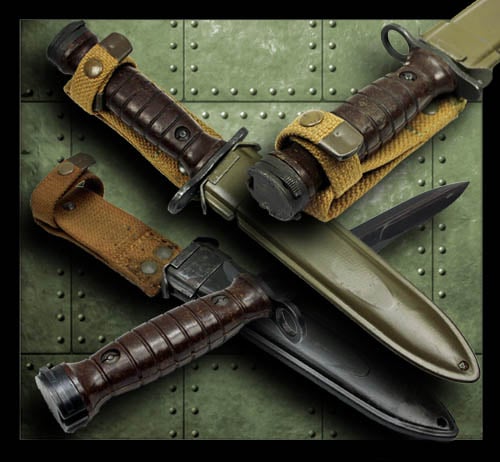
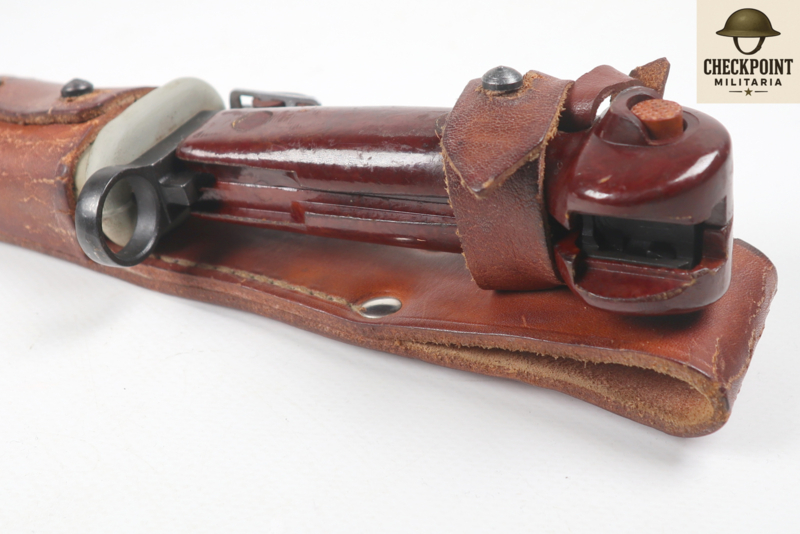
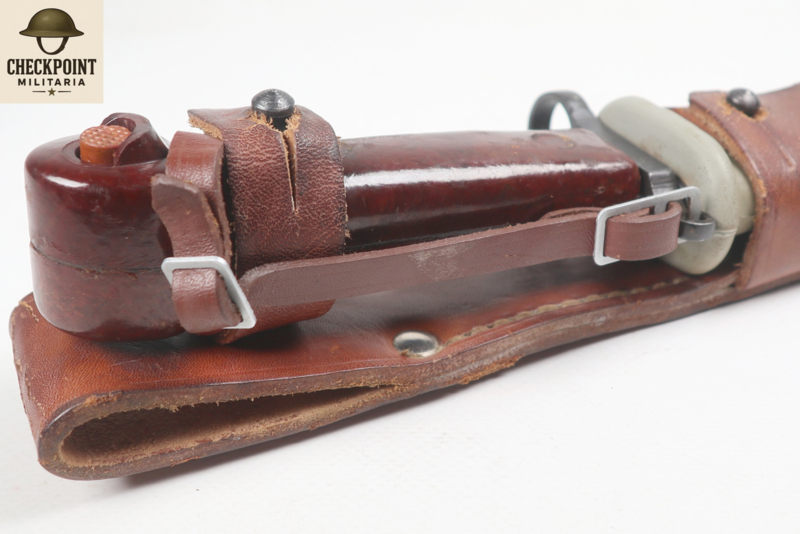
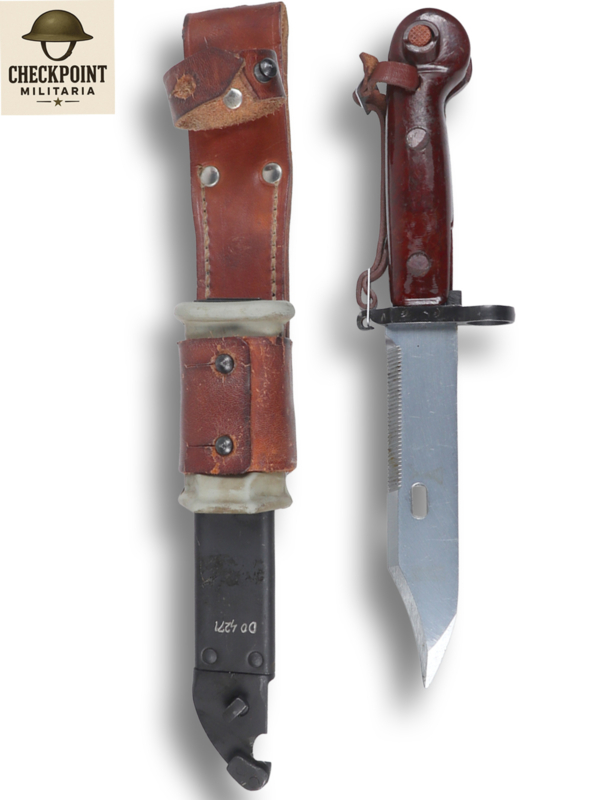
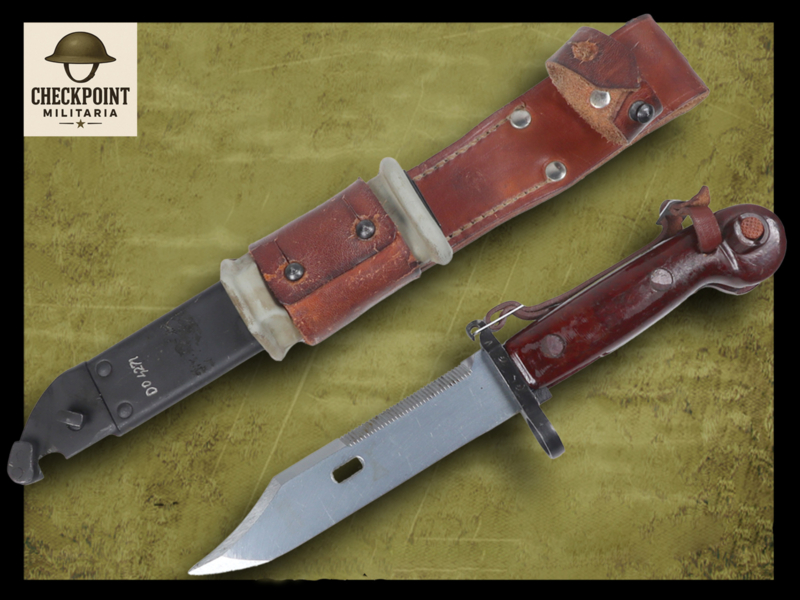
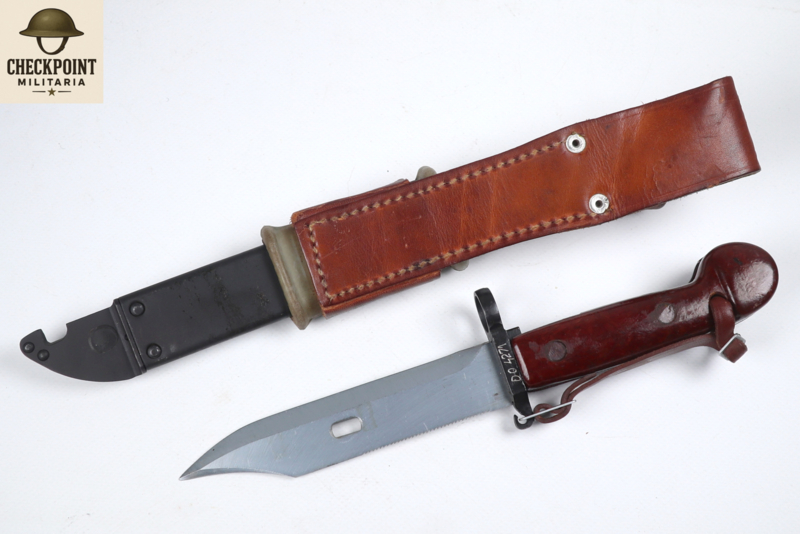
Romanian AKM Type I bayonet (based on the Soviet 6X3 design). The bayonet was produced from 1963 to 1994 and was primarily intended for use on the Pistol Mitralieră model 1963 (PM md. 63) assault rifle, the Romanian variant of the Kalashnikov AKM.
Key Features & Design
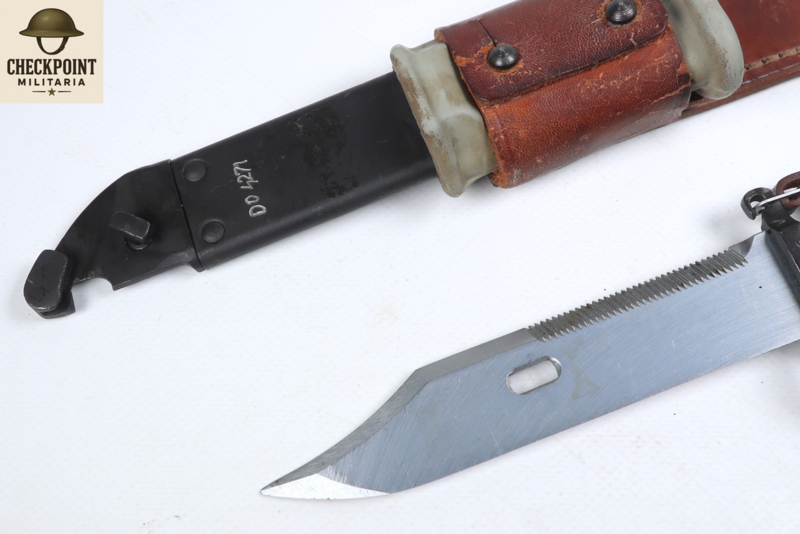
- Multifunctional blade: The matte stainless steel clip-point blade features a serrated or sawback spine. It is not razor-sharp, but rather designed for penetration and heavy field use.
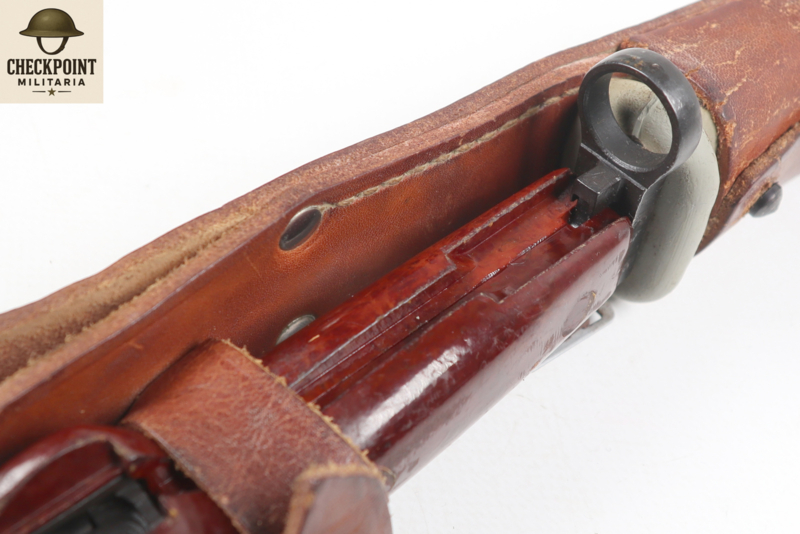
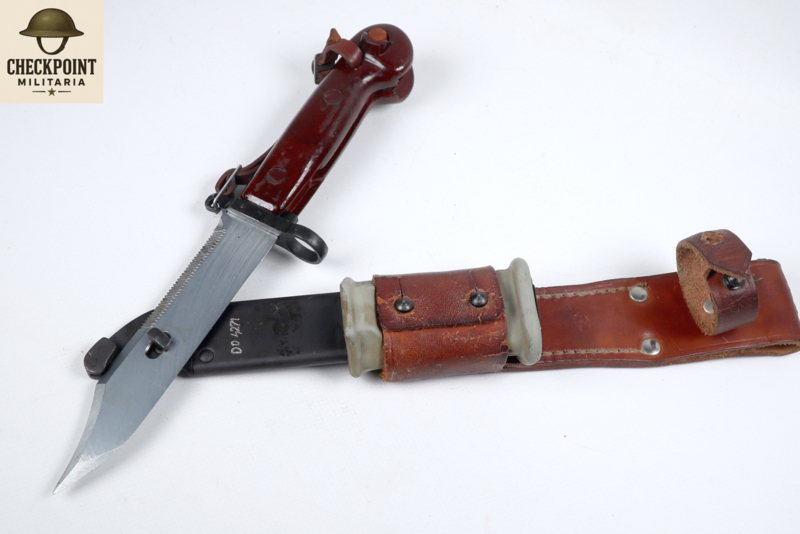
- Wire-cutter system: The blade features an oval hole. When the bayonet is hooked into the lug of the steel scabbard, the assembly forms a lever capable of cutting (live) barbed wire.
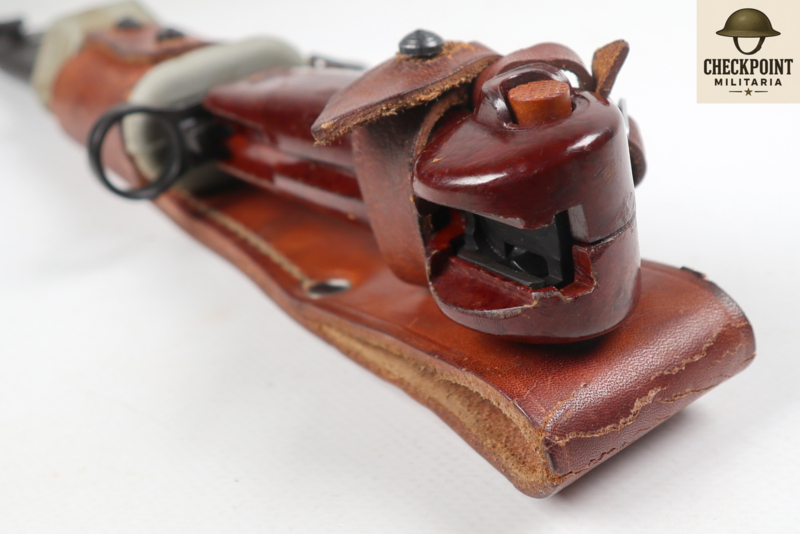
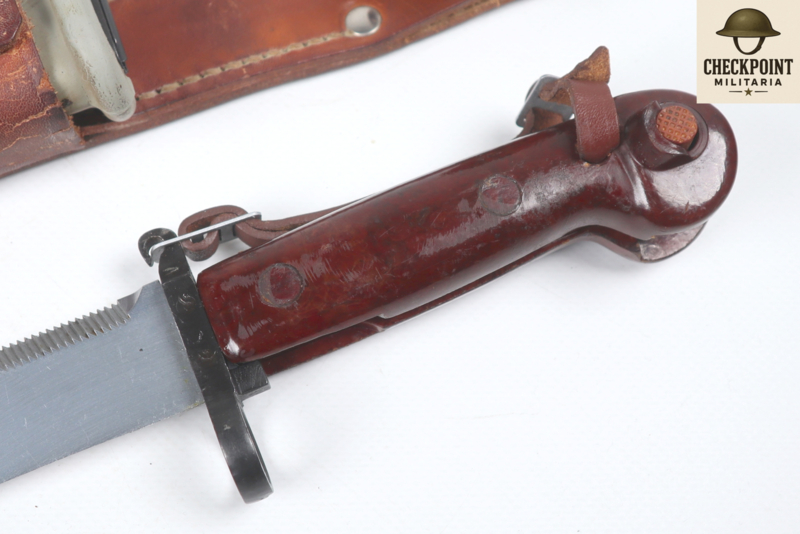
- Bakelite handle: The grip consists of a distinctive reddish-brown, marbled plastic (often referred to as Bakelite) with a large, bulbous pommel. This plastic pommel was fragile and prone to breaking if used as a hammer, an issue resolved in later Type II bayonets with a metal pommel.
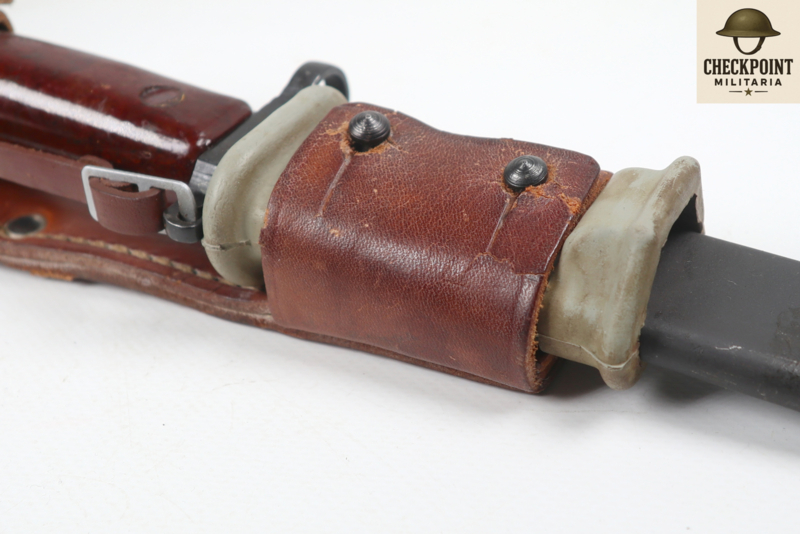
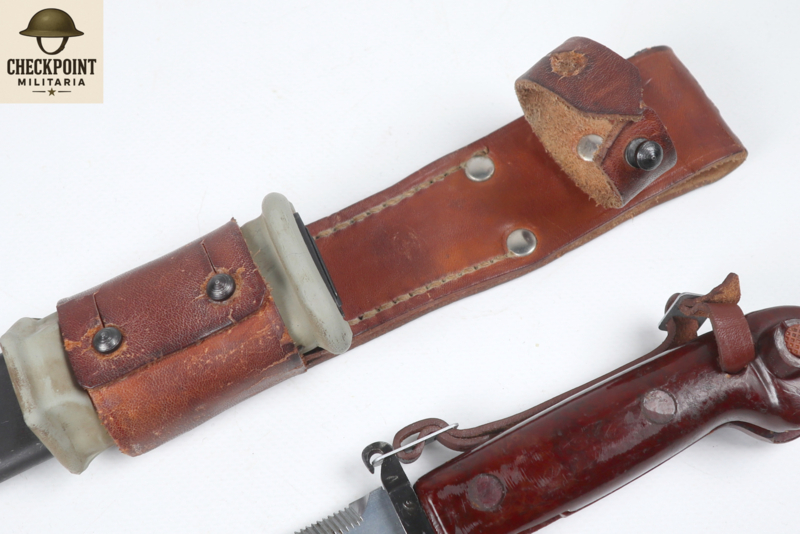
- Black steel scabbard: The scabbard is made of black blued sheet steel and is fitted with a thick, detachable rubber insulator (usually gray or tan) to protect the user from electrical shocks while cutting wires.
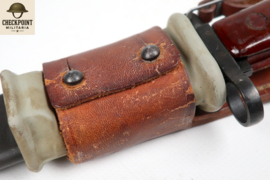
- Frog: Unlike the Soviets, who usually attached a short leather hanger directly to the scabbard, Romania used a leather carrier that wraps entirely around the rubber insulator.
Collector Information & Identification
- Serial numbers: Original military-issued sets feature factory matching serial numbers stamped on both the crosspiece and the scabbard. However, unnumbered "New Old Stock" examples directly from military arsenals also exist.
- PSL variant: A specific variant of the Type I bayonet was issued with the Romanian PSL sniper rifle. These bayonets are identical but carry a serial number with a specific letter prefix (such as D, E, F, or H) that matches the rifle.
- Rarity: The Romanian Type I bayonet is highly common and affordable on the global surplus market due to being produced and exported in massive quantities to conflict zones (including the Gulf War, where many US soldiers brought them back as souvenirs).