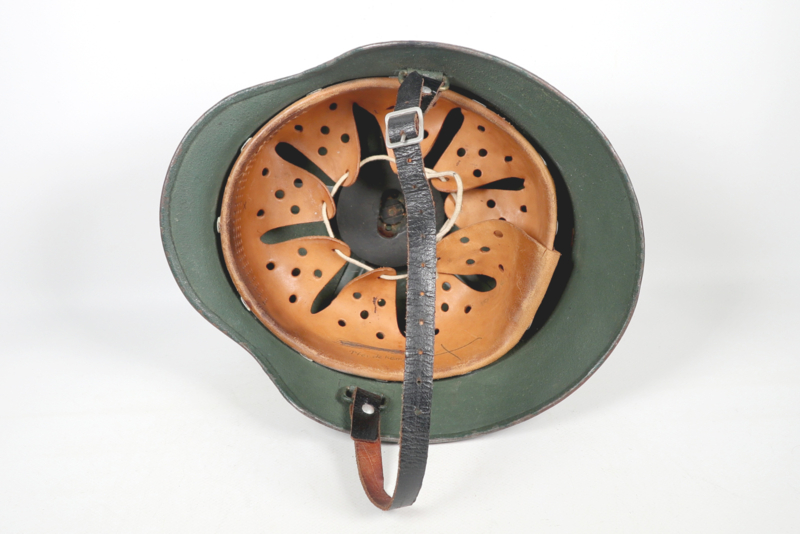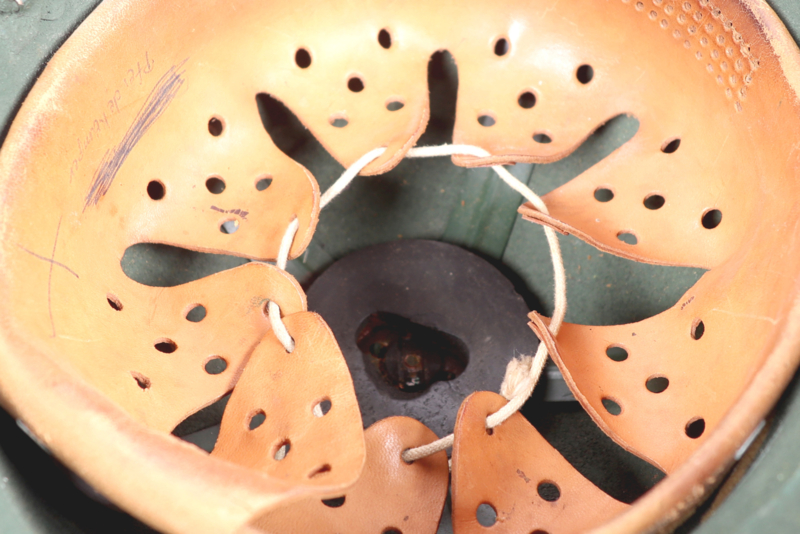
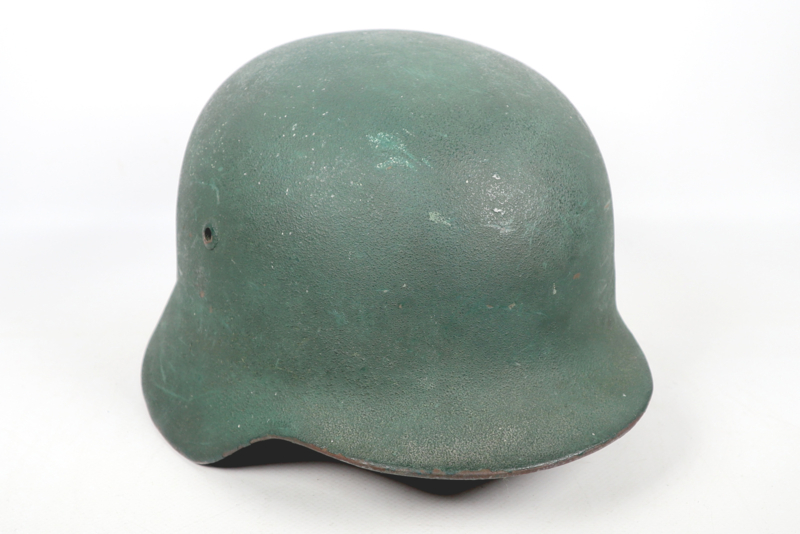
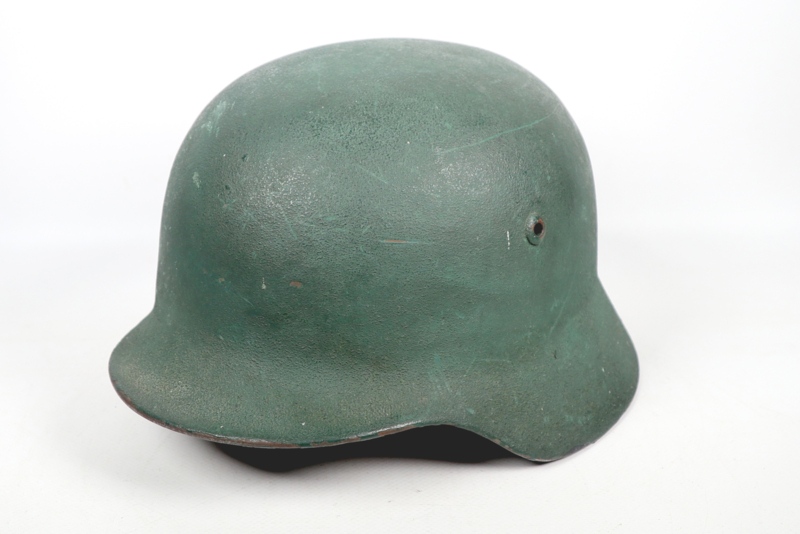
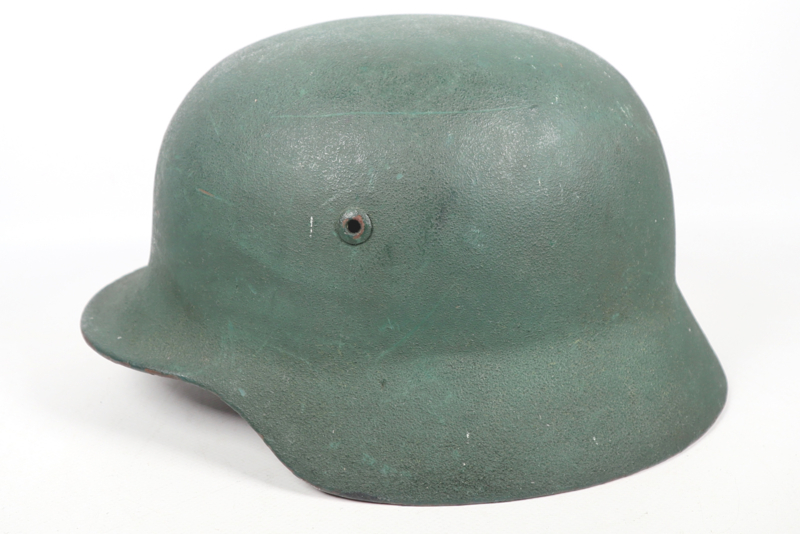
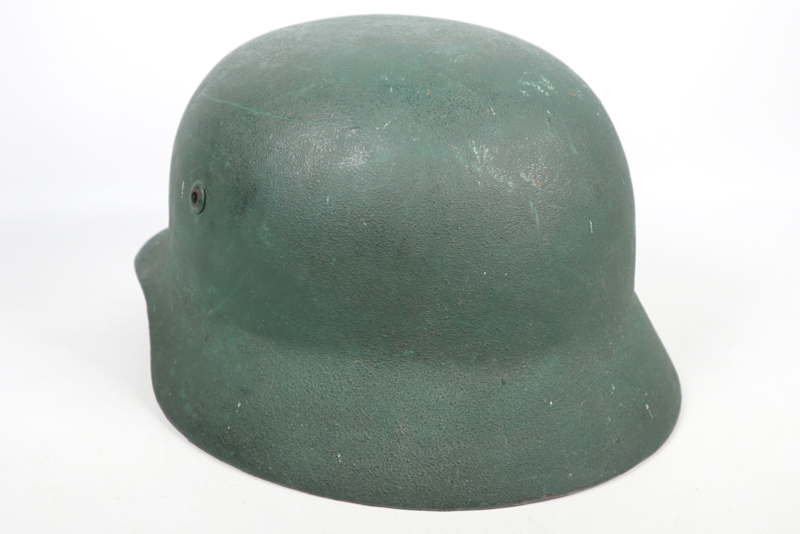
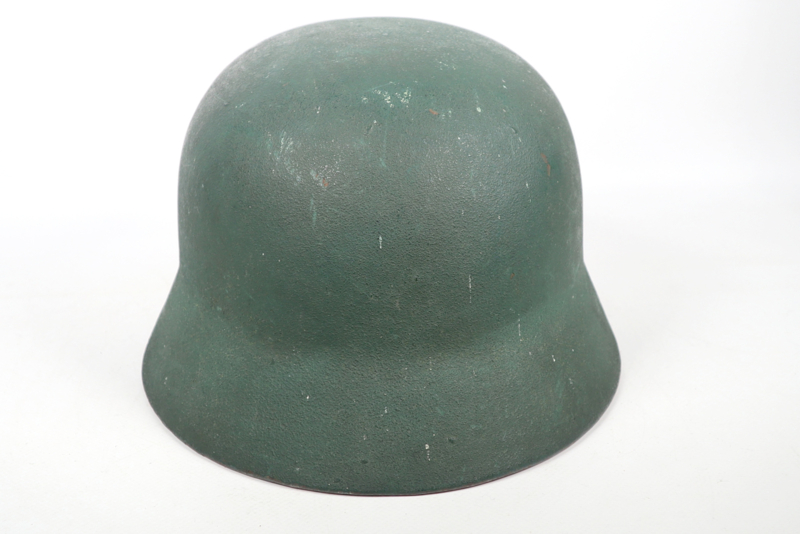
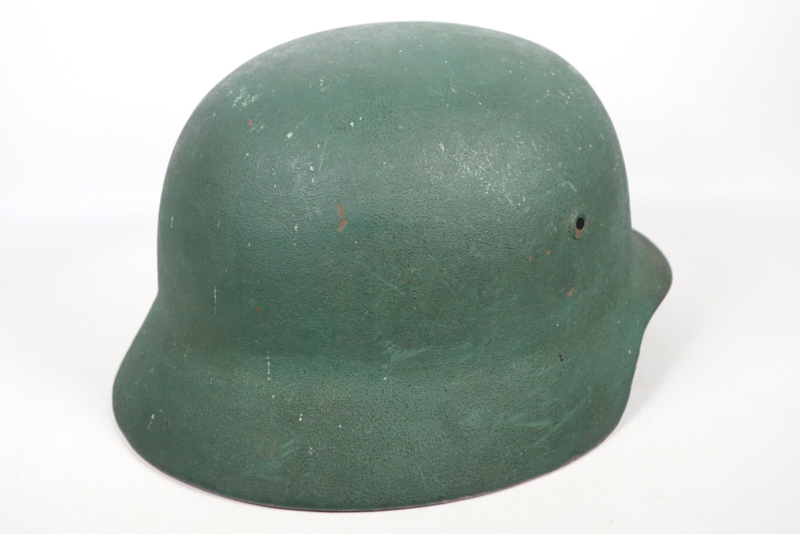
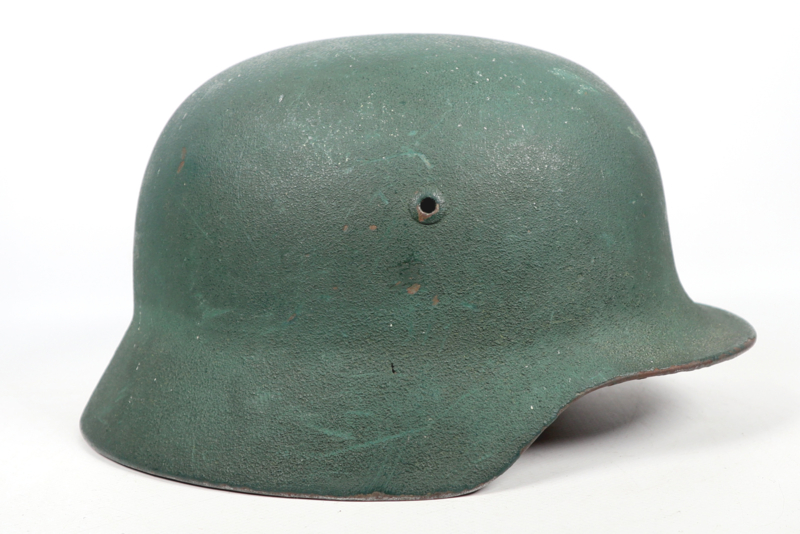
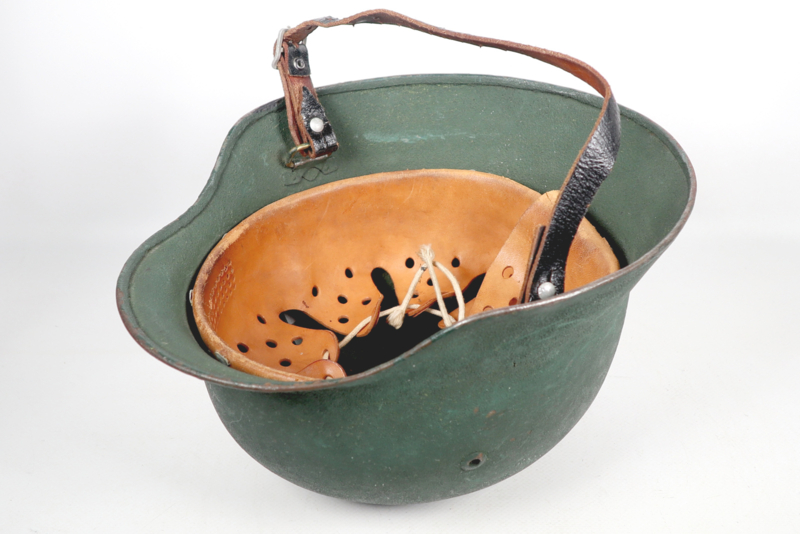
German "Bundesgrenzschutz" M-35 Helmet
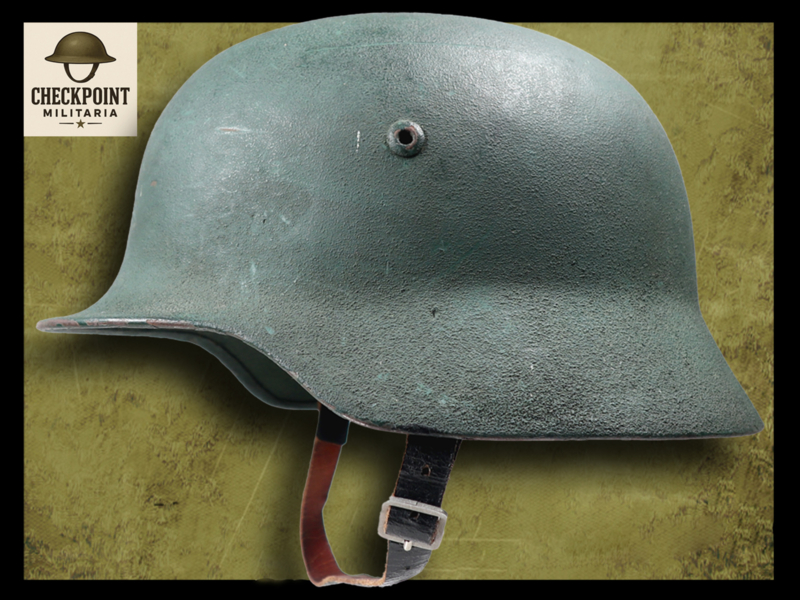
The Bundesgrenzschutz (BGS), the West German Federal Border Guard, used helmets based on the classic German M35 design after World War II (from its founding in 1951).
Key features
Although the appearance closely resembles the wartime models, there are specific differences:
- Model: The helmet is often referred to as the M35/53 or simply the BGS helmet. It is a direct continuation of the Stahlhelm shape, as the BGS had a paramilitary character.
Ventilation openings
- Wehrmacht M35: Features ventilation openings consisting of separate bushings (grommets) pressed into the shell. This gives the opening a sharp, raised edge.
- BGS M35/53: In many post-war models, the ventilation holes are stamped directly into the shell (similar to the later wartime M40 model) or are sometimes even entirely absent or replaced by a different type of ventilation.
Liner and Fastening
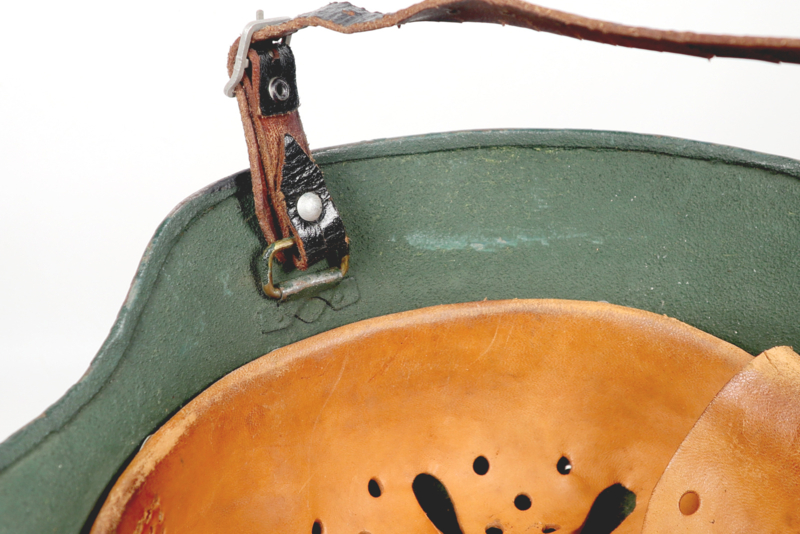
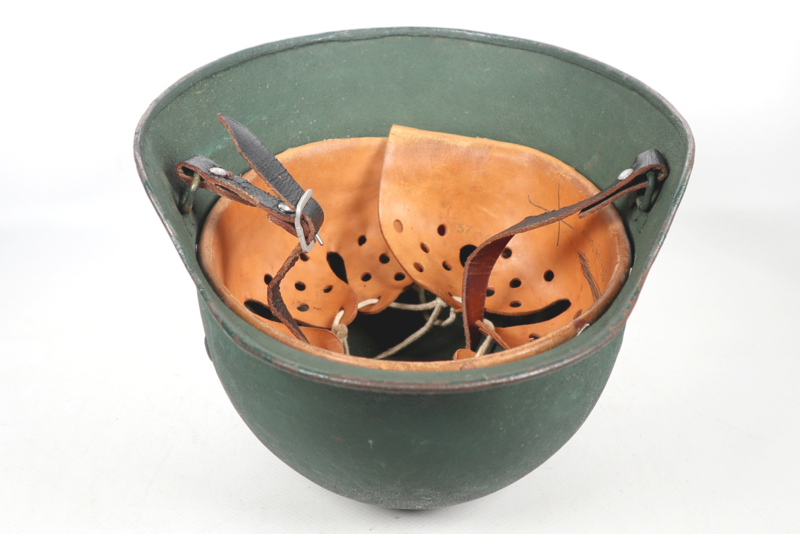
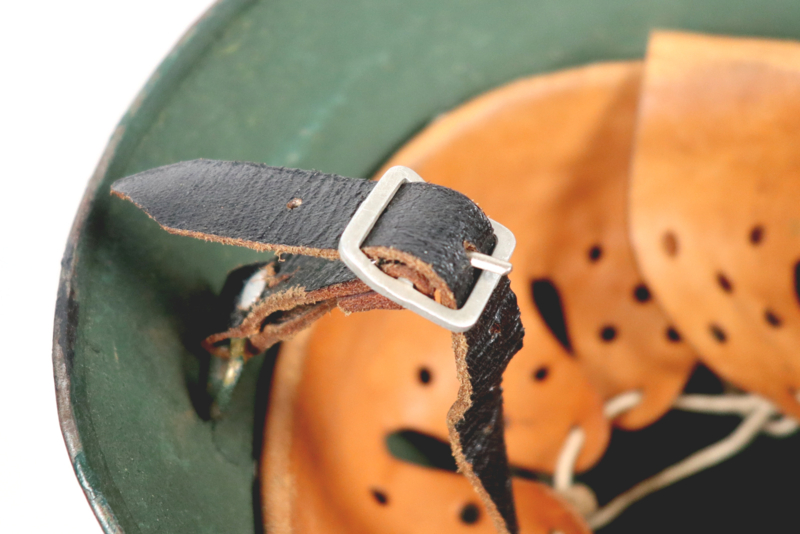
- War Model (M31): Secured with three rivets (split pins) clearly visible on the outside of the helmet (two at the front, one at the back).
- BGS Model (M53): The post-war model is often recognizable by the absence of these three rivets. Instead, the liner is often secured with a central bolt on top of the helmet (the so-called "dome screw") or via another system where the holes in the side are welded shut.
Markings and Stamps
- Wehrmacht: Always contains a manufacturer code and a size stamp (e.g. ET64, Q66) on the inside of the rim (left or rear), along with a lot number.
- BGS: Post-war helmets lack these specific wartime manufacturer codes or feature more modern markings from manufacturers such as Linnemann-Schnetzer or Quist (who continued production after the war).
Finish and Paint
- Color: BGS helmets feature a specific dark green (BGS green) or grey-green glossy paint. War helmets are usually finished in field grey, apple green, or have rough camouflage coatings.
- Rim: Both models have a rolled rim, unlike the last war model (M42), which has a sharp, unfinished rim.
Context and Use
- Politically Sensitive: While the Bundeswehr (the regular army) switched to American-style helmets (the M1) in 1955 to distance itself from the war past, the BGS retained the traditional German design.