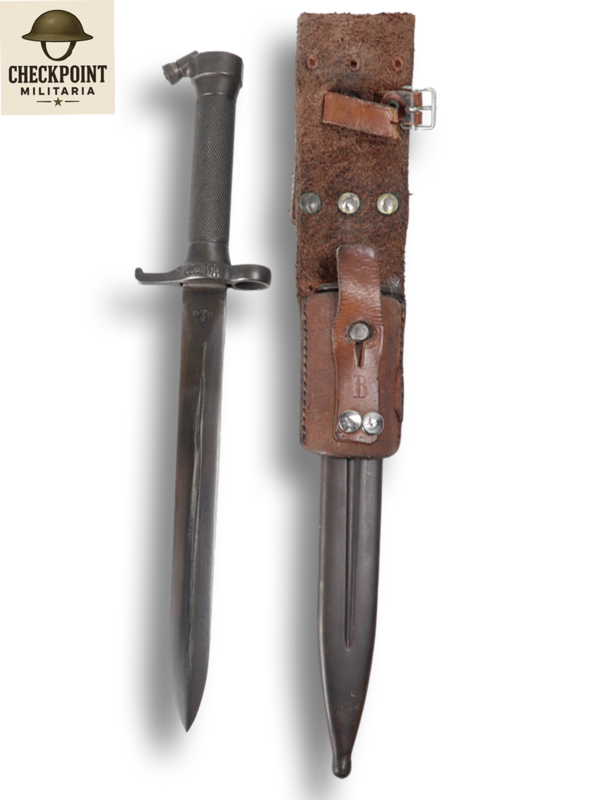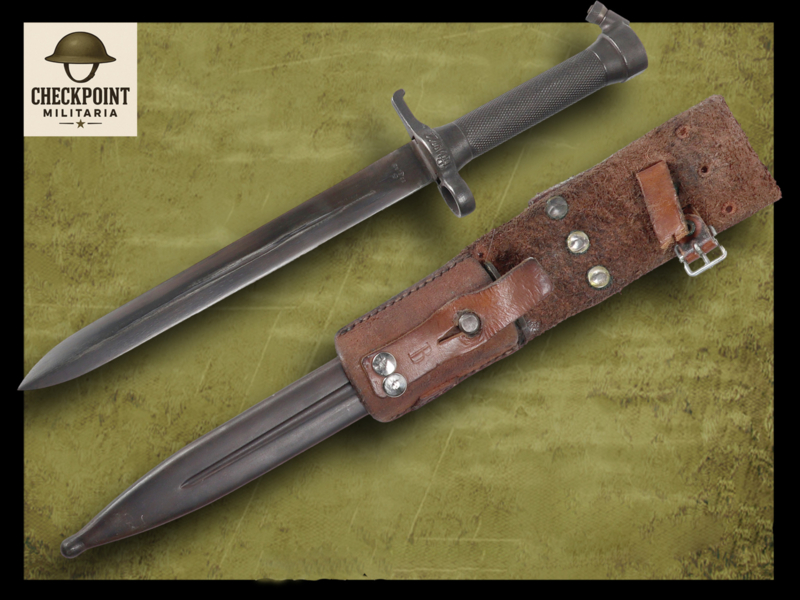
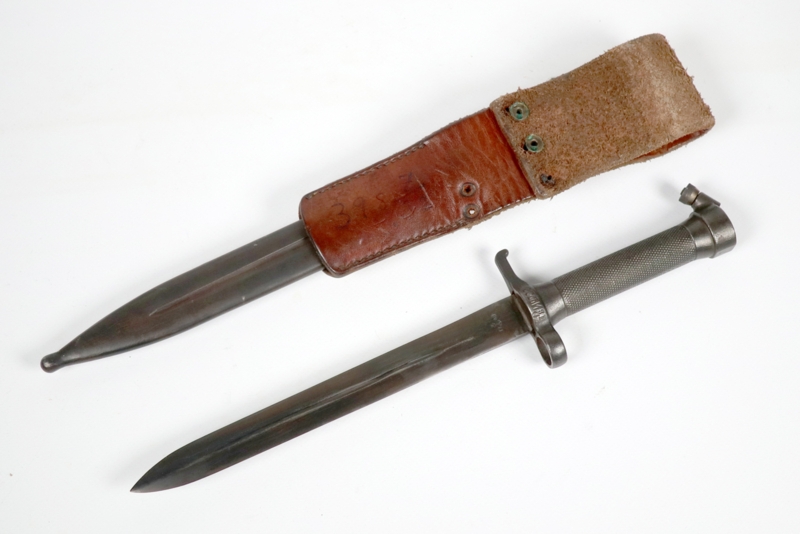
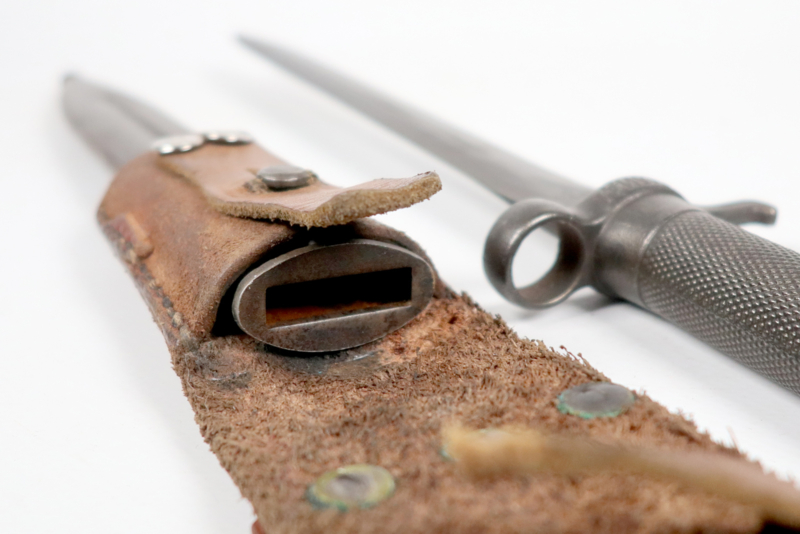
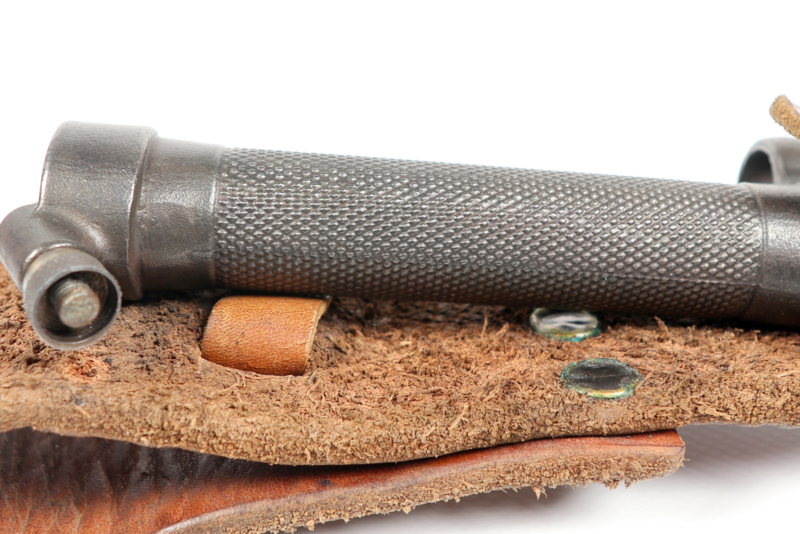
Fake Swedish M1896 Bajonet
While the Swedish M1896 Mauser bayonet is a common and affordable surplus item, high-quality fakes exist—many of which originated from sellers in China in the 1990s. These replicas can be surprisingly well-made, often including accurate-looking markings and details.
How to Identify a Fake (Replica) M1896
If you are looking at a potential M1896, check for these common red flags that distinguish reproductions from originals:
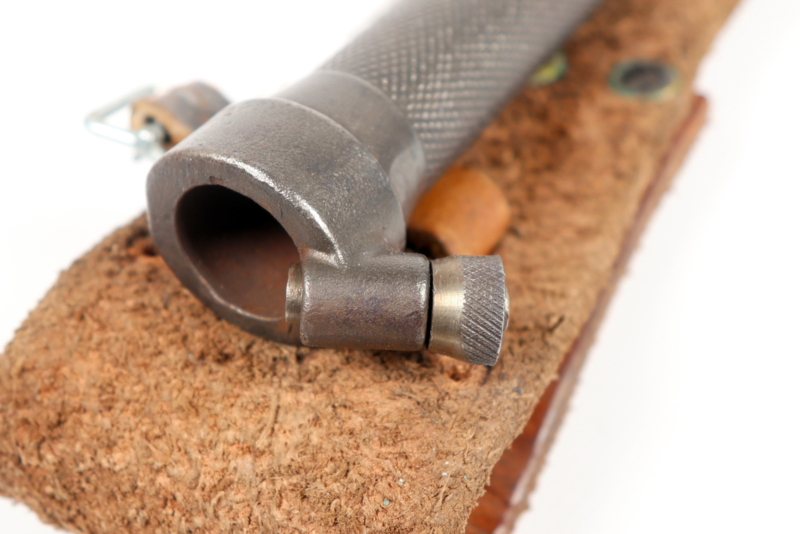
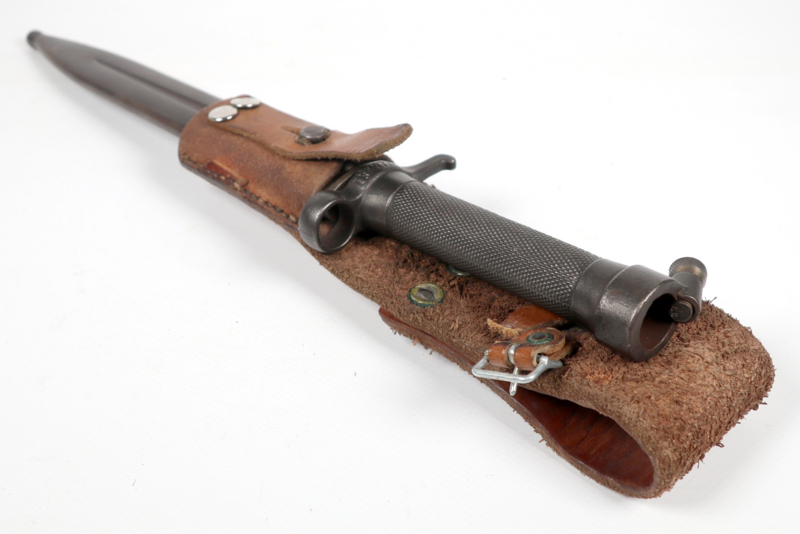
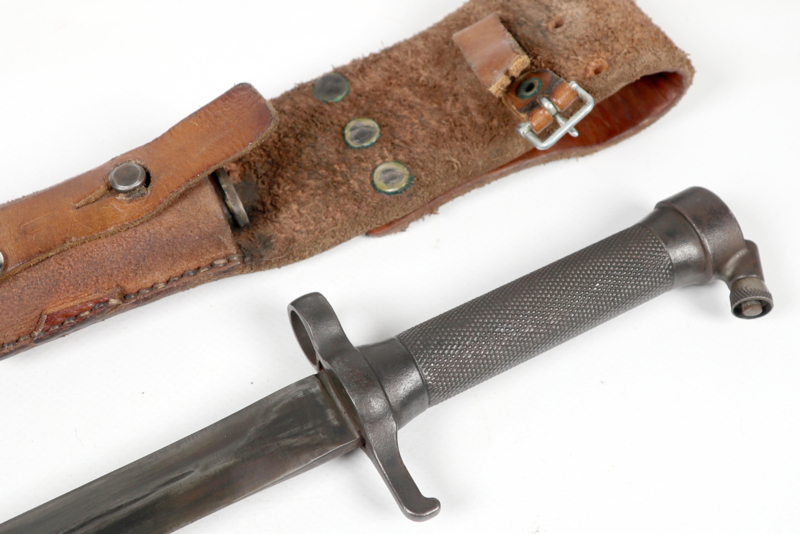
- Handle Construction: The grip on fakes is typically casted rather than machined, often resulting in a thinner handle than the original.
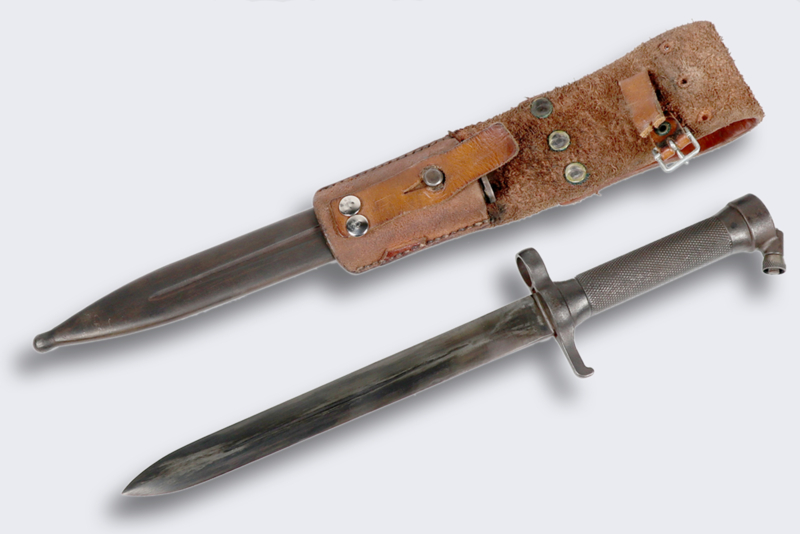
- Blade Attachment: On many replicas, the blade is welded to the grip. Authentic Swedish bayonets were manufactured with much higher industrial standards.
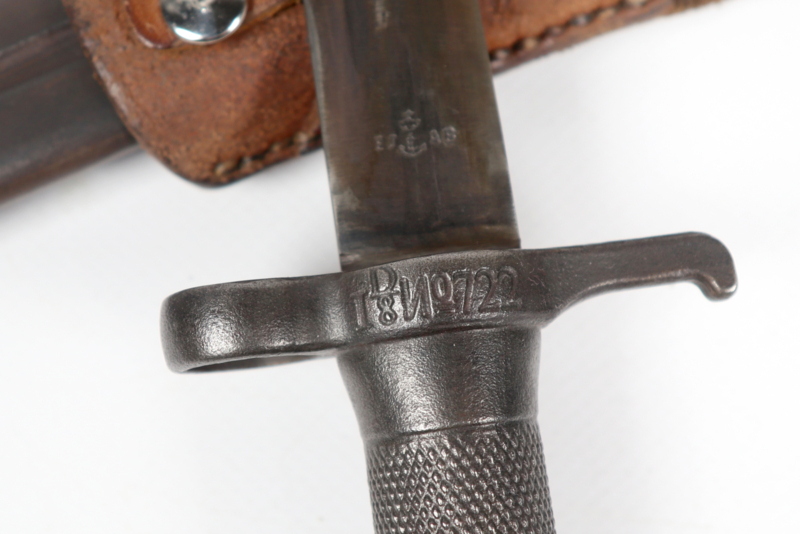
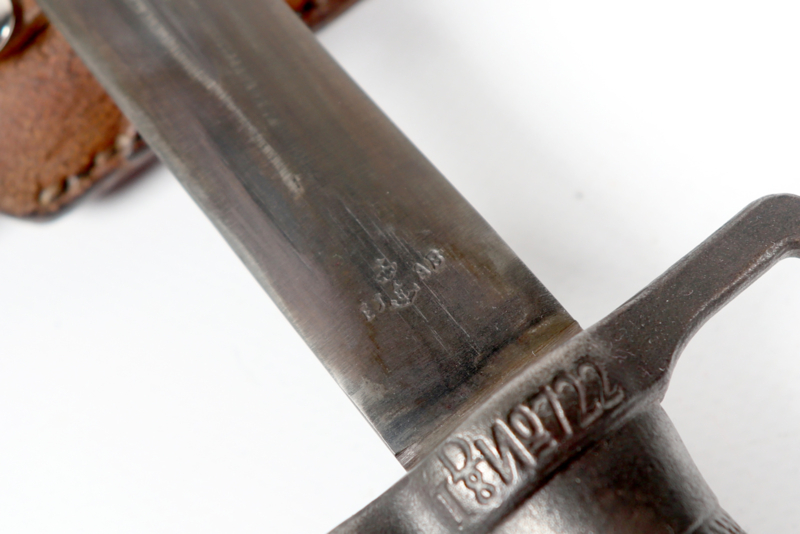
- Marking Quality: Look closely at the stamps on the blade and guard. Fakes often have badly aligned markings that look cast into the metal rather than struck with a die. Authentic pieces should have sharp, struck markings.
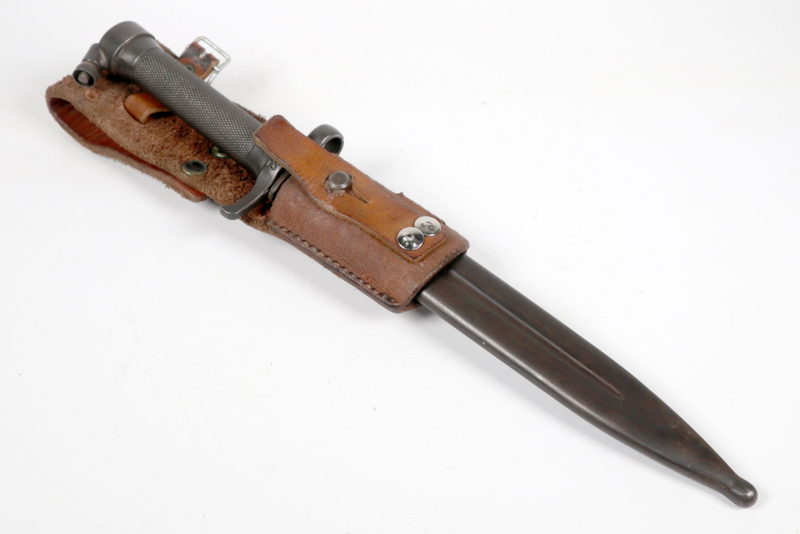
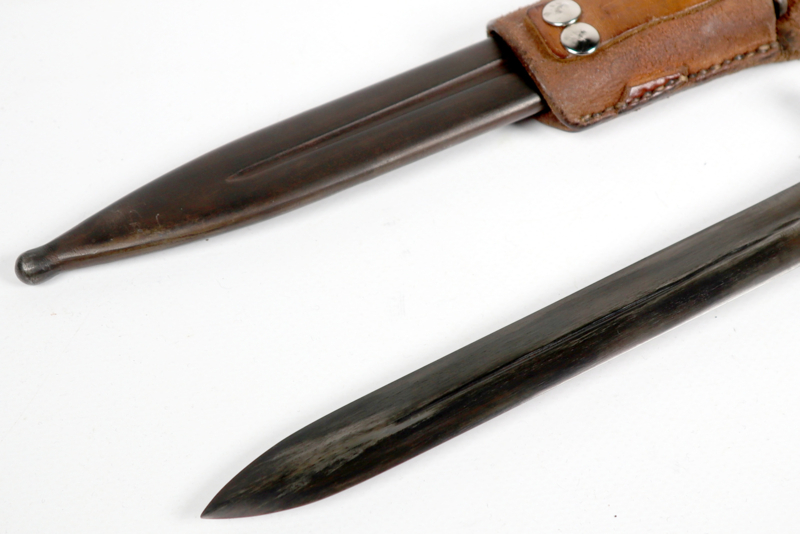
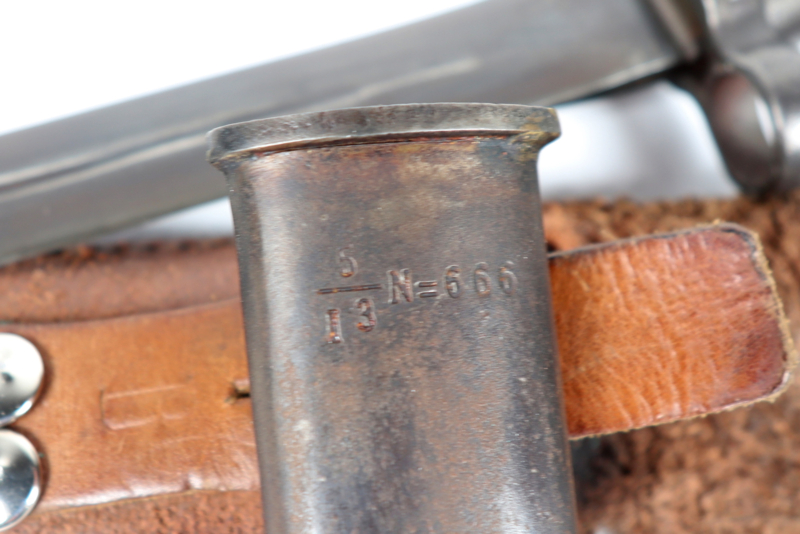
- Scabbard Details: Reproduction scabbards often have uneven markings and a mouthpiece that lacks the "sharp" defined edges found on original Swedish production.
- Overall Finish: Real M1896 bayonets are known for their high-quality "engine-turned" or knurled tubular steel grips and polished blades. Replicas may have a "muddier" or less precise texture on the knurling.
Strap broken.
- These bayonets are now rarely offered, most of them are in collections.
Authentic Identification Tips
Genuine Swedish M1896 bayonets were produced by three main manufacturers. Look for these specific maker marks to help verify authenticity:
- EJ-AB: Eskilstuna Jernmanufactur AB (marked with an anchor).
- Carl Gustaf: Marked with a "C" under a crown.
- EAB: Erik Anton Berg (the rarest of the three)