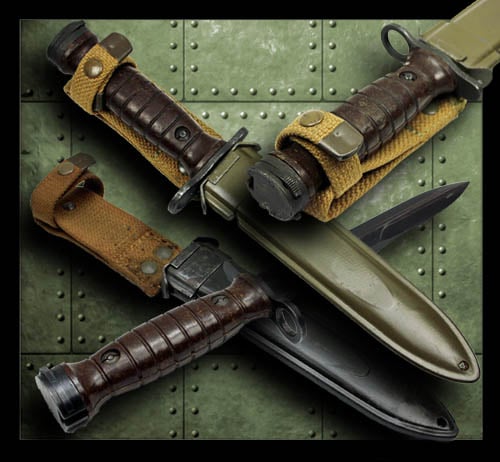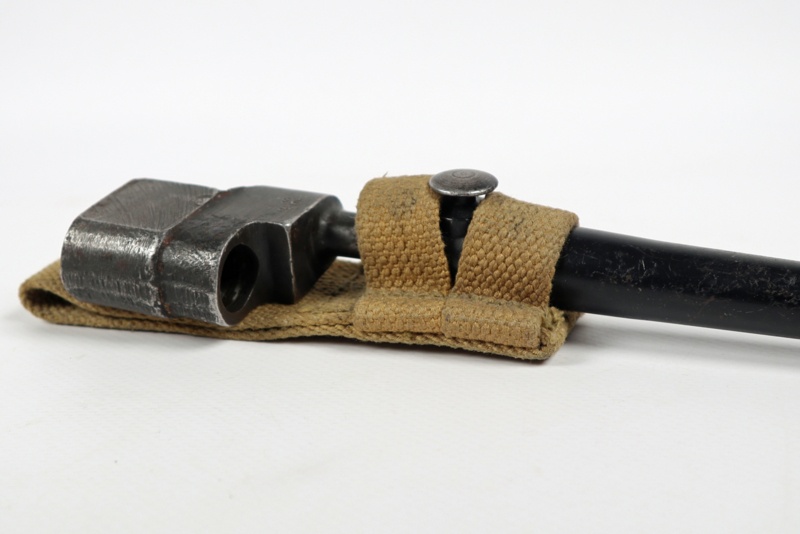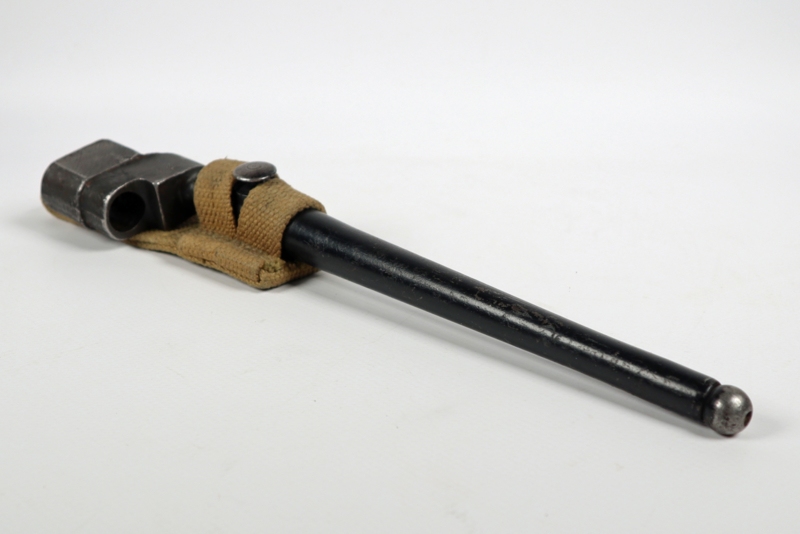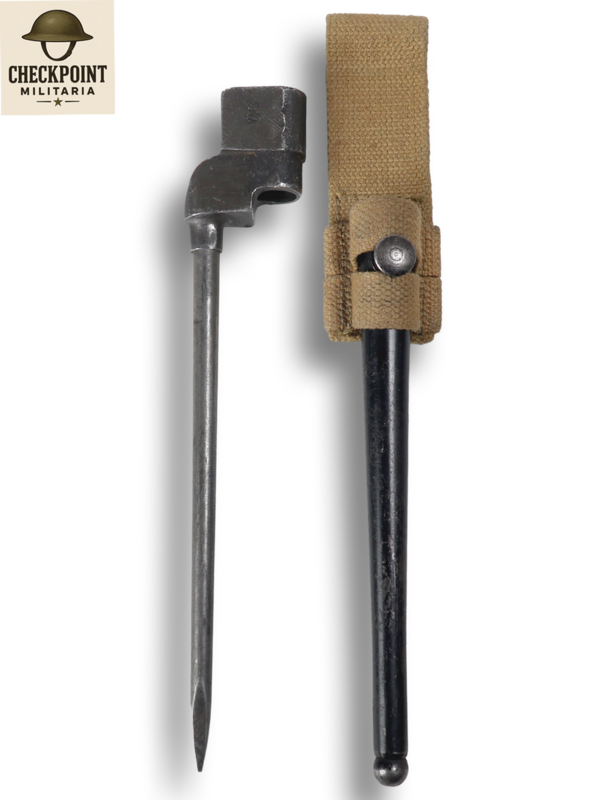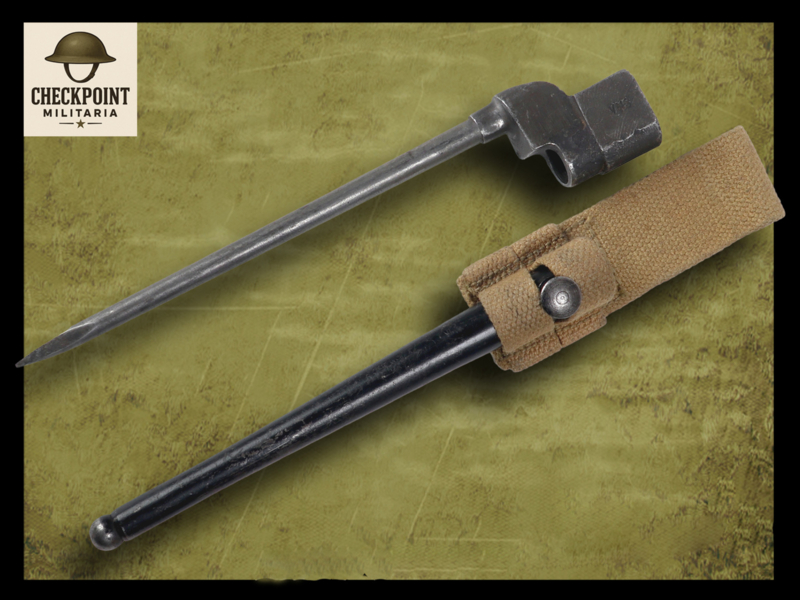

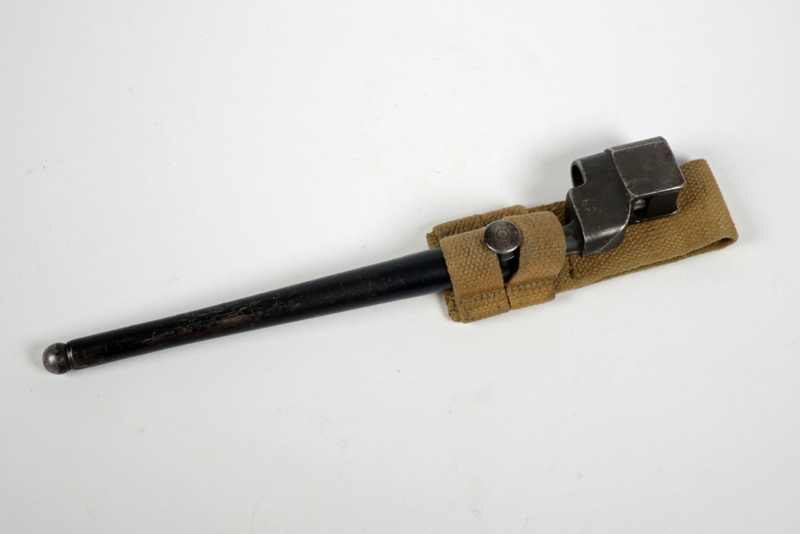
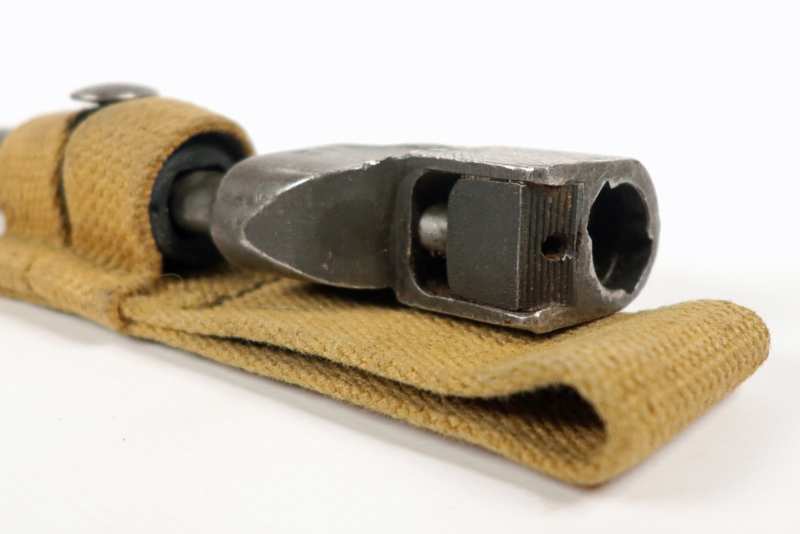

British No.4 MK II socket bayonet
The British No. 4 Mk II socket bayonet is the most widely produced variant of the "spike" bayonet designed for the Lee-Enfield No. 4 rifle. Commonly nicknamed the "pig-sticker," it was introduced in 1941 as a simplified version of the earlier Mk I to speed up wartime production.
Key Features
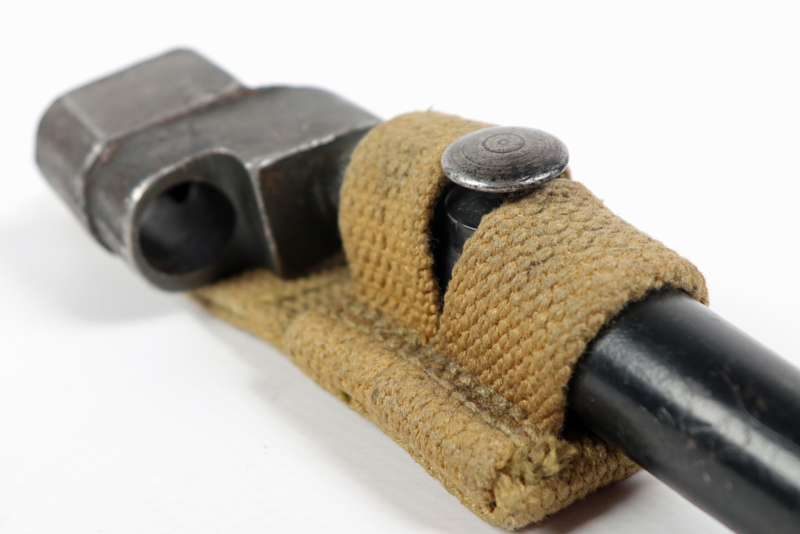
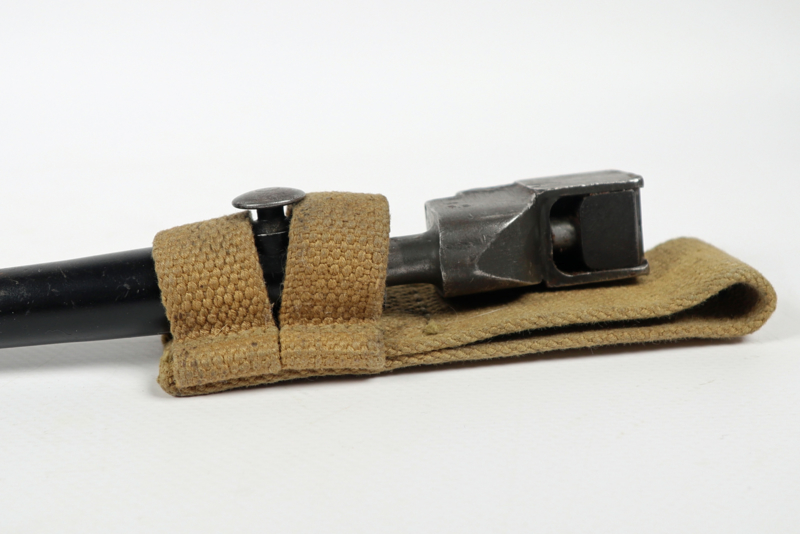
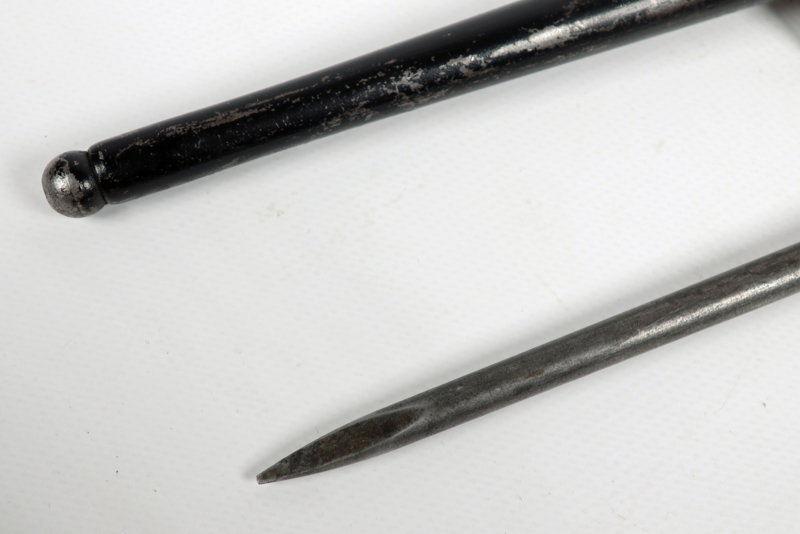
- Blade Design: Unlike the Mk I, which had a cruciform (cross-shaped) fluted blade, the Mk II features a simple, smooth circular section spike roughly 8 inches long.
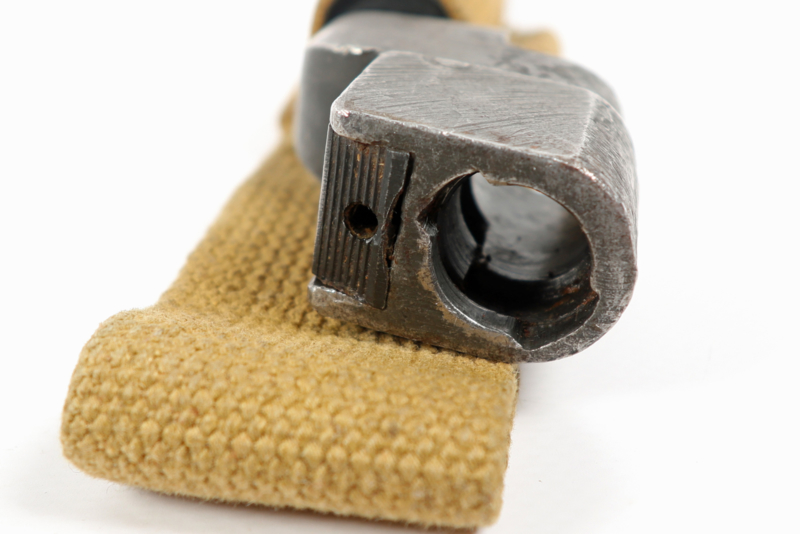
- Construction: The socket and blade are forged as a single solid piece of steel.
- Attachment: It uses a quarter-turn rotation to lock onto two lugs at the muzzle of the No. 4 rifle.
- Finish: Typically found with a heavily blued or parkerized (dull grey/black) finish.
Major Manufacturers & Markings
Over 3 million No. 4 Mk II bayonets were produced by several contractors across the UK and North America:
- Singer Manufacturing Co. (Scotland): Stamped with the dispersal code "N67" or "SM".
- Savage-Stevens Co. (USA): Produced roughly 1.25 million under the Lend-Lease Act, typically marked with a square "S".
- Long Branch (Canada): Marked with a "B" nested inside an "L".
- Howard & Bullough (UK): A smaller producer marked with their own specific manufacturer codes.
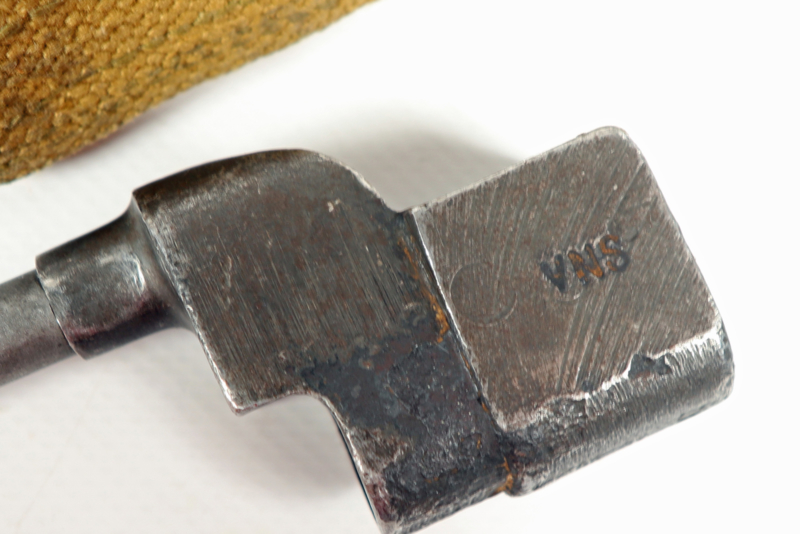
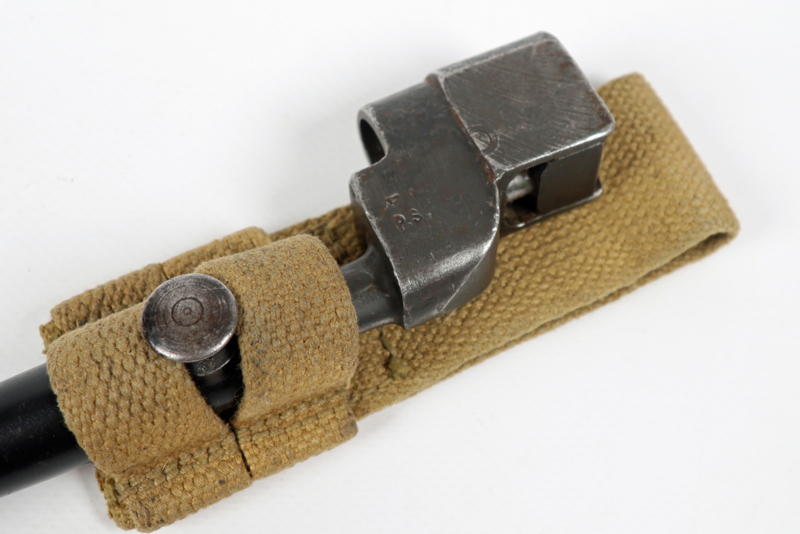
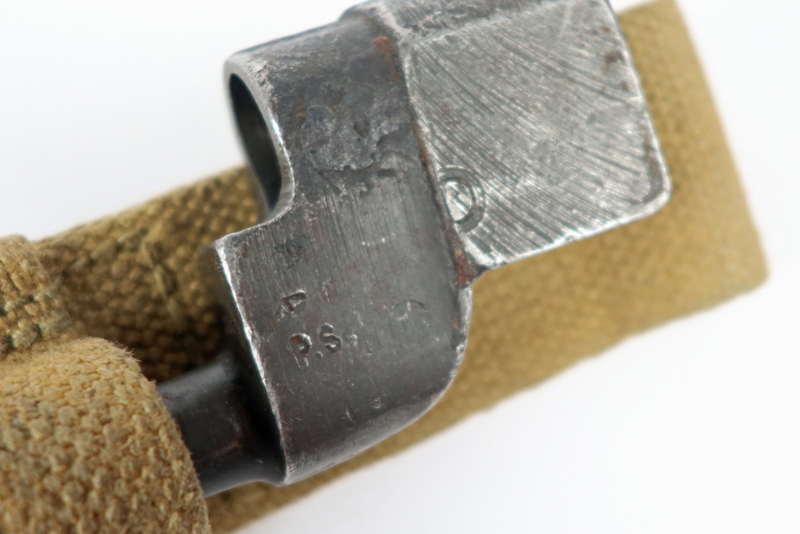
The markings P.S. and VNS on this socket bayonet identify a No. 4 Mk II* (Mark 2 Star) variant, characterized by its two-piece construction where the blade is welded to the socket. These marks reveal the specific British companies involved in its wartime production:
Manufacturer Identities
- P.S. (or P.S. & S. Ltd): Stands for Prince-Smith & Stells of Keighley, Yorkshire. Originally a manufacturer of textile machinery, they became the primary assembler of the Mk II* variant, producing over 1 million units between 1942 and 1945.
- VNS: Stands for Viners Ltd. of Sheffield. They were a cutlery firm subcontracted specifically to forge the socket blocks, which were then sent to Prince-Smith & Stells for final assembly with the spike.
Key Characteristics of This Variant
- Two-Piece Construction: Unlike the standard Mk II (one-piece forging), the Mk II* has a visible "step" or weld line where the spike meets the socket. This change allowed smaller subcontractors like Viners to produce parts independently to speed up supply.
- Marking Placement: Usually, "No 4 MK II*" and the "P.S." mark are on the left side of the socket, while the "VNS" mark is deeply stamped on the right side.
- Broad Arrow: You may also see a small arrow mark, which is the British War Department's acceptance stamp.