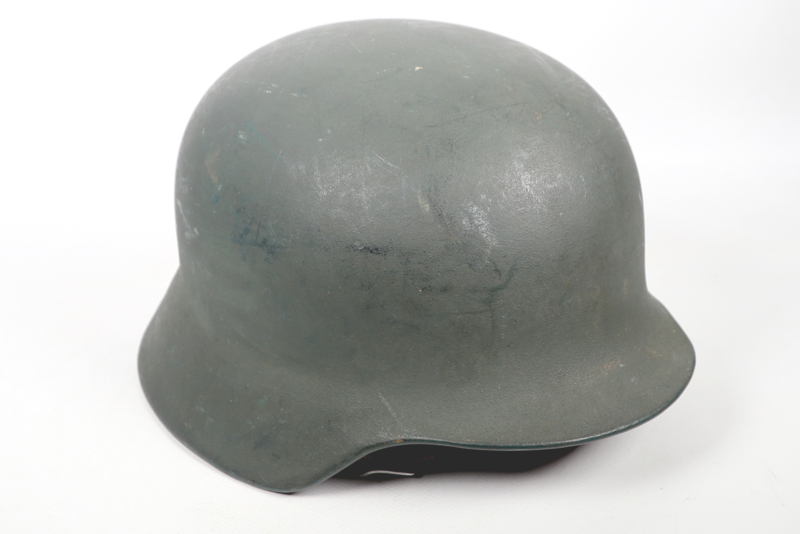
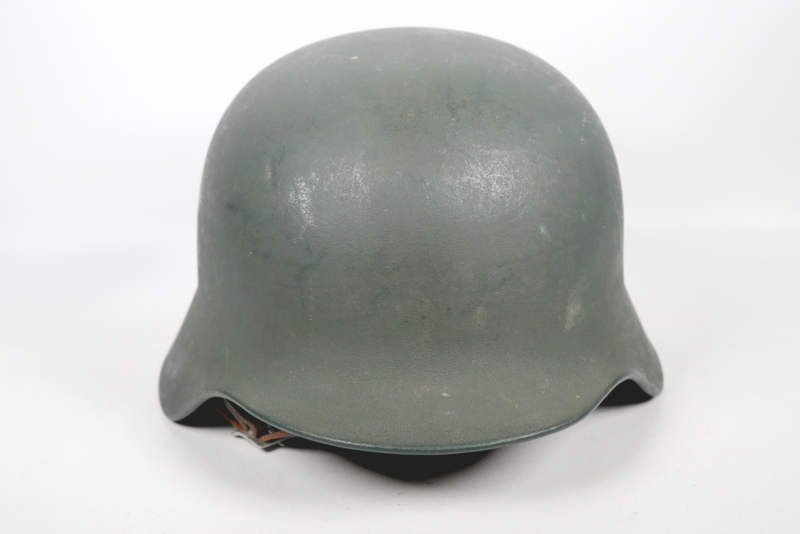
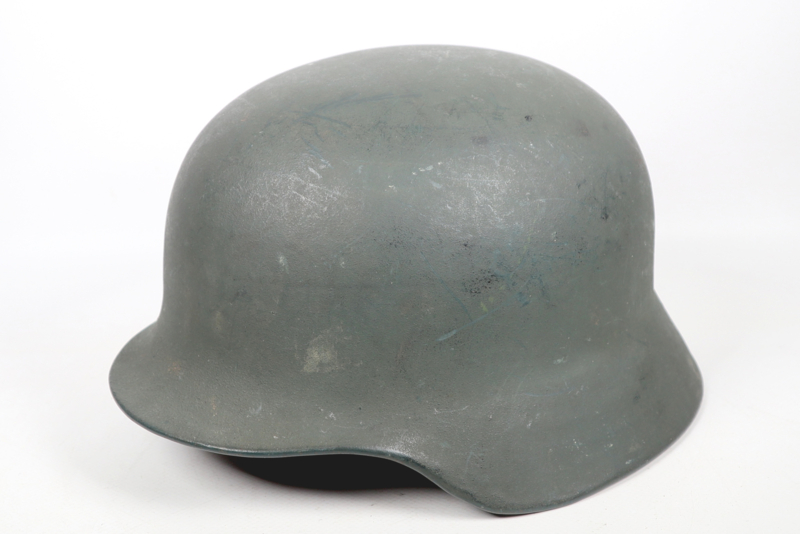
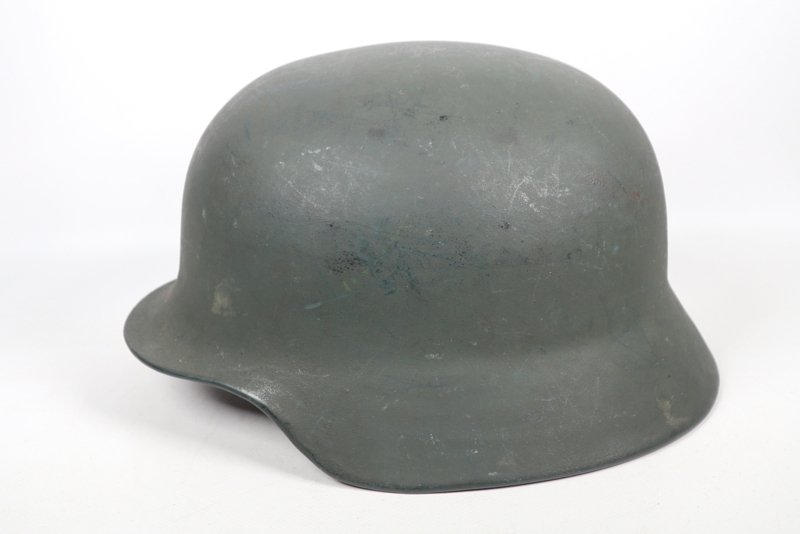
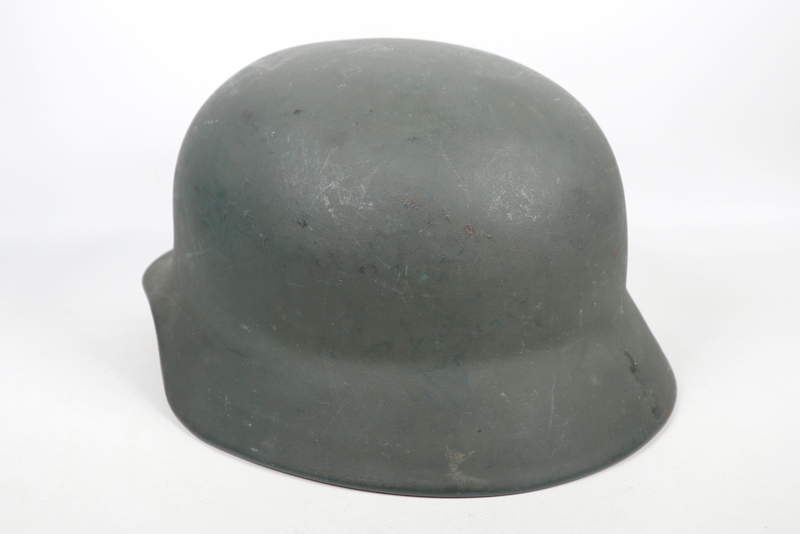
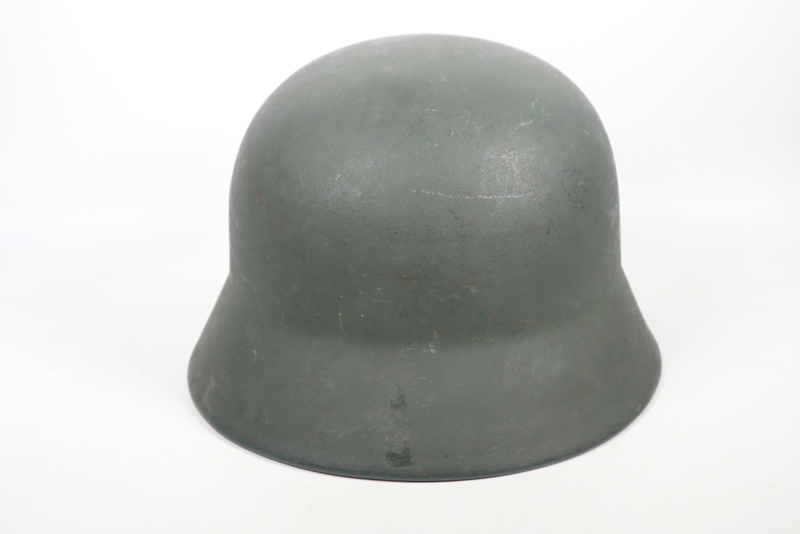
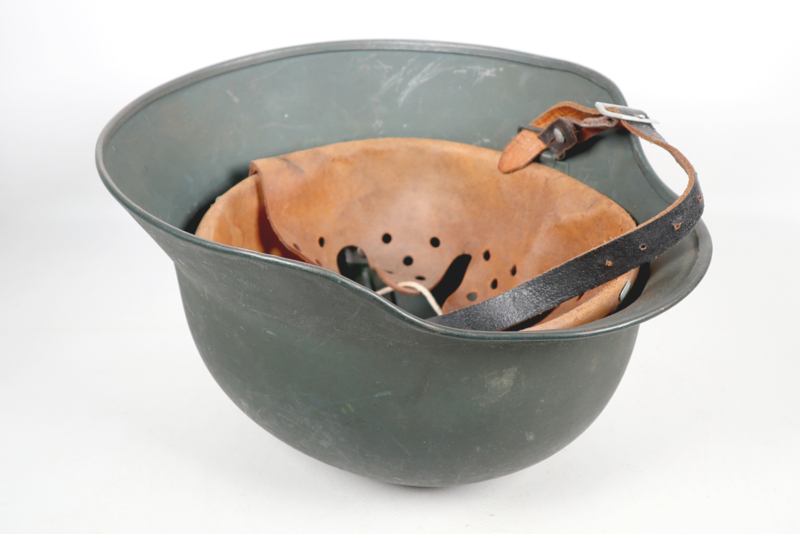
German "Bundesgrenzschutz" M-53 Helmet
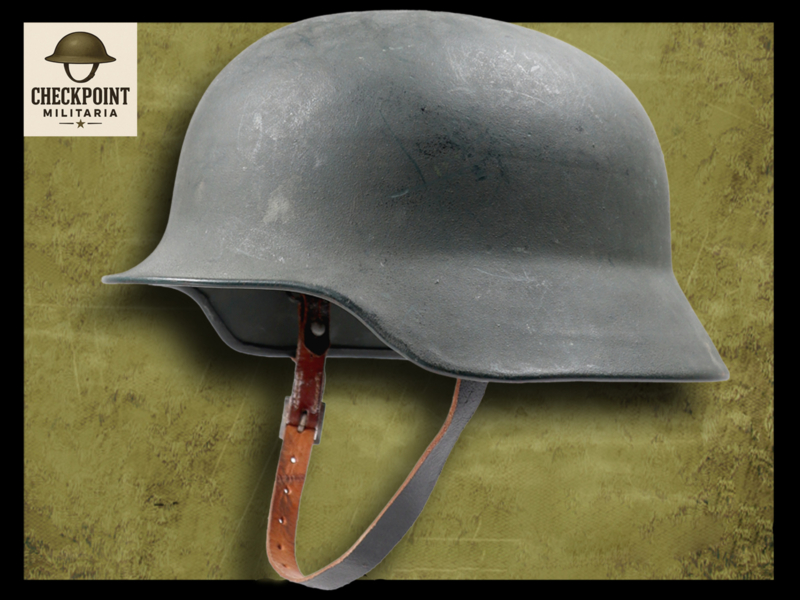
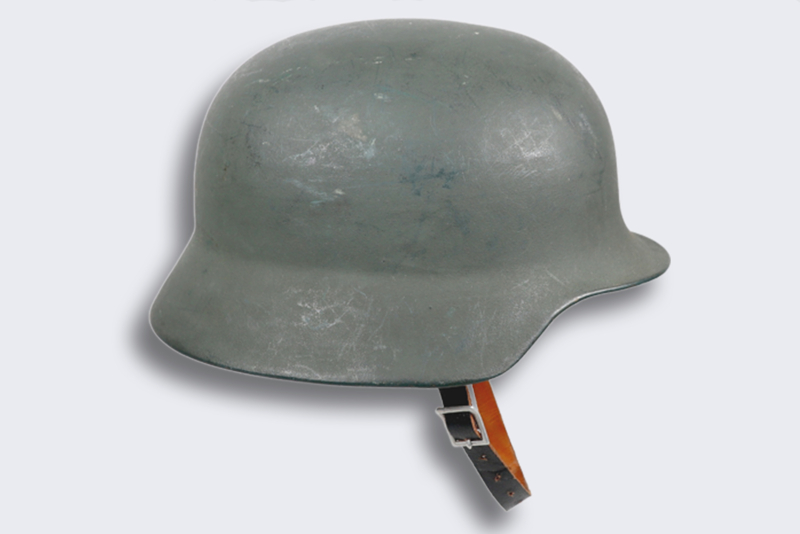
The German Bundesgrenzschutz (BGS) M-53 helmet (unofficially also called M35/53) is a West German steel combat helmet from the Cold War era. The federal border guard and the paramilitarily organized police used this helmet starting in the 1950s. Although the shape strongly resembles the classic German Stahlhelmfrom World War II, the M-53 model features crucial post-war modifications.
Key Features & Identification
- No external rivets: Unlike wartime models (M35, M40, M42), the M-53 has no three visible split pins/rivets on the outer shell to secure the liner.
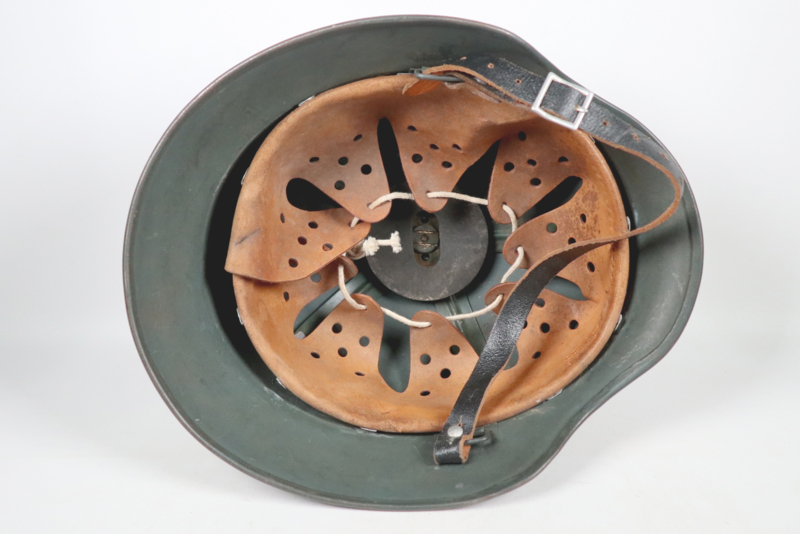
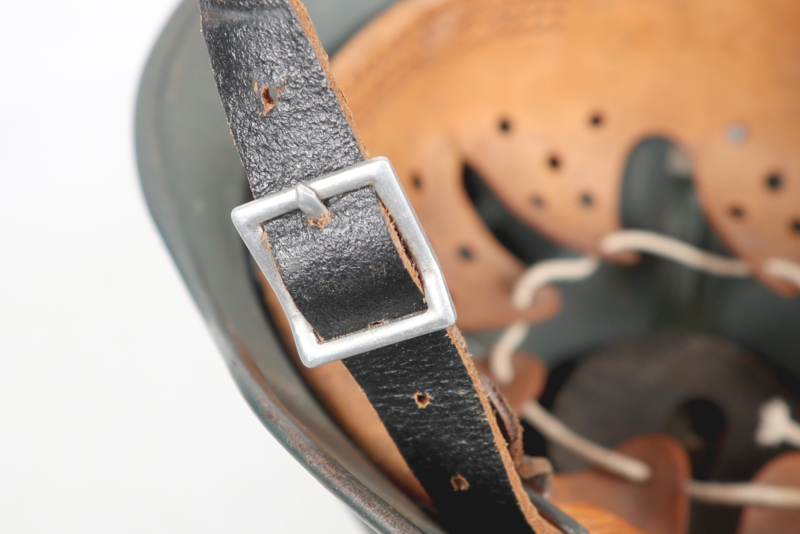
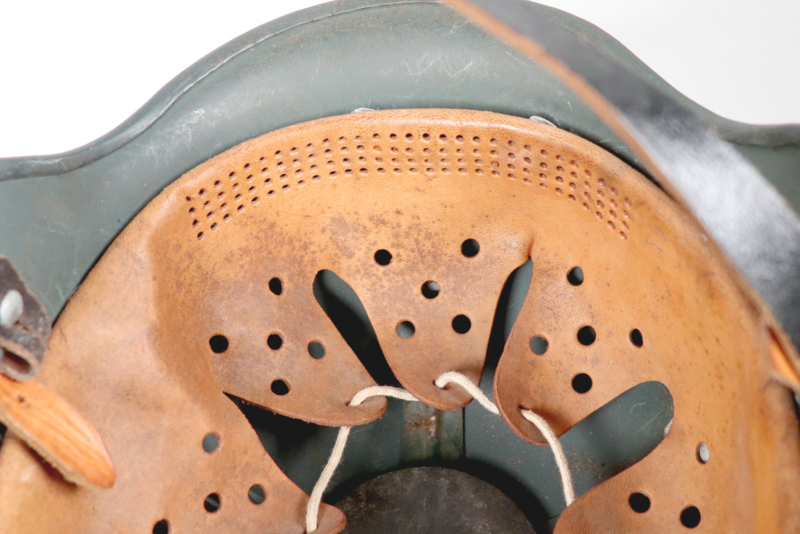
- Liner attachment ("Dome screw"): The liner is secured via a single central screw at the very top (dome) of the helmet. A special bracket is welded on the inside to hold this screw.
- Ventilation holes: Early production models still feature small ventilation holes on the sides. Later variants (produced from around 1959 onwards) are completely smooth without vent holes to eliminate weak spots.
- Color and finish: The helmets are painted in a specific, glossy or slightly textured dark green to grey-blue color (often RAL 6012, known as "BGS green").
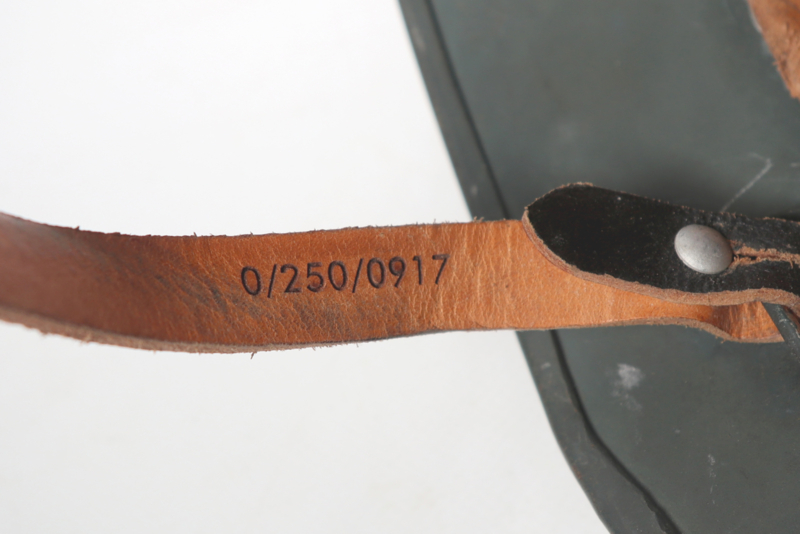
- Liner system: Equipped with the post-war leather I53 liner system (produced by Schuberth).
Manufacturers & Stamps
While the West German Bundeswehr adopted helmets based on the American M1 design, the BGS retained the traditional German shape. Production was outsourced to post-war factories:
- Linnemann-Schnetzer (LS): The most common manufacturer of this helmet type. Often stamped LSalong with the production year (e.g., LS 59) inside the neck rim.
- Quist (Q): This well-known wartime manufacturer continued to produce helmets for police and border units after the war.