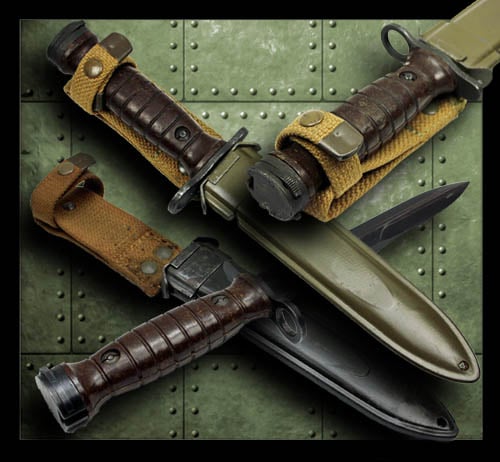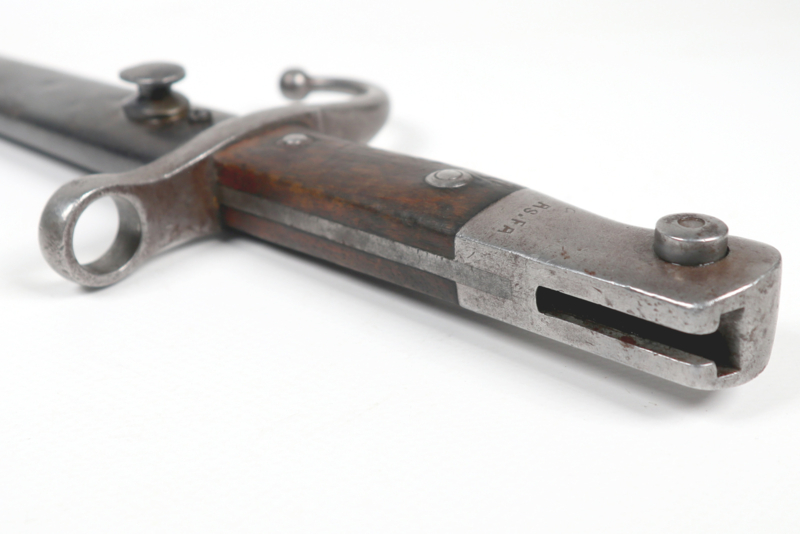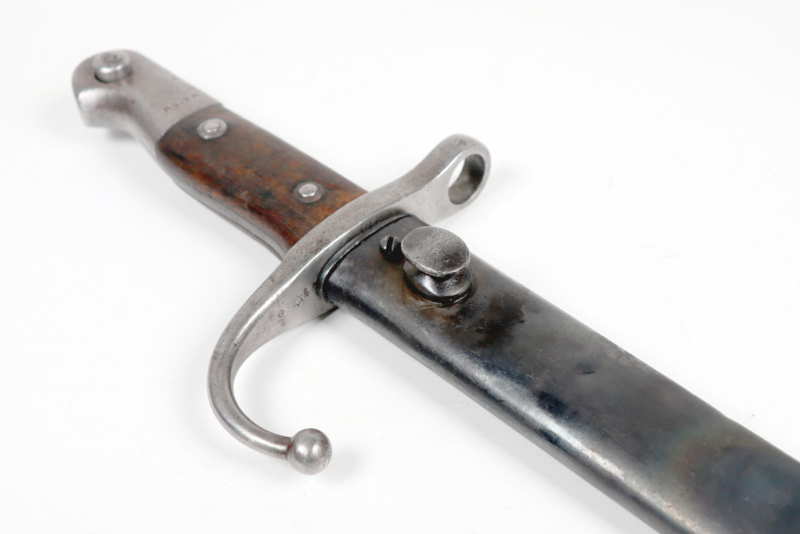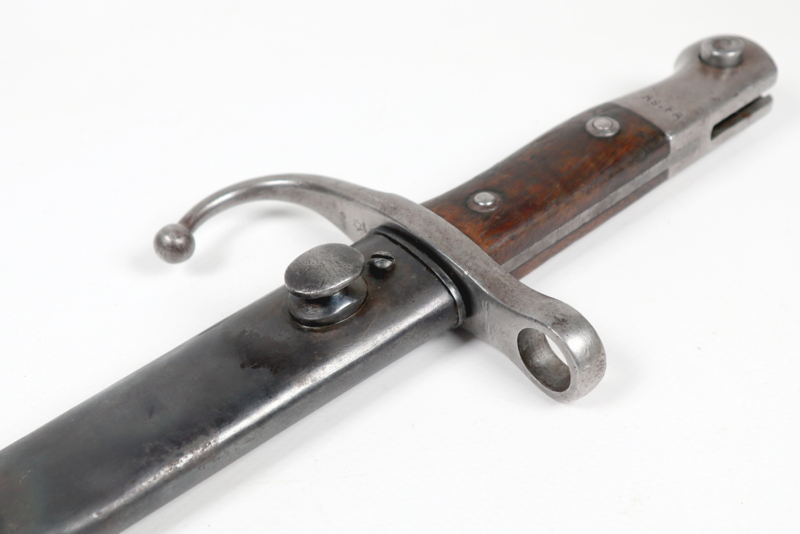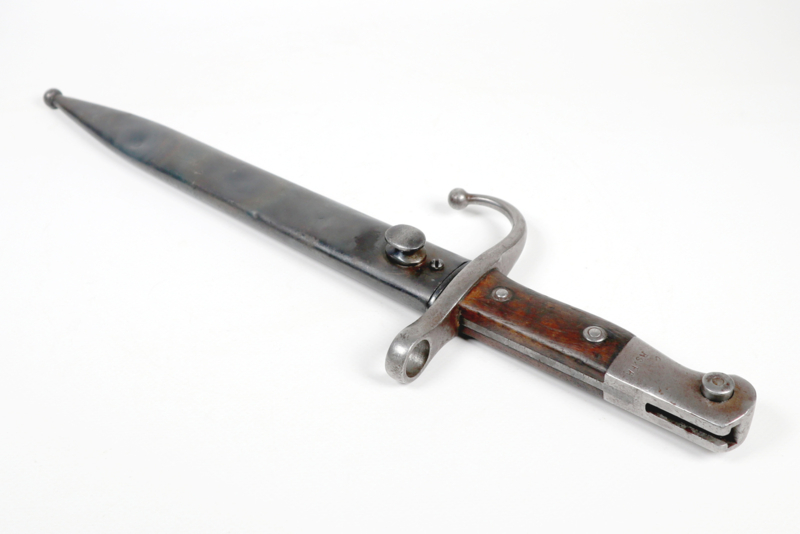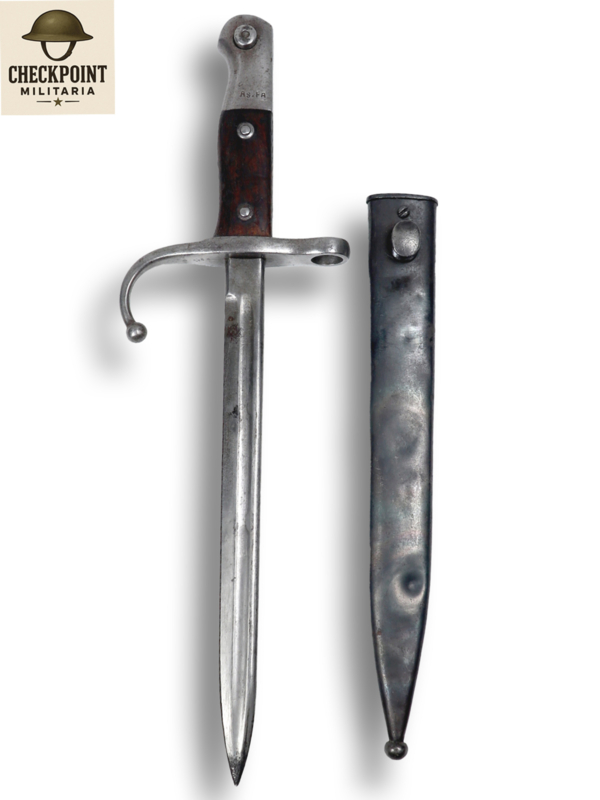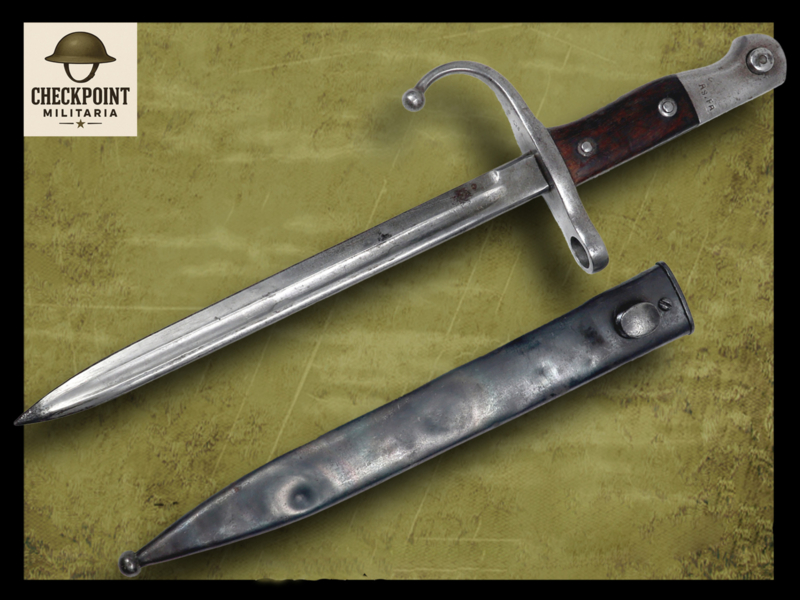
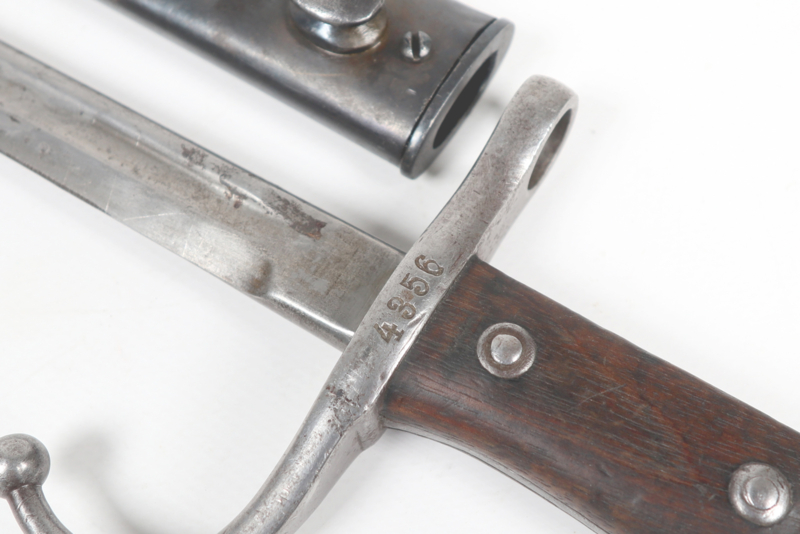

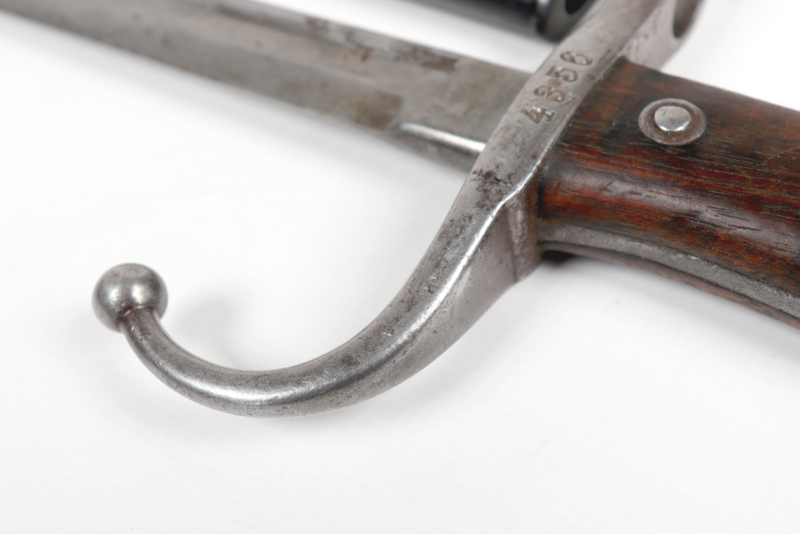


Turkish M1935 Bayonet
The Turkish modified M35 bayonet is a collective name for a wide range of older bayonets that were standardized by the Turkish Republic starting in 1935. During this period, the Turkish army attempted to unify its diverse stock of Ottoman and captured foreign bayonets so that they would fit their standardized "Model 1938" Mauser rifles.
Key features of modified M35s
Because these bayonets were modified from many different original models, they are "anything but standard," although they share a number of common characteristics:
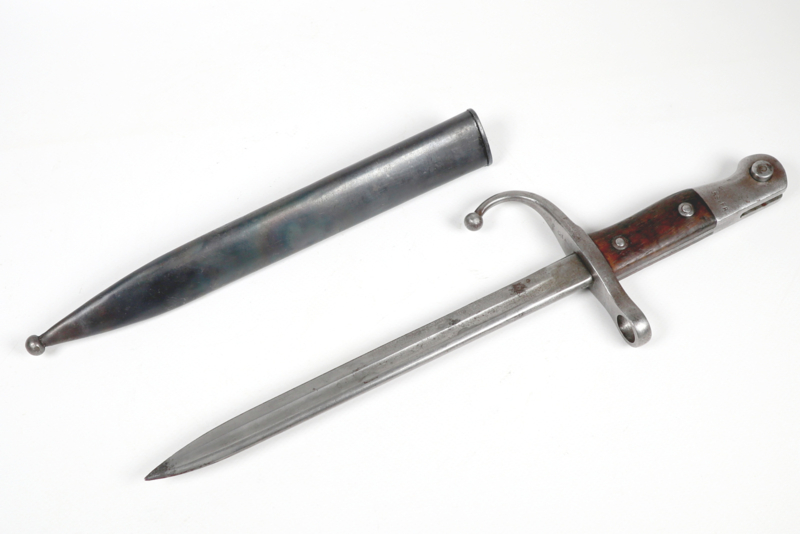
- Blade length: Most were shortened to a uniform length of approximately 250 mm (about 10 inches).
- Point shape: The original blades were resharpened to a solid spear point.
- Removal of the crossguard: On models such as the M1903, the distinctive hook-shaped crossguard was usually cut off or ground down to a straight profile.
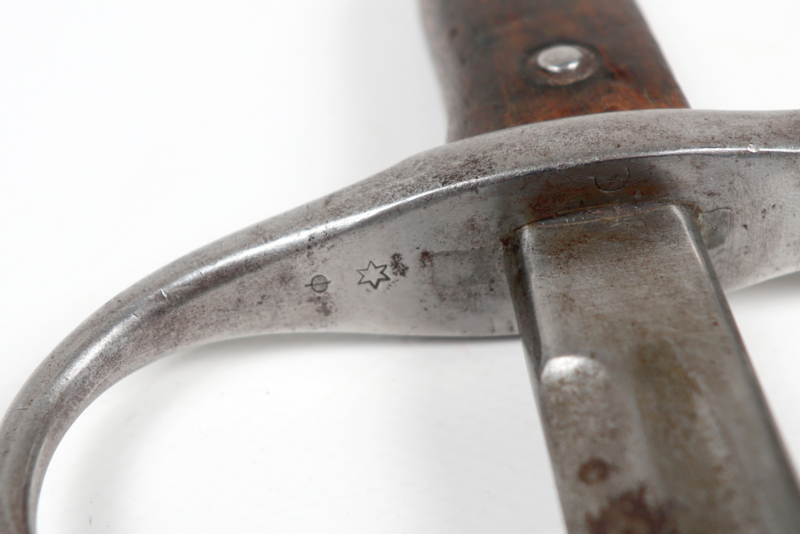
- ASFA markings: Most modified examples are stamped with "*" (Askeri Fabrika, or Military Factory) on the pommel or guard.
- Scabbard: Original long scabbards were often roughly shortened, welded, and fitted with a new metal muzzle to match the shortened blade.
Common "base models"
The M35 modification is often found applied to these original types:
- Turkish M1890 & M1903: Shortened versions of the original Ottoman "sword" bayonets.
- German S98/05: The famous "Butcher Blade" bayonets were often shortened in Turkey and fitted with a new handle.
- Captured British P1907: Bayonets captured during the Gallipoli campaign were also converted to the M35 standard.
"Turkish" versus modified:
Although many M35 bayonets are "Turkish" (recycled/modified) versions of older bayonets, Turkey also produced completely new M1935 bayonets in the ASFA arsenal. These versions typically feature a thicker, coarser construction with two rivets holding the wooden grips and a more uniform appearance compared to the recycled variants.