



French M1855 Helmet
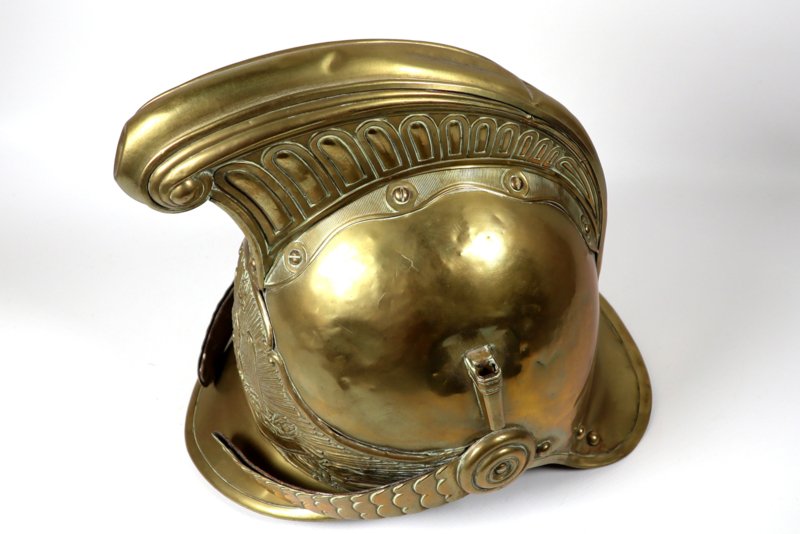
The Sapeur-Pompier helmet model 1855 is a helmet designed during the Second French Empire (1852-1870) under the reign of Emperor Napoleon III. This parade helmet is made entirely of polished brass and is inspired by the aesthetics of Roman antiquity. The helmet was mainly worn during parades and official ceremonies, and less during actual firefighting work.
Features and design of the model 1855
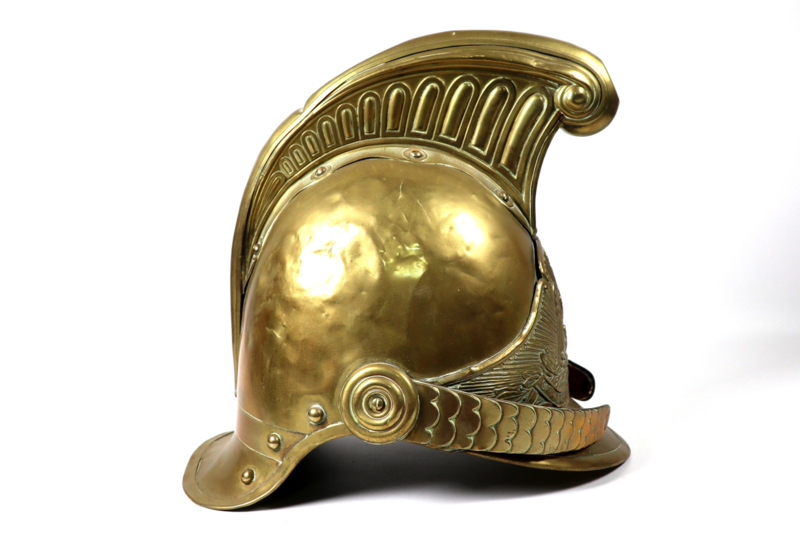
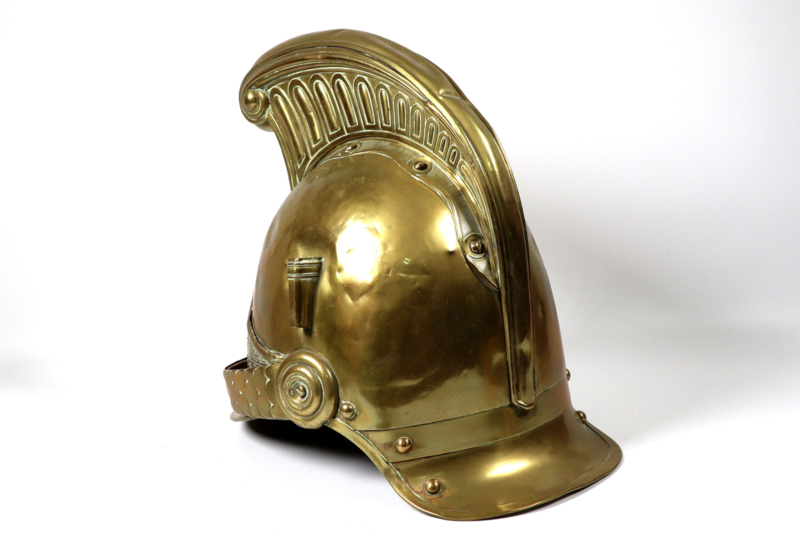
- The shell and the visor: The main structure (the convex shell), the front visor, and the neck guard are made of brass. The edges are reinforced with a folded brass profile.
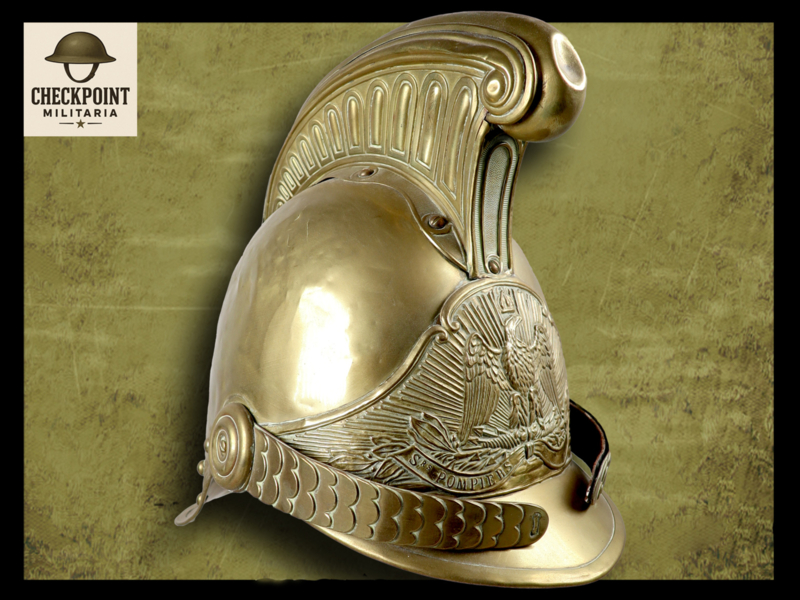
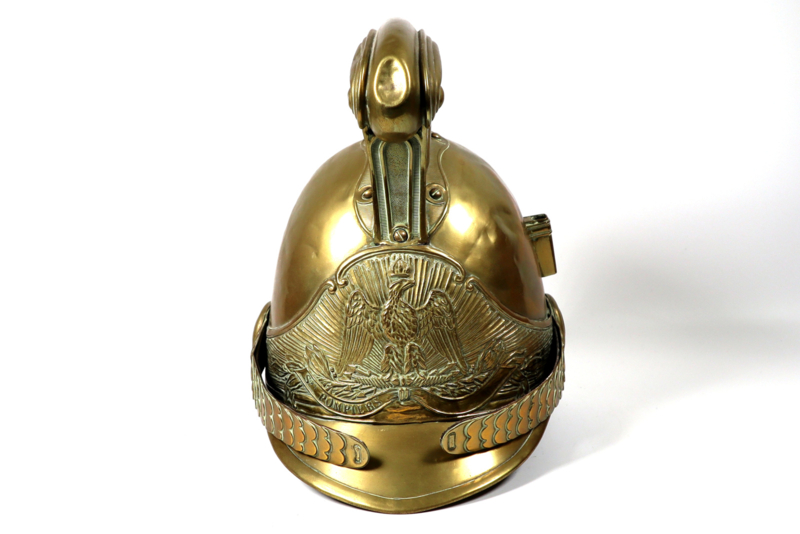
- The imperial front plate: This is the most recognizable element from the Second Empire period. It is a stamped relief plate featuring the crowned Imperial Eagle of Napoleon III, often set against a background of sunburst rays. Beneath the eagle is a scroll with the name of the municipality (e.g., "Sapeurs Pompiers de [Name of the municipality]").
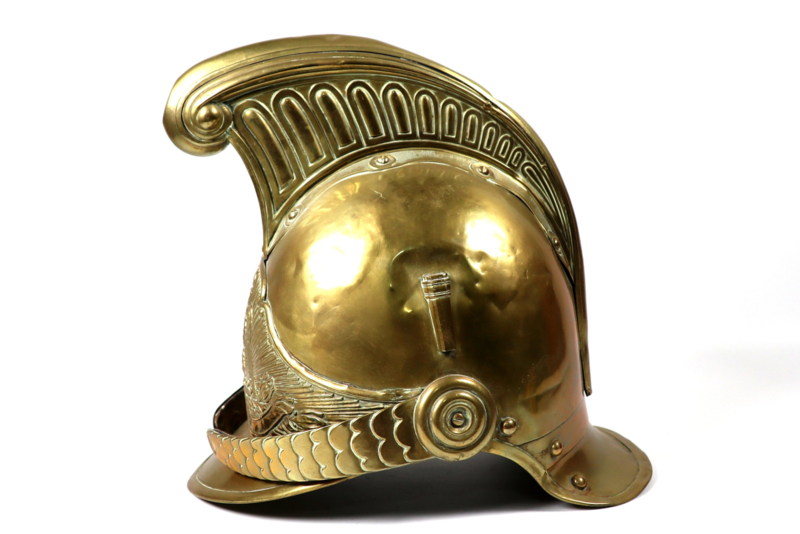
- The crest (cimier): A high crest on top of the helmet, decorated on the sides with fluting (usually 11 ridges).
- The plume or mane: For grand parades, the crest was fitted with a brush (plume) made of dyed horsehair (often black or red).
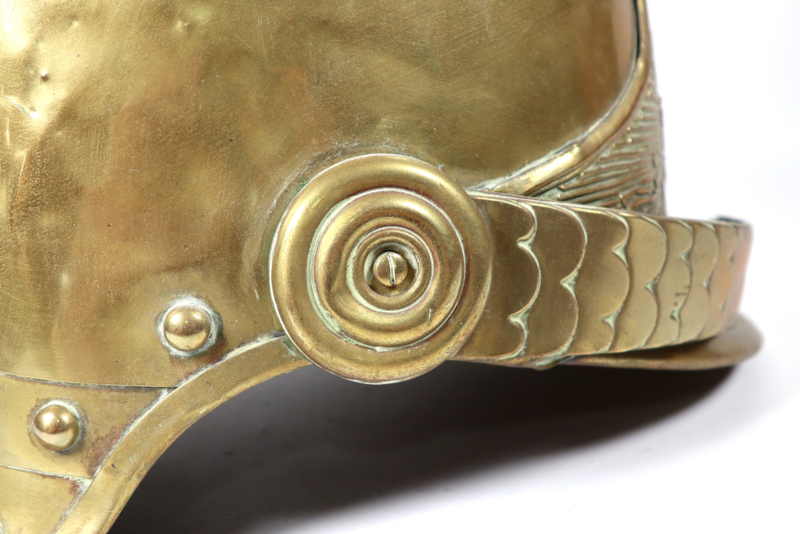
- The chinstraps (jugulaires): These consist of two round rosettes at the temples, connected to leather straps covered with overlapping brass scales.
- Plume holder: A small tube with a square opening on the left side to insert a feather plume (often red).
The modification to "Model 1855/72"
After the fall of Napoleon III in 1870 and the proclamation of the Third French Republic, imperial symbols were banned. An 1872 decree mandated the modification of existing helmets:
- The Imperial Eagle was systematically filed down, cut away, or replaced on the front plate.
- It was replaced by republican symbols, such as a central shield featuring a flaming grenade, crossed axes, and laurel leaves.
- Original pieces where the imperial eagle is still completely intact are very rare today and highly sought after by militaria collectors.