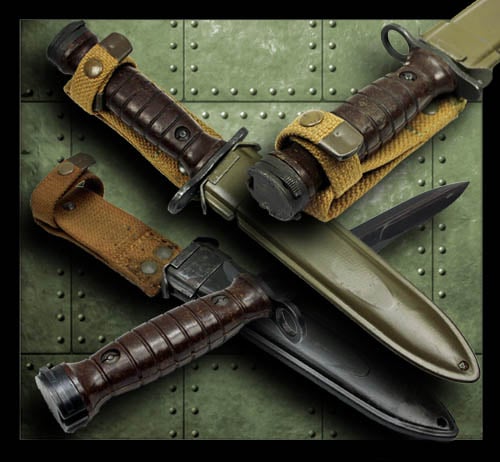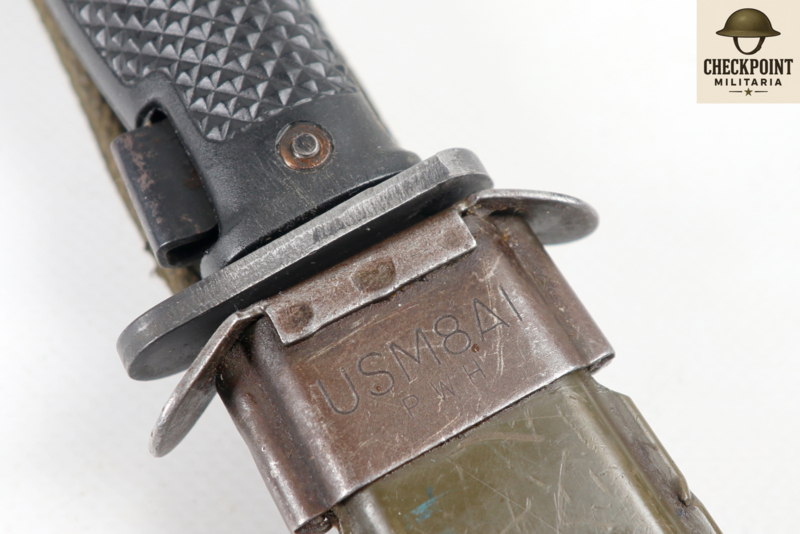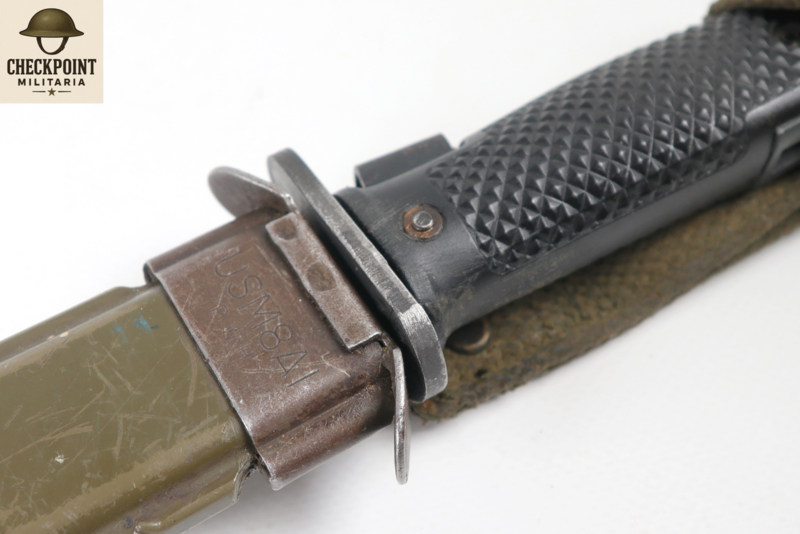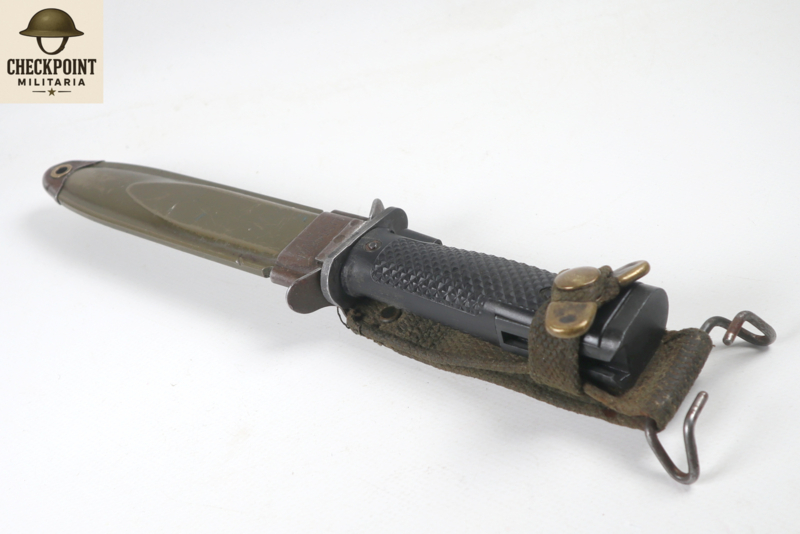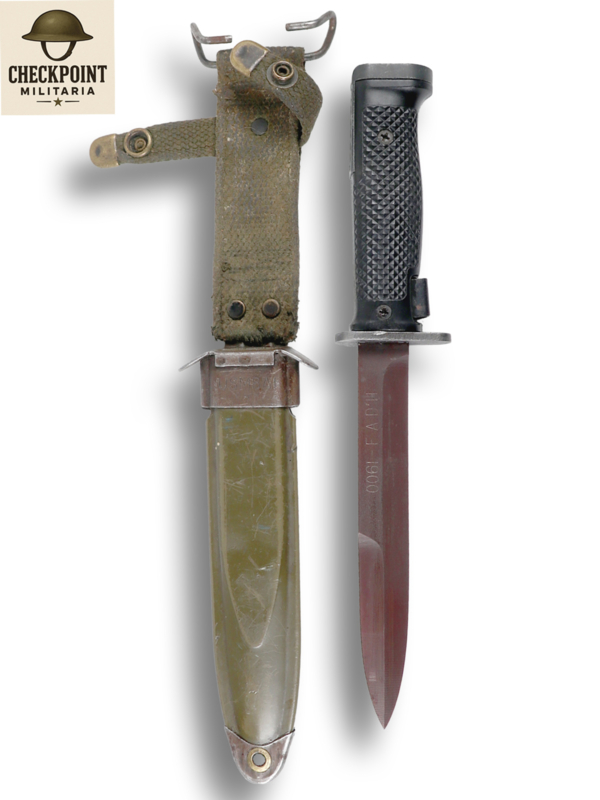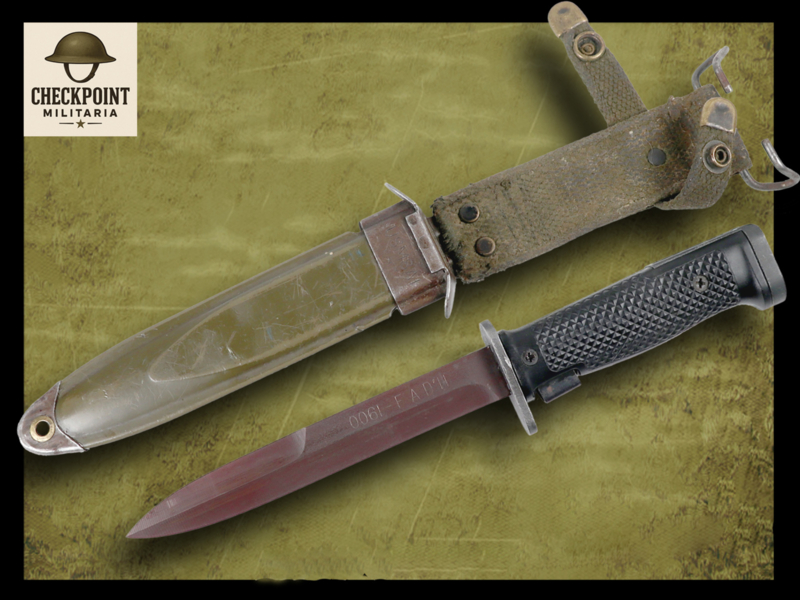
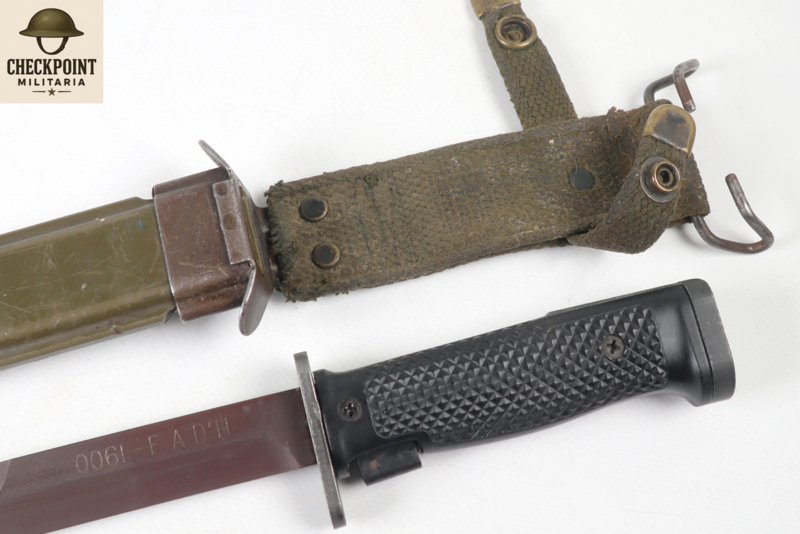
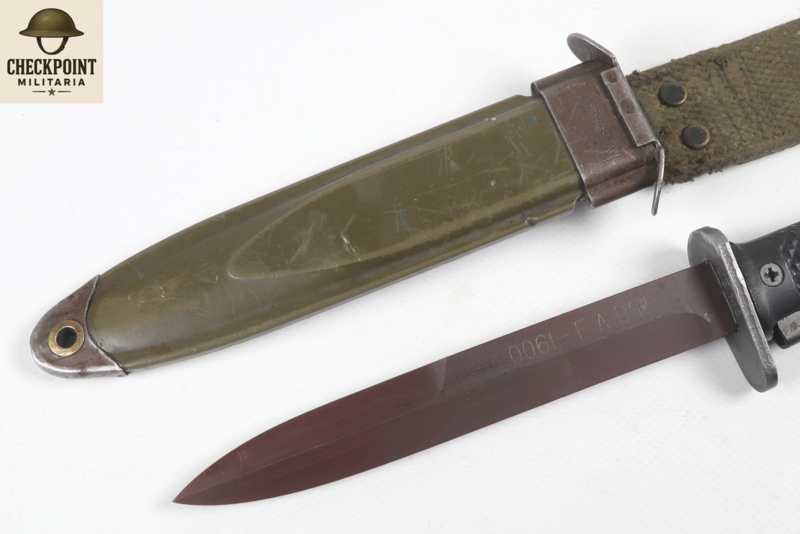
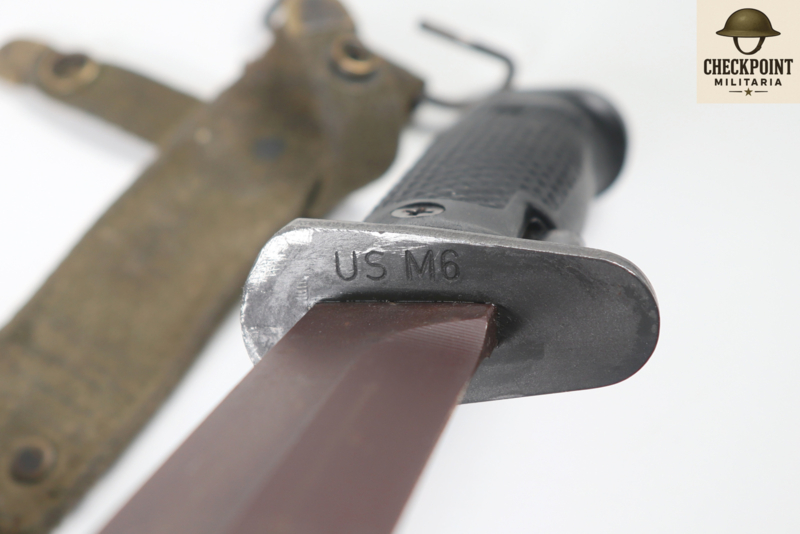
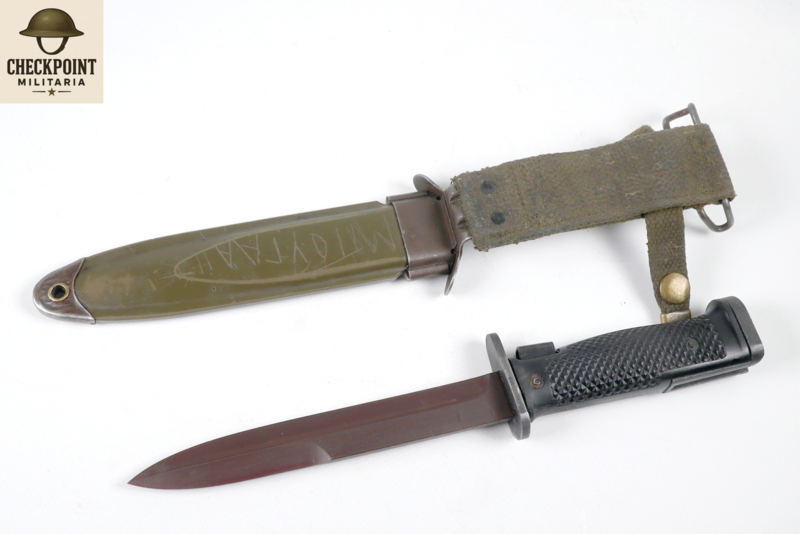
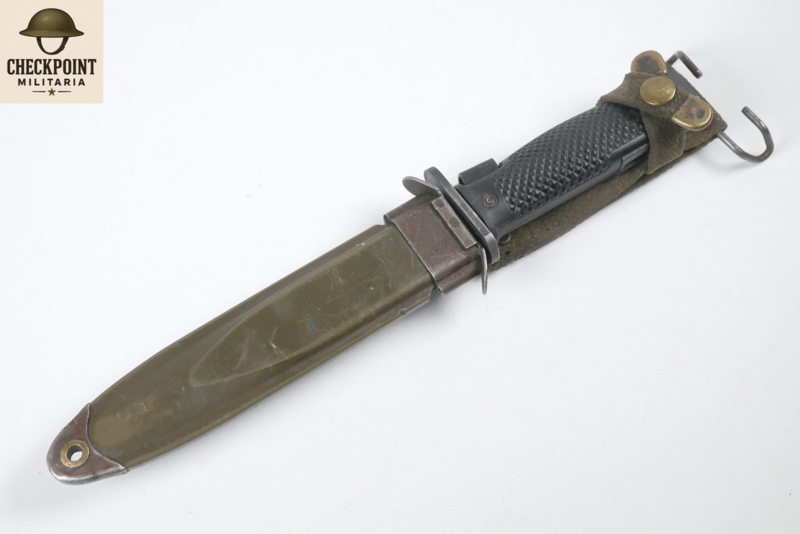
M6 Bayonet Forces Armées d'Haïti FAD'H
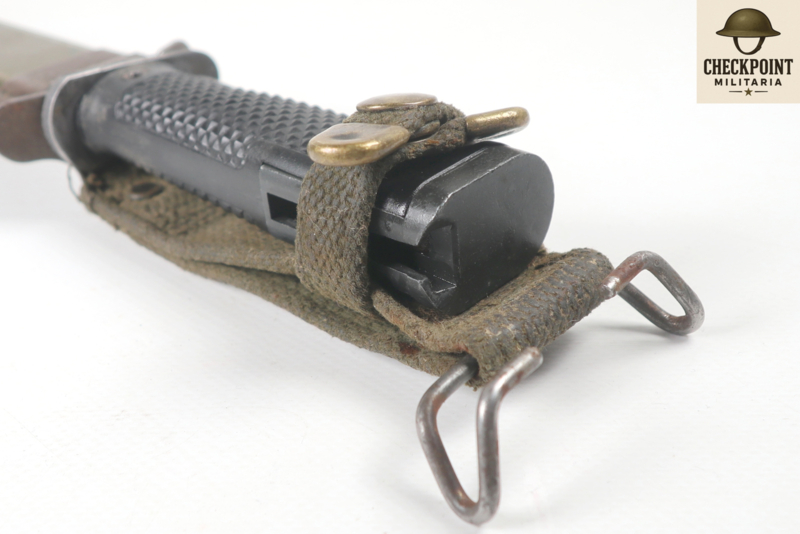
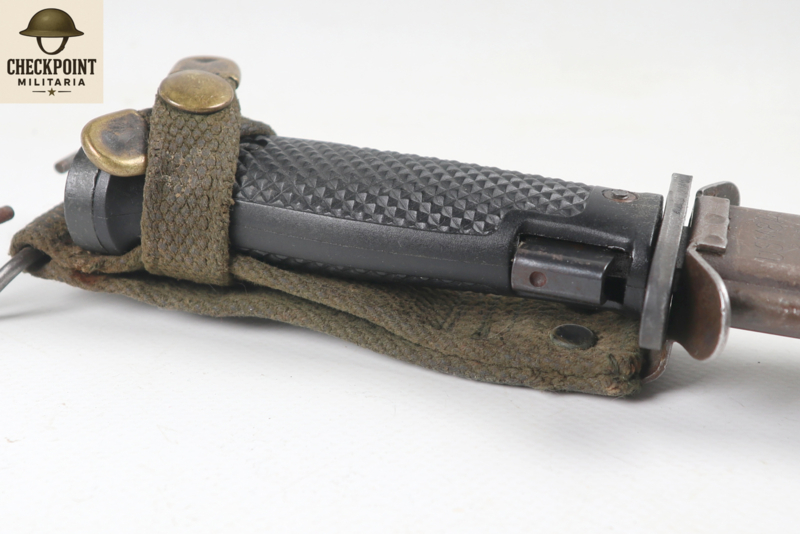
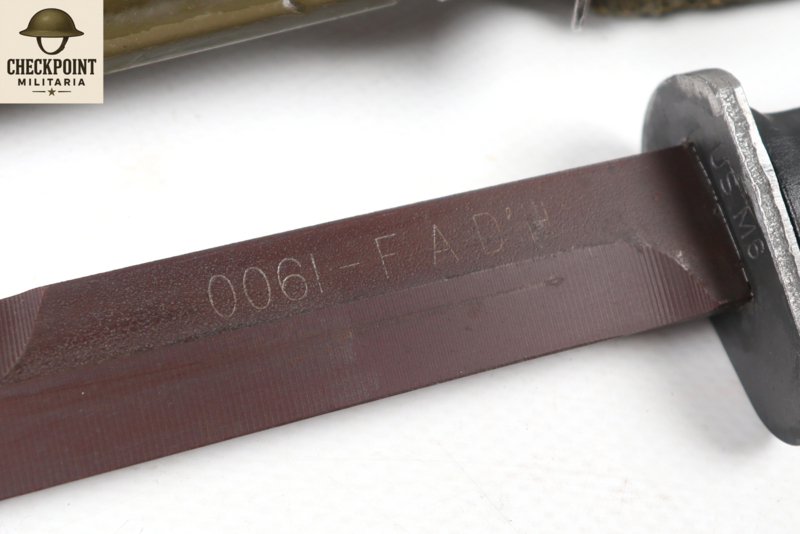
This is a very interesting and rare bayonet! The marking FADH (or FAD'H) stands for Forces Armées d'Haïti (the Armed Forces of Haiti). The number 0061 is the weapon's unique serial number within this contract.
Background of this bayonet
During the 1960s and 1970s, the US government (or authorized manufacturers) supplied military goods to allies in Latin America and the Caribbean to contain communism in the region.
Haiti equipped its elite units and presidential guard with American M14 automatic rifles during this period. Because regular US manufacturers (such as Milpar or Imperial) were fully occupied with the Vietnam War, some of these export contracts were outsourced. A well-known manufacturer that produced these specific contracts for Haiti was A. Eickhorn-Solingen (AES) from West Germany. They replicated them exactly according to US military specifications (mil-spec) but featured the Haitian ownership stamps.
Why was it modified into a dagger?
The fact that FADH is stamped on the blade provides a highly logical explanation for its modification into a dagger:
- Local need for combat knives: Throughout Haiti's turbulent political history (including the regime of the Duvaliers and the infamous Tonton Macoute militia), bayonets were more frequently carried by military and paramilitary personnel as intimidating combat knives rather than actually being mounted on a rifle.
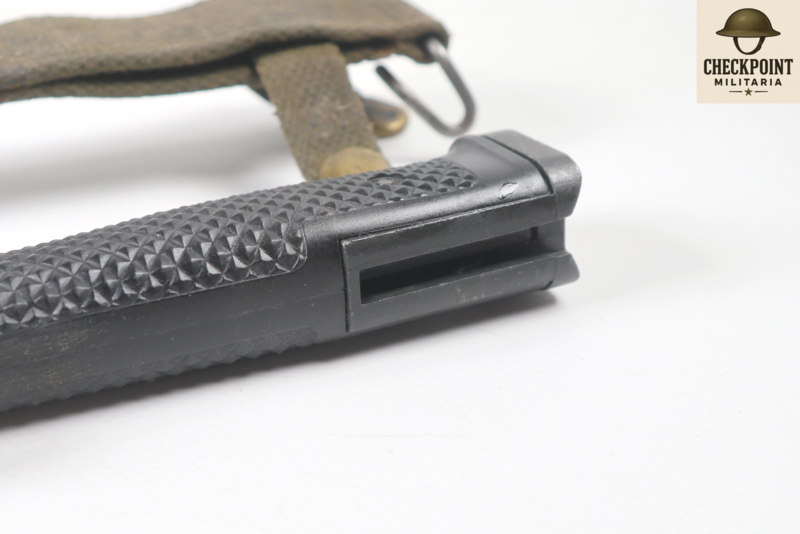
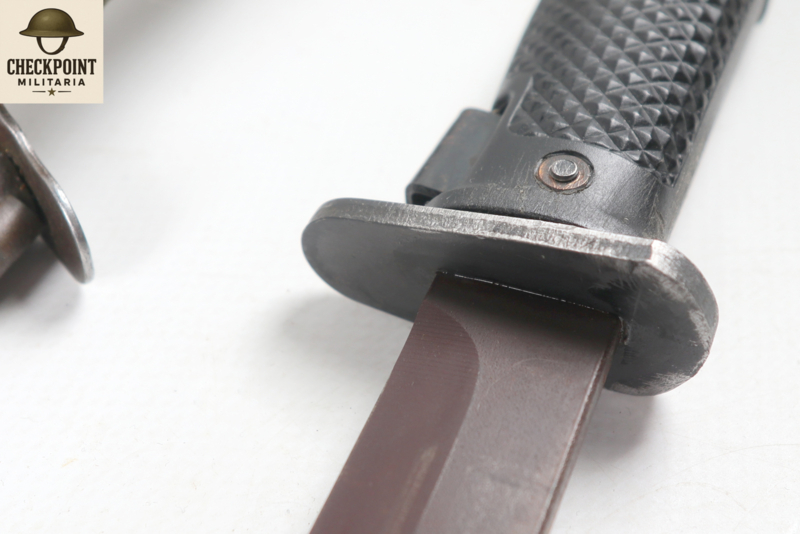
- Practical use: By removing the muzzle ring and sometimes modifying the locking mechanism, Haitian soldiers transformed the relatively cumbersome bayonet into a perfectly balanced, double-edged dagger that could be carried more comfortably on a combat belt.
Collector's value
M6 bayonets with a FAD'H stamp are inherently quite rare and highly sought after among militaria collectors because only a limited number were shipped to Haiti at the time. Although the modification into a dagger altered its original factory condition, this stamp lends the weapon a raw and fascinating historical context ("provenance"). This makes the piece a tangible slice of Cold War history in the Caribbean.