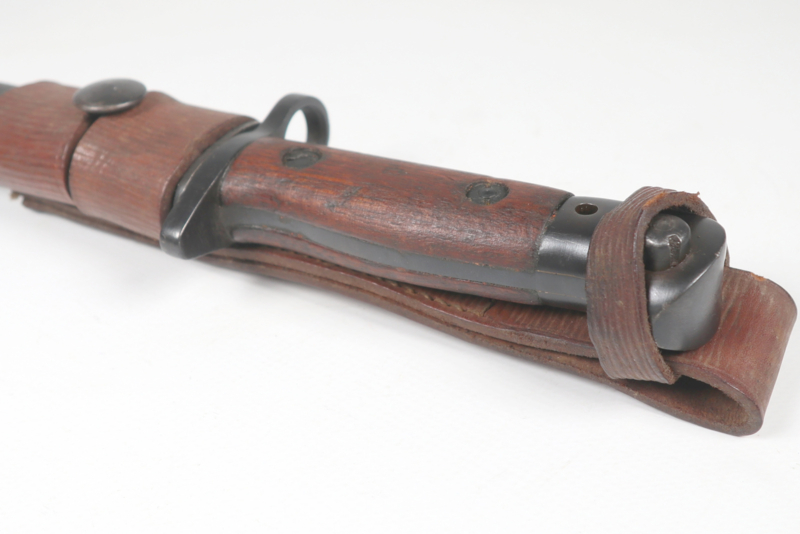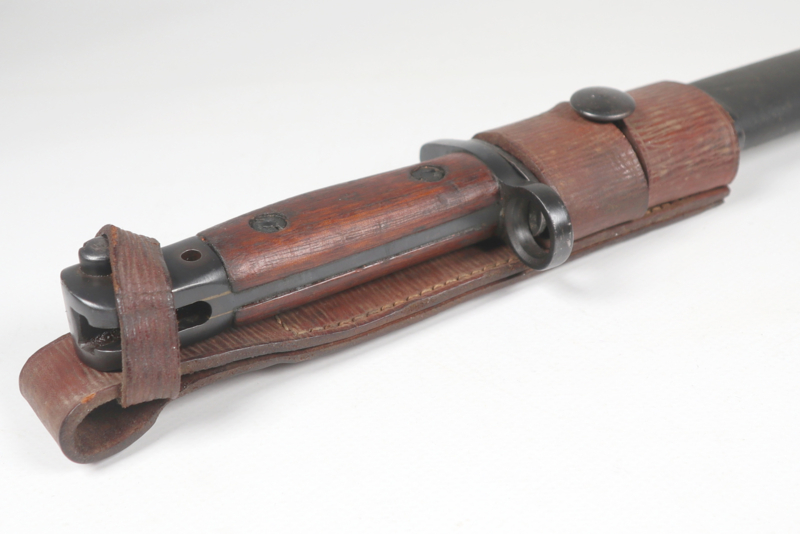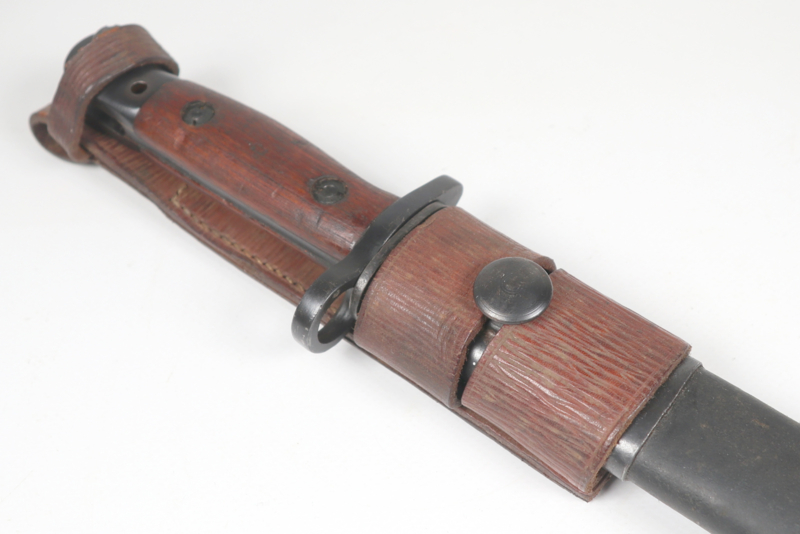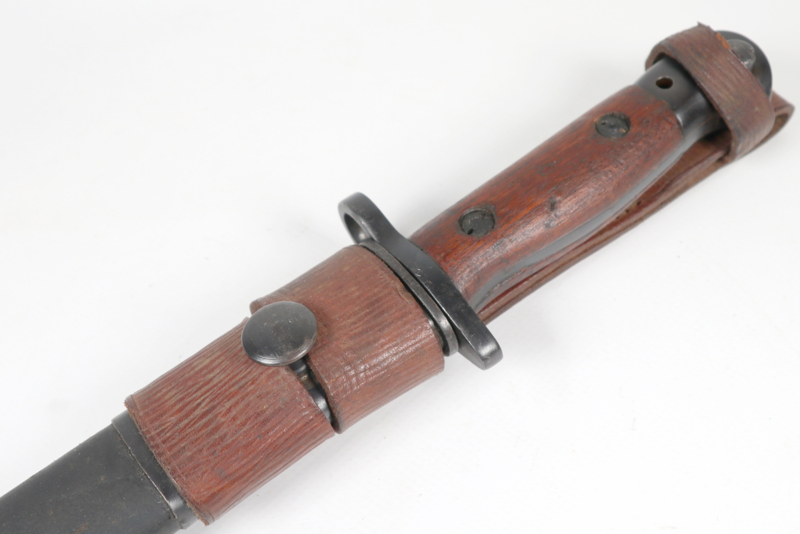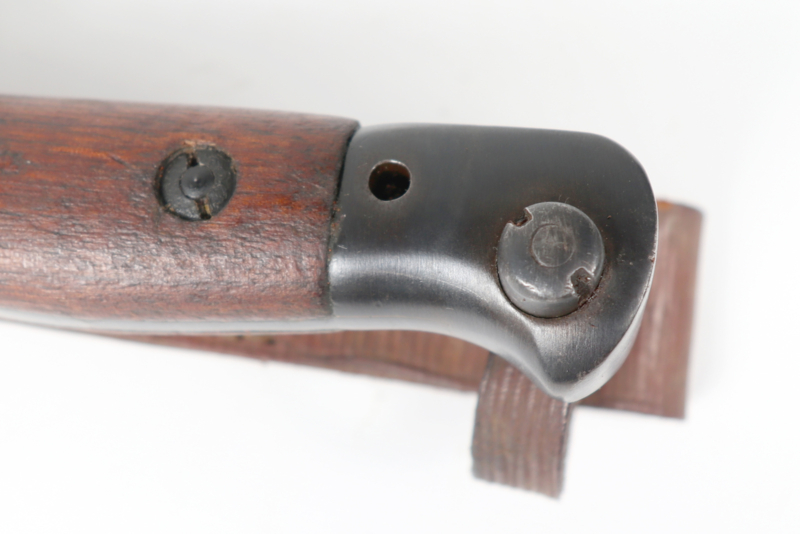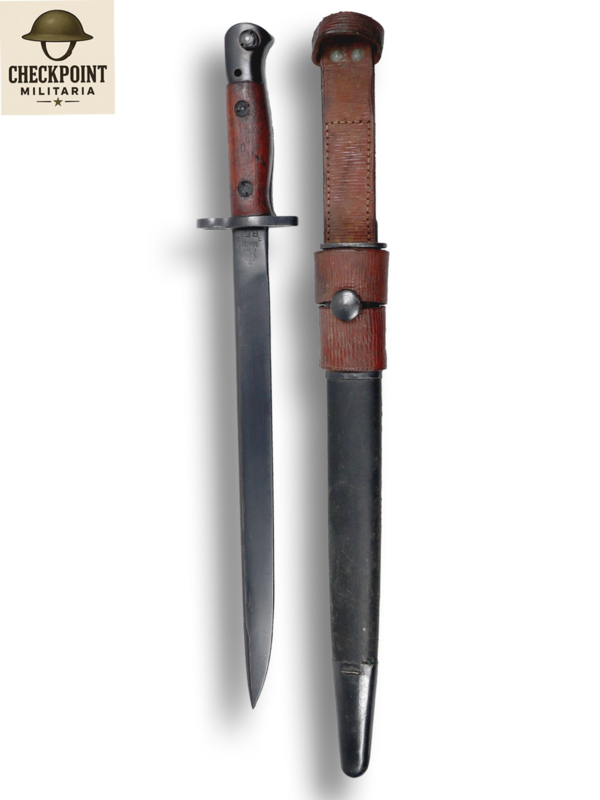
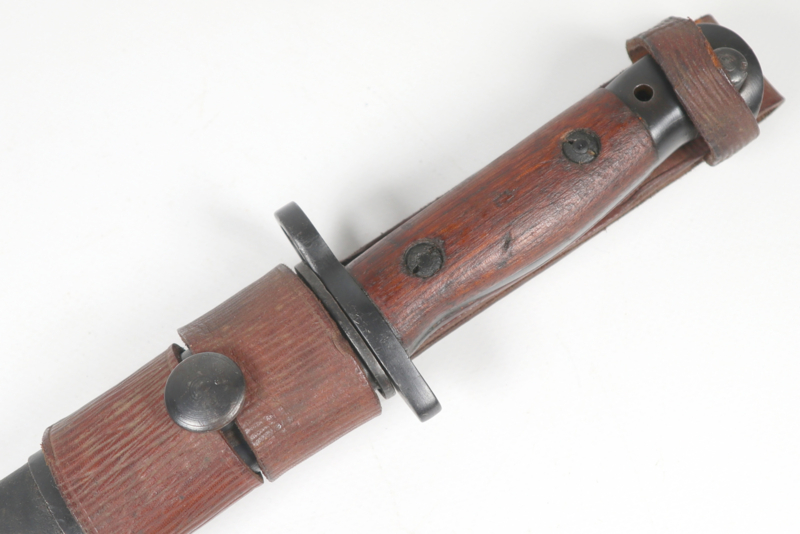
Indian No 1 Mk II * Bayonet by R.F.I.
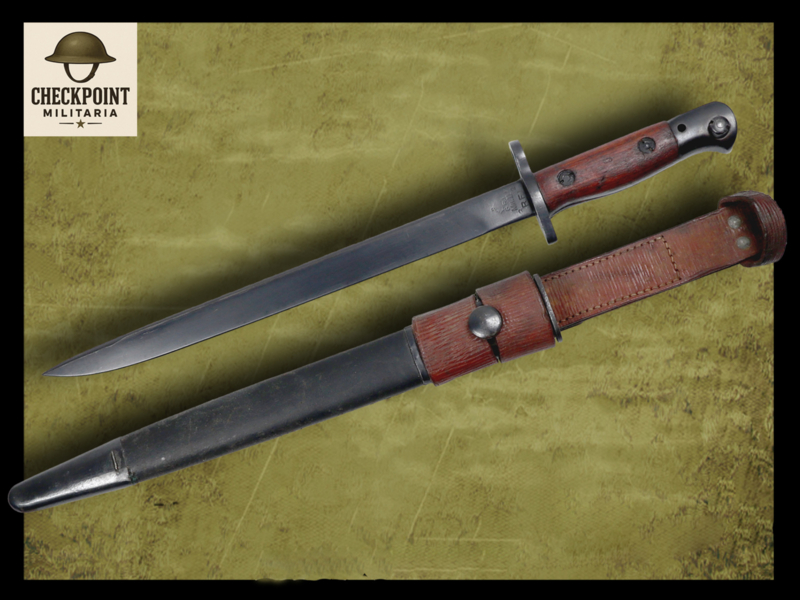
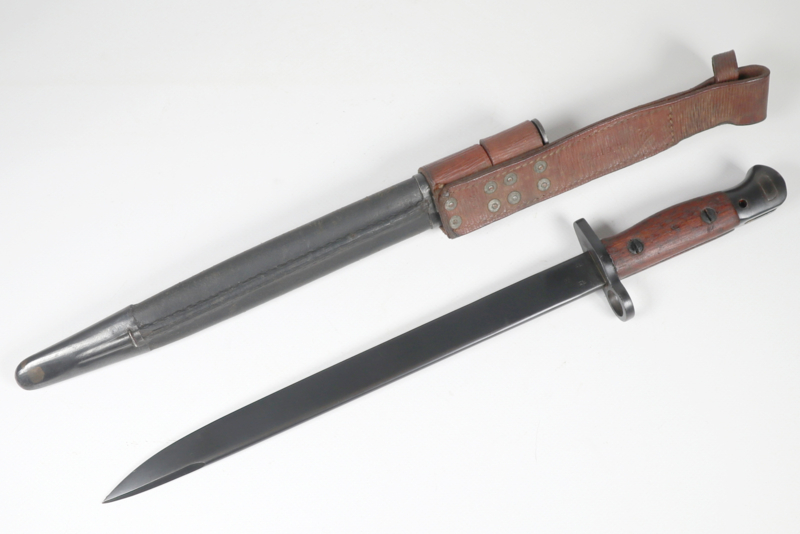
The Indian No. 1 Mk II bayonet* was a simplified wartime version of the British Pattern 1907 sword bayonet, produced by the Rifle Factory Ishapore (RFI) during World War II.
Designed for the SMLE (Short Magazine Lee-Enfield) No. 1 Mk III* rifles, it was specifically adapted for jungle warfare in Burma and the Pacific, where a shorter blade was more practical.
Key identifying features:
- The "star" (*) marking: The main difference between the Mk II and the Mk II* is the addition of a false edge (a sharpened upper edge) near the tip to improve penetration.
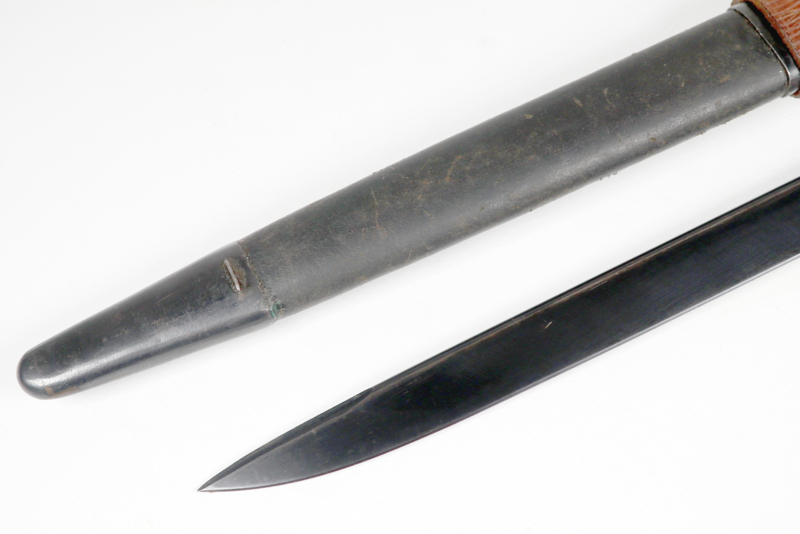
- Blade design: It features a 30 cm (12 inch) blade without groove, with a rounded spine and an asymmetrical tip. Unlike the earlier Mk I versions, which were often shortened from longer P1907 blades, the Mk II series was largely produced new as short bayonets.
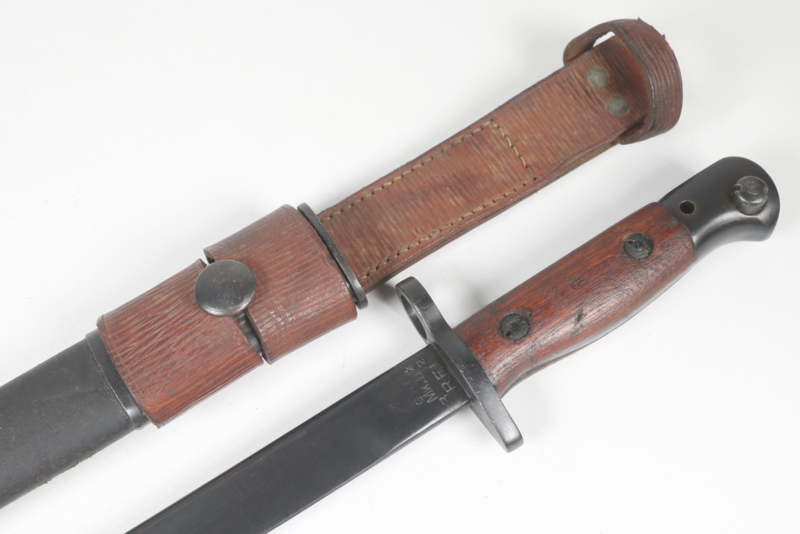
- Handle and pommel: Early versions retained the traditional "bird's beak" pommel. However, later productions during the war (around 1944) often used a square pommel and rectangular wooden grips as a cost-saving measure.
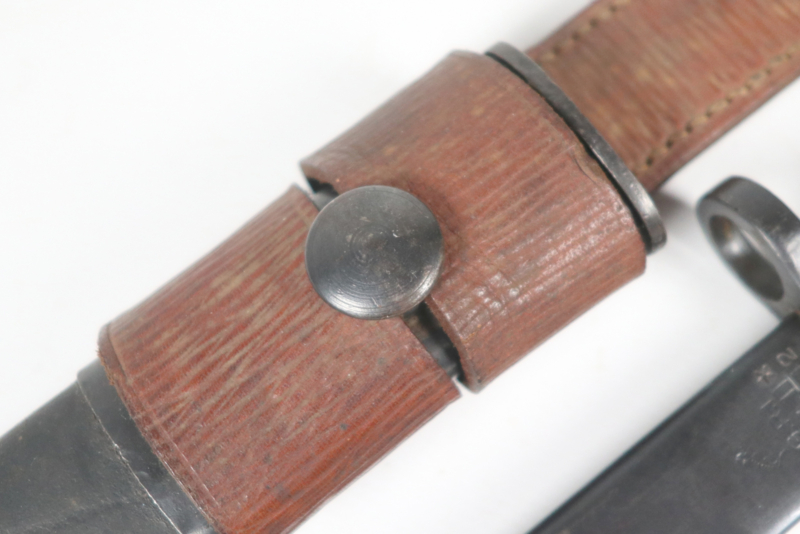
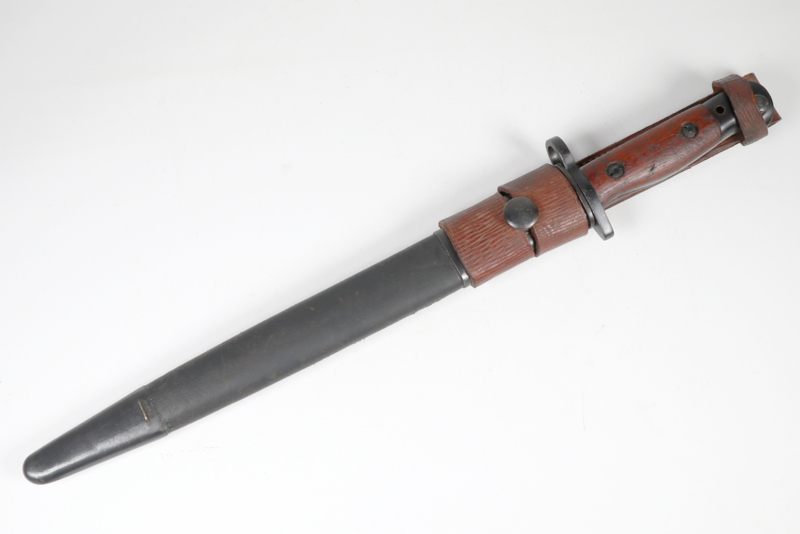
- Scabbard: In a shortened black leather scabbard (model 1907) with blued metal fittings and with a brown leather frog dated 1939.
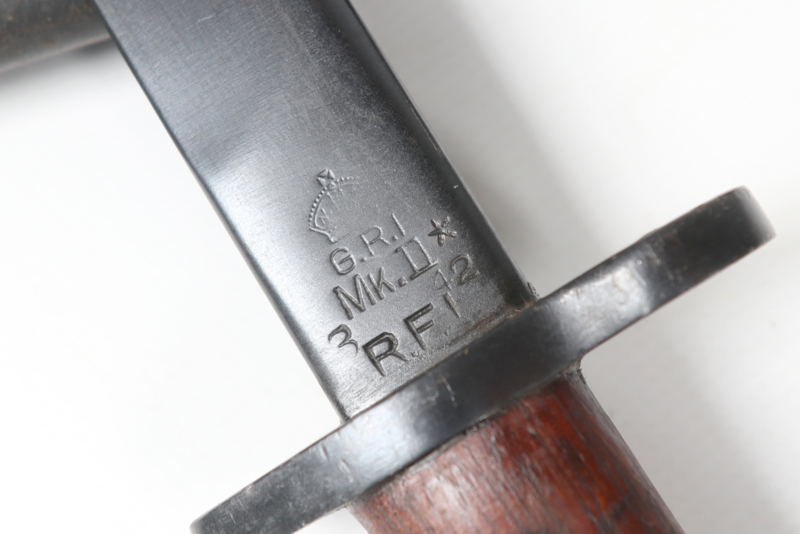
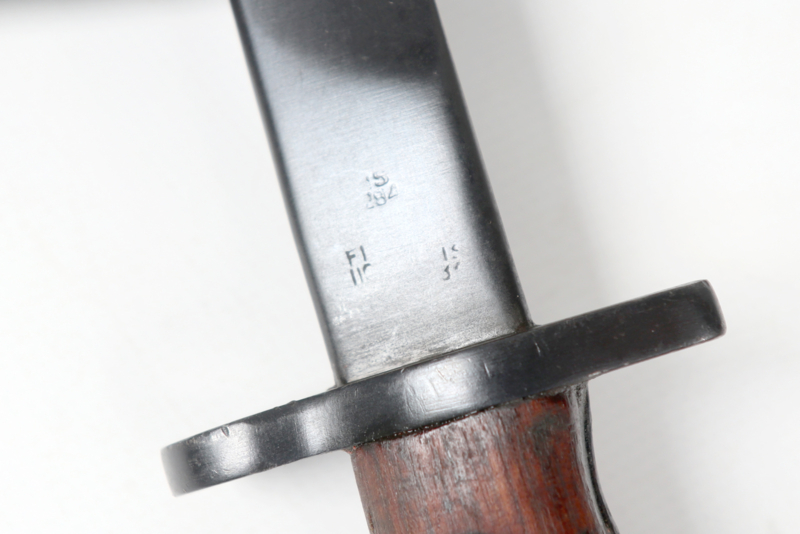
Markings on the ricasso:
- G.R.I. above a crown:Stands for Georgius Rex Imperator (King George VI, Emperor of India), indicating that it was produced under British India.
- R.F.I.: The maker's mark of Rifle Factory Ishapore.
- Model designation: Often stamped as MK II *, although errors were common; Some Mk II* bayonets are marked only with "MK II", despite the false cut.
- Date: Usually stamped with the month and year of manufacture (e.g., "10 '42" or "3 '42").
- Inspection stamps: The back of the ricasso typically bears multiple Ishapore inspection/acceptance stamps (e.g., "IS" followed by a number).
Historical context:
These bayonets were primarily issued to British and Commonwealth troops in the Far East. After independence, many remained in use with the Indian police and paramilitary units, and some were even used into the 1970s with the 7.62 mm NATO Ishapore 2A/2A1 rifles.