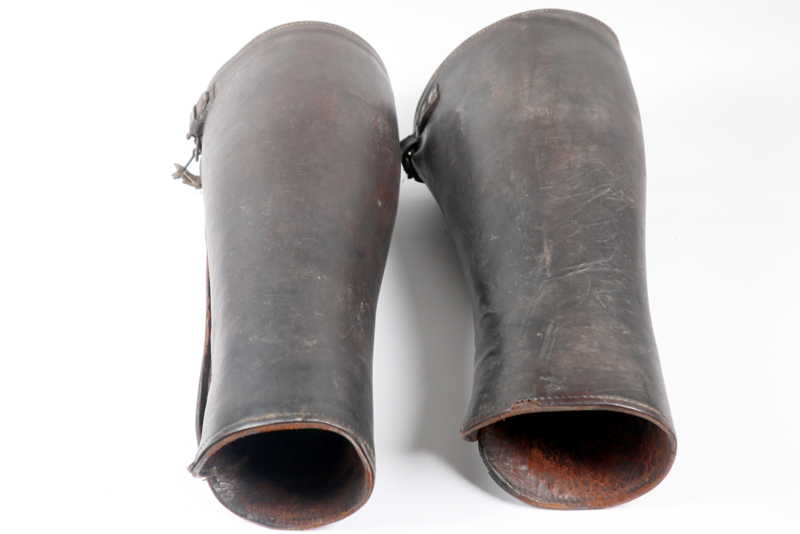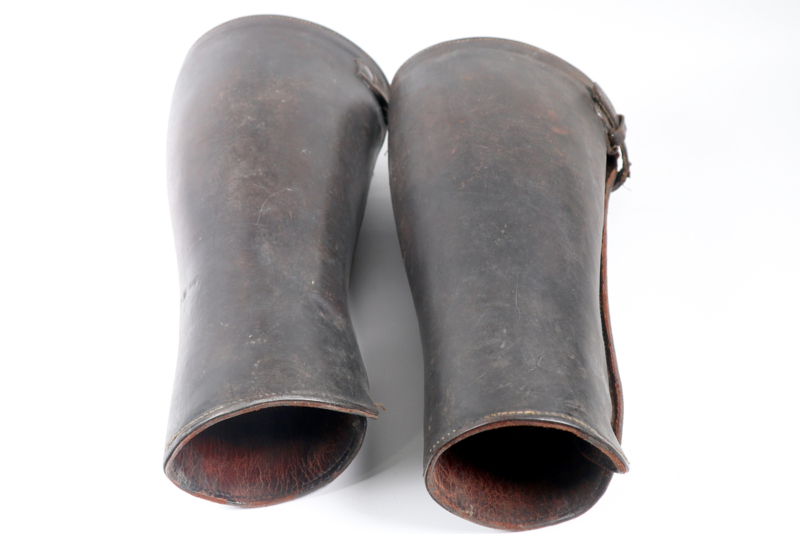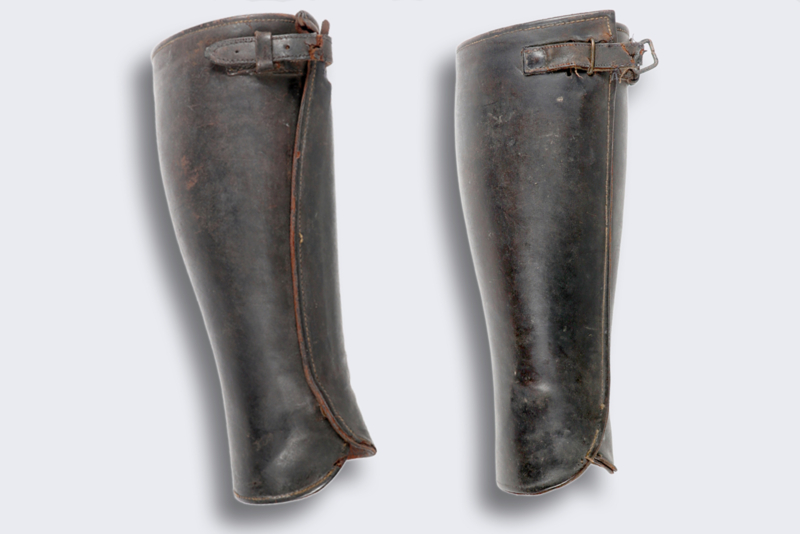
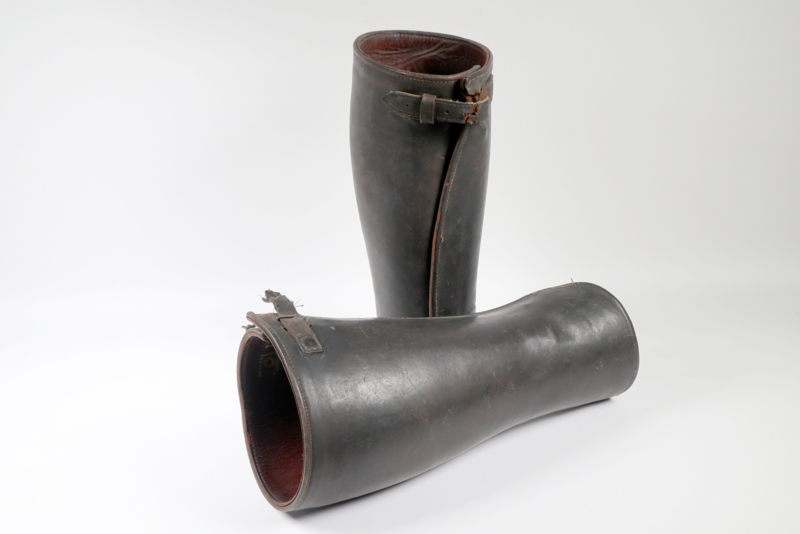

W.W.I British Army Officer's Black Leather Gaiters.
During World War I, British officers frequently wore private-purchase leather gaiters (leggings) as a functional and elegant alternative to the woolen puttees of the enlisted men. While brown leather was the standard for most infantry and field officers (matching the Sam Browne belt), black leather gaiters were strictly worn by officers of specific regiments. This primarily concerned the Rifle Regiments (such as the King's Royal Rifle Corps and the Rifle Brigade) and certain cavalry or logistical units, where dress regulations prescribed black leather equipment instead of brown.
Historical Purpose & Usage
- Status and Appearance: Worn tightly over standard ankle boots (Ammo boots), these high-quality, pre-shaped leather gaiters mimicked the polished look of expensive, tall riding boots at a fraction of the cost.
- Field Protection: They bridged the gap between the officer's breeches and boots. This kept out the thick mud, water, and debris of the Western Front trenches, while providing crucial support to the ankles and calves during long marches.
- Private Purchase: Unlike enlisted men, who were issued standard woolen puttees, British officers received an allowance to buy their own uniform and equipment. This resulted in minor variations in construction, leather thickness, and closures, depending on the officer's personal tailor.
Common Models
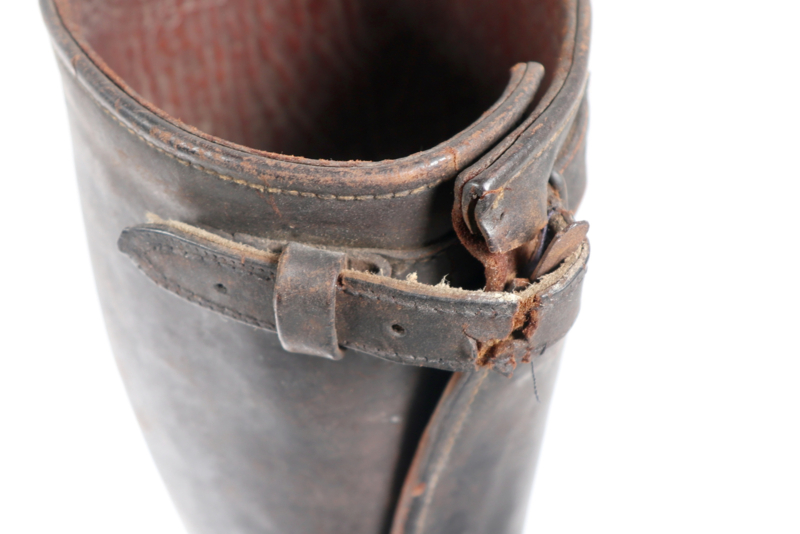
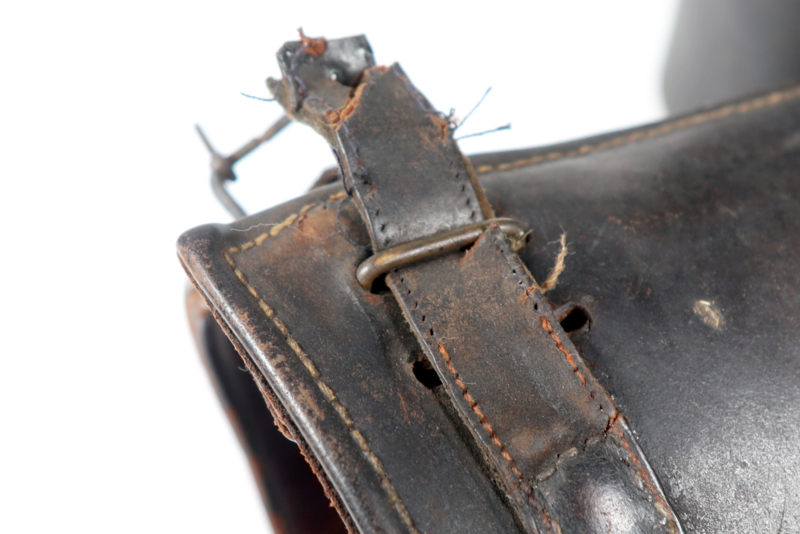
- The Strap and Buckle System: Features multiple small leather straps and brass buckles along the side of the calf to tighten the gaiter.
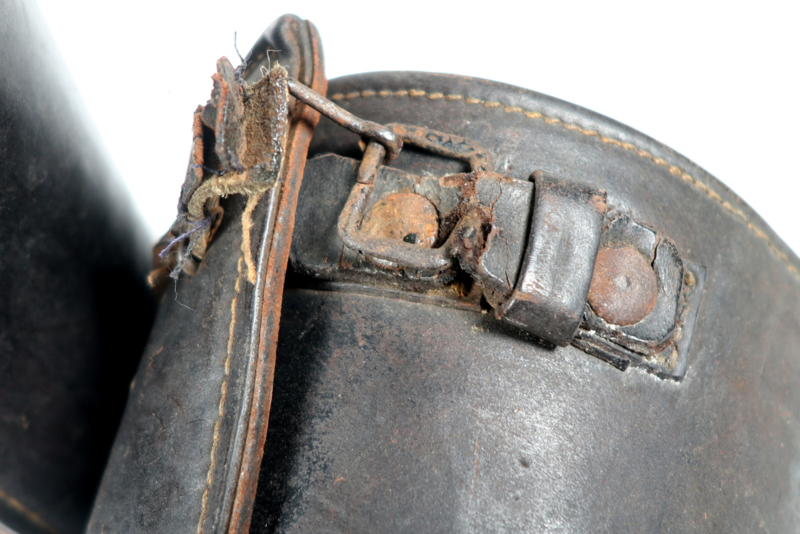
- The Stohwasser Model (Wrap Strap): A highly popular, streamlined design featuring a single long strap wound around the leg, or secured with a metal hook at the bottom and a buckle at the top.
- Lace and Hook System: Equipped with metal speed hooks and eyelets, allowing the officer to lace them tightly along the side.
For Collectors and Reenactors
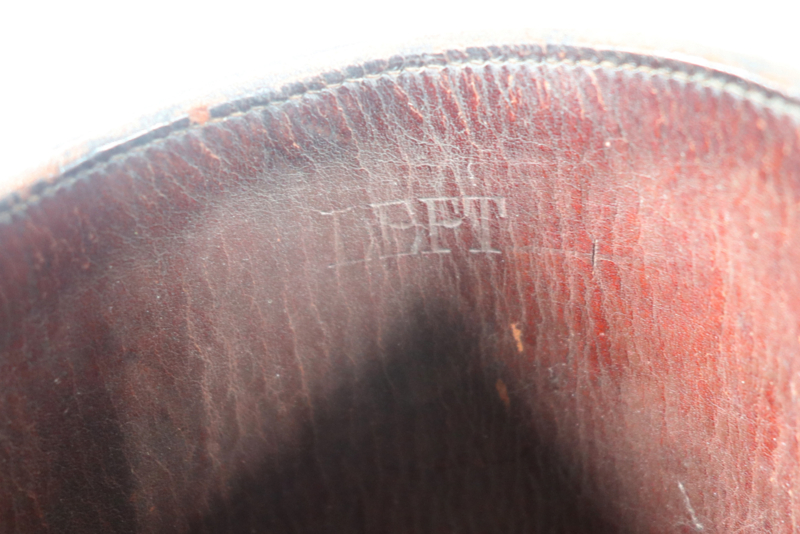
- Originals: Authentic black leather gaiters from the First World War are highly sought after by militaria collectors due to their rarity compared to the brown variants. When inspecting originals, look for a maker's mark, a stamped year (e.g., 1915), or the "Broad Arrow" symbol of the War Department. Keep in mind that military stamps are often missing on private-purchase items.
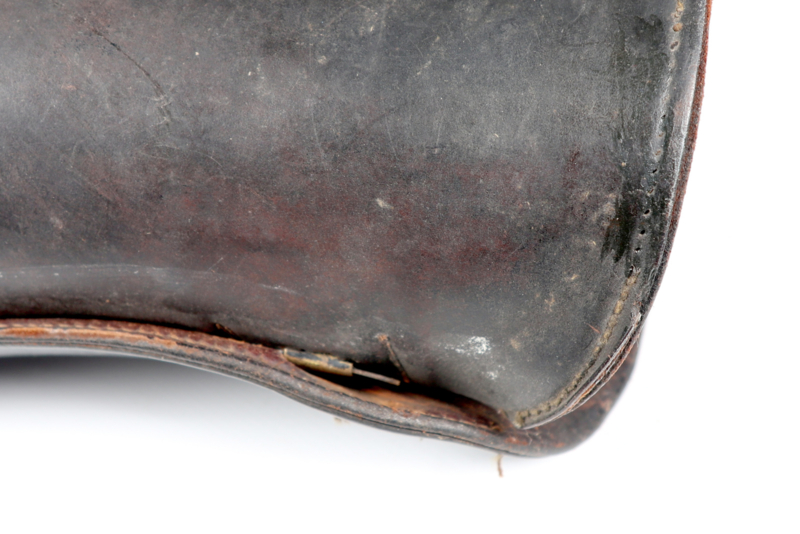
- Leather Condition: Original pieces often suffer from dry cracks at the back of the ankle or brittle straps—on this pair, they are broken. Treating them with museum-grade leather wax (such as Renaissance Wax or Pecard) is highly recommended to preserve the leather.