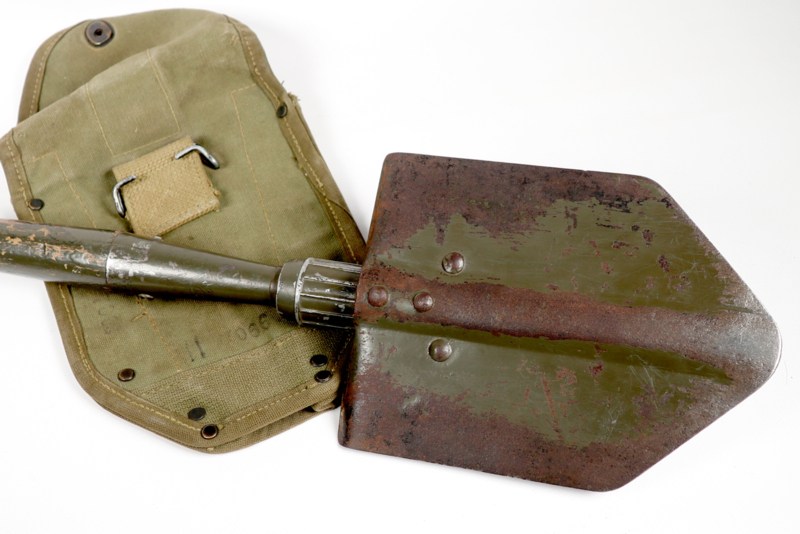


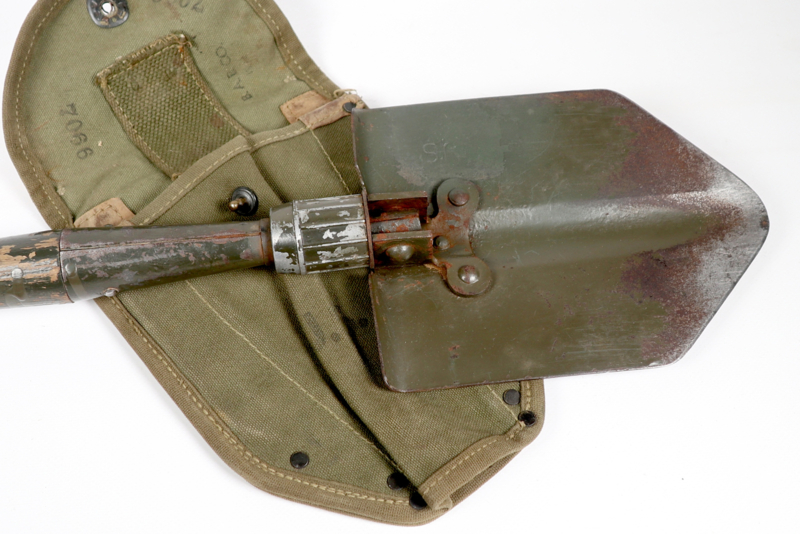
U.S. Folding Shovel M-43
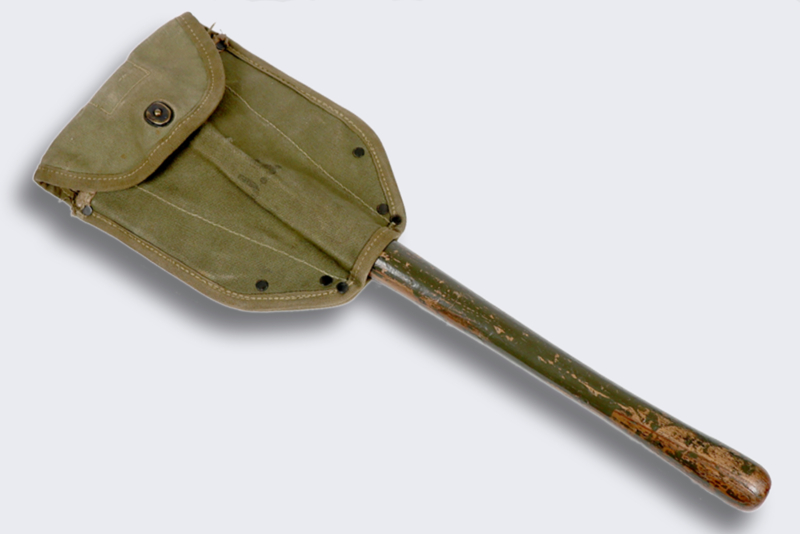
The U.S. Folding Shovel M-1943 (commonly referred to as the M43 Entrenching Tool or E-Tool) was a groundbreaking piece of field gear introduced during World War II to replace the outdated, solid T-handle M1910 shovel. Heavily inspired by captured German Klappspaten foldable spades, it offered American soldiers a more compact, versatile tool for digging foxholes and fortifications.
Key Design Features
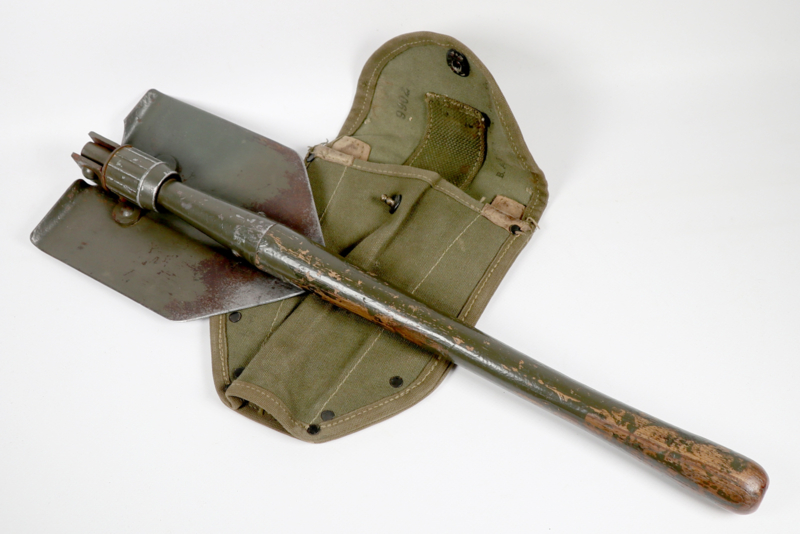
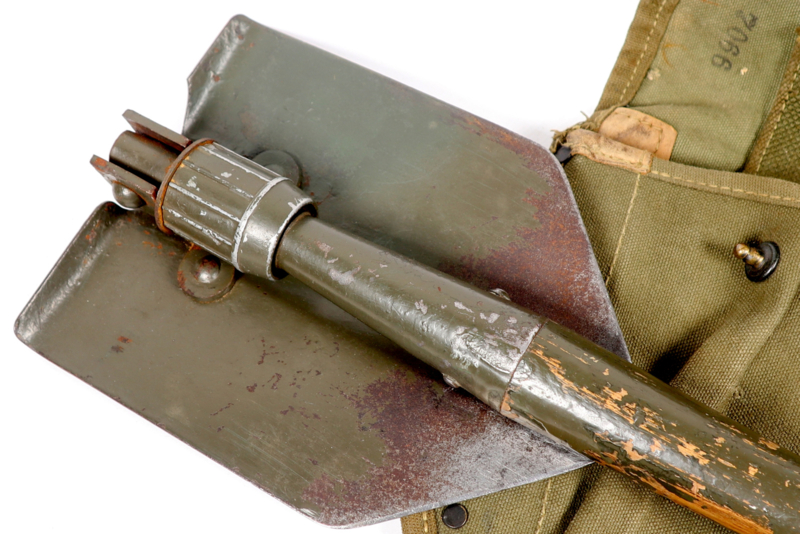
- Folding Mechanism: The steel shovel head folds backward 180 degrees via a rotating locking collar. This allowed it to be locked straight for standard digging, or locked at a 90-degree angle to act as a pick or hoe.
- Portability: When folded, the tool was significantly shorter, making it vastly easier to carry on a standard utility belt without striking the soldier's legs while moving.
- Dimensions: It typically measures around 20.75 inches (52.7 cm) when folded and extends to roughly 27.5 inches (70 cm) when fully opened. It weighs approximately 2.8 lbs (1.27 kg).
- Combat Use: Beyond its utility for digging, its sharpened steel edges and heavy construction meant it was frequently utilized as an ancillary hand-to-hand combat weapon.
Historical Background & Production
- Origin: Developed in 1943, initial production runs started late that same year. Because 1943-stamped models were only manufactured for a couple of months, they are highly sought after by militaria collectors today. The vast majority of surviving wartime models bear 1944 or 1945 production dates.
- Primary Manufacturers: The U.S. Military contracted major tool manufacturers to build the M43, most notably the Ames Baldwin Wyoming Co. (stamped "AMES") and the Wood Shovel and Tool Company (stamped "WOOD").
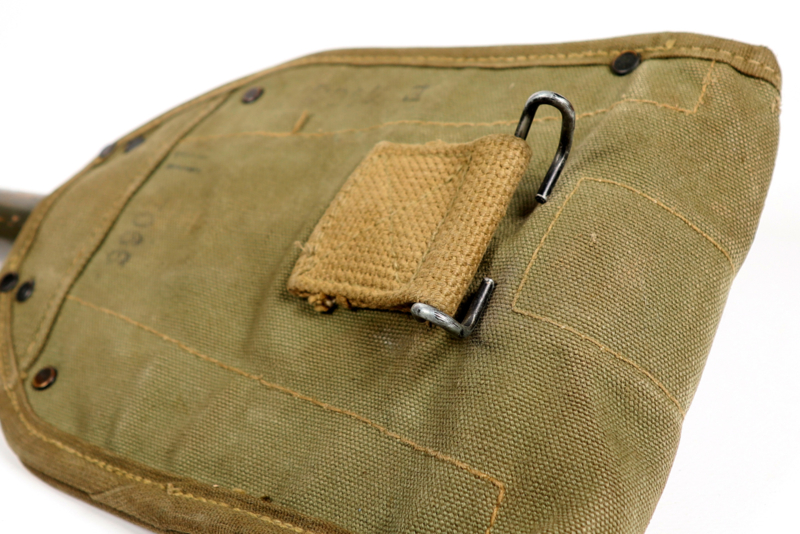
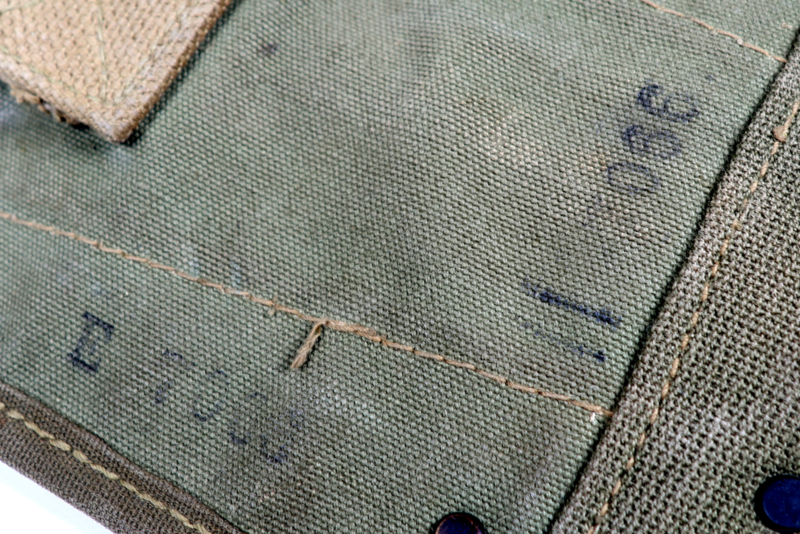
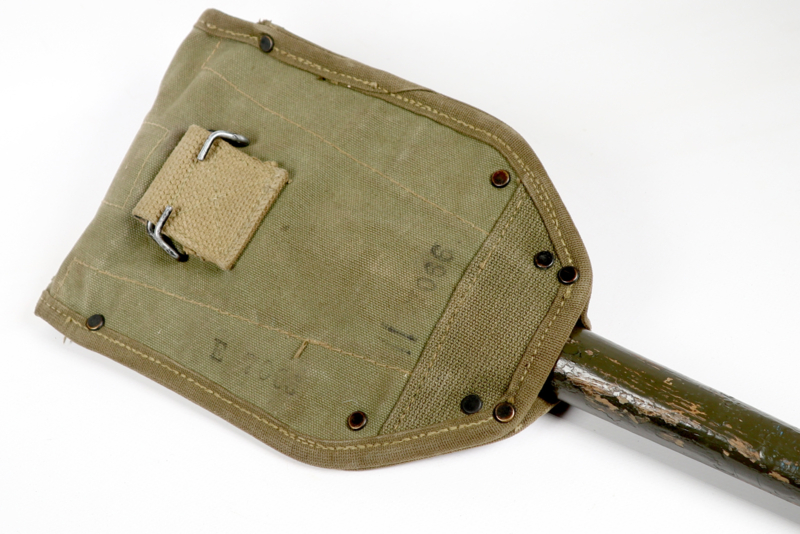
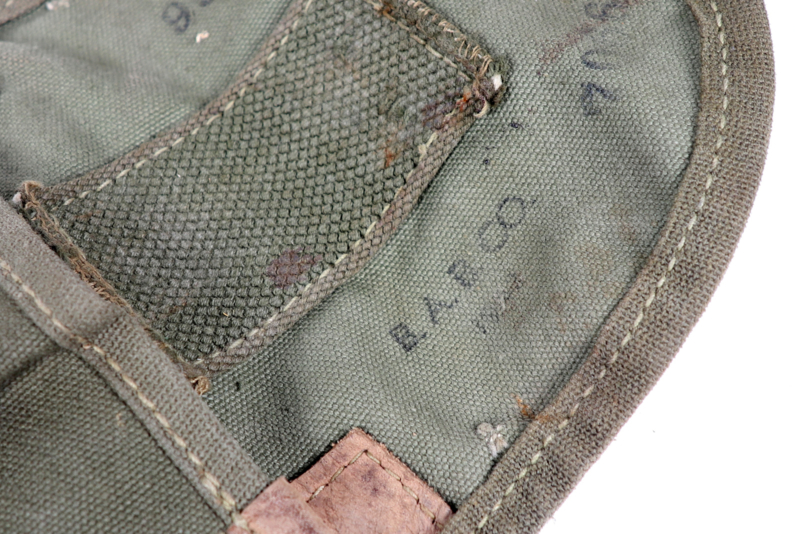
- The Canvas Carriers: The shovel was paired with a rugged canvas cover. First-generation 1943 covers featured a single, fixed belt hanger. By 1944, the military updated the design to feature an adjustable hook attachment and inner leather reinforcement to prevent the sharp metal edges of the shovel from fraying the canvas.
The M-1943 design proved so successful that it remained a military staple long after WWII, serving through the Korean War until it was eventually replaced by pick-integrated and tri-folding e-tools during the Vietnam War era.