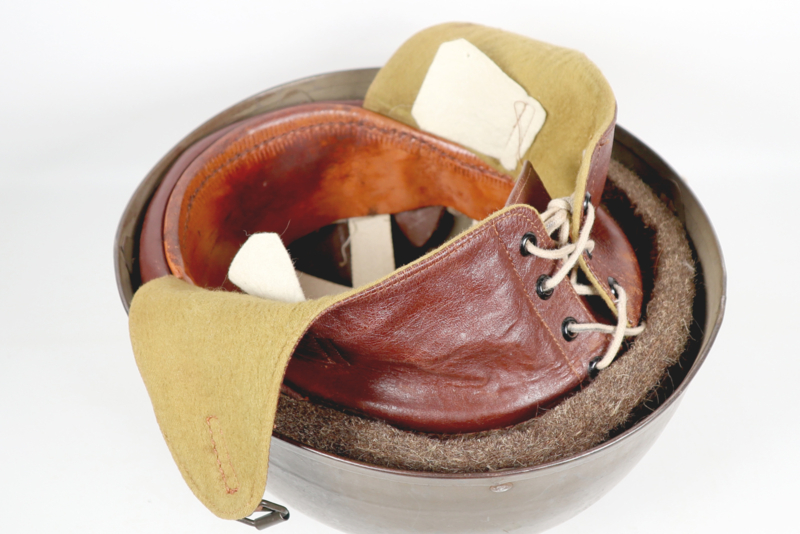
Belgian Dispatch Rider helmet Mk II
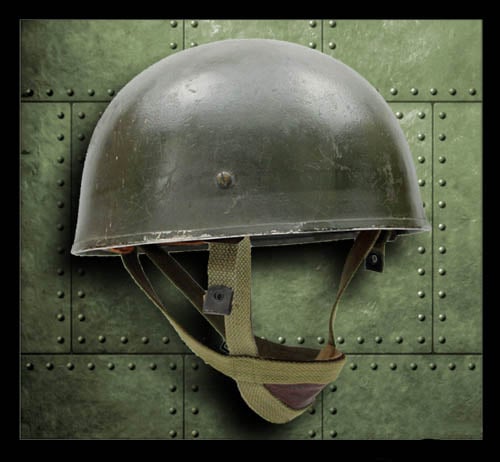
The Belgian Dispatch Rider helmet Mk II (also known as the motorcyclist or ordnance helmet) is a helmet introduced by the Belgian Army (ABL) shortly after the Second World War. Although the design is directly based on the well-known British Dispatch Rider model, the Belgian variant has specific features and its own history.
Historical Context
After the liberation in 1944, the Belgian Army was largely rebuilt along British lines. Initially, British surplus stocks were used. To restart its own industry, Belgium began manufacturing its own production of these helmets and liners around 1949 to 1952. The helmet was worn by dispatch riders (motorcycle messengers) and the Military Police (MP).
Features of the Helmet
The Belgian Mk II motorcyclist helmet differs in subtle ways from the original British wartime model:
- The Shell: The helmet shell is made of steel or a light composite fiber/pulp (depending on the exact production period).
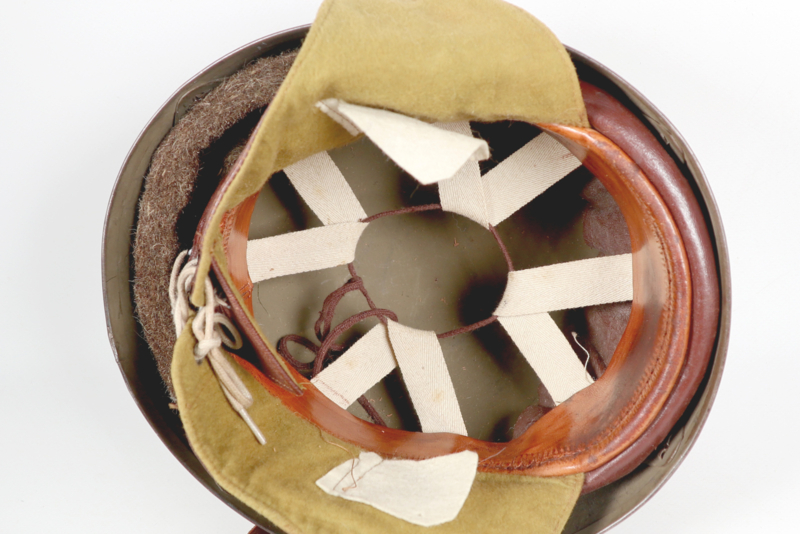
- The Liner: The interior consists of a thick, brown leather headband with a shock-absorbing padding made of felt or foam rubber (sorbo foam).
- The Neck Flap: Characteristic of the dispatch rider style is the large leather neck and ear flap that can be tightened with laces at the back. This provided protection against wind, rain, and cold while riding.
- Markings: Belgian helmets are almost always stamped with the royal army mark ABL (Armée Belge / Belgisch Leger), often followed by the year (e.g., 1951 or 1952) and the manufacturer's code (such as XB or COMET).
- National Tricolor: Many helmets feature a small painted Belgian flag (black-yellow-red decal) on the left side. Not present on this one.
- Size: 56