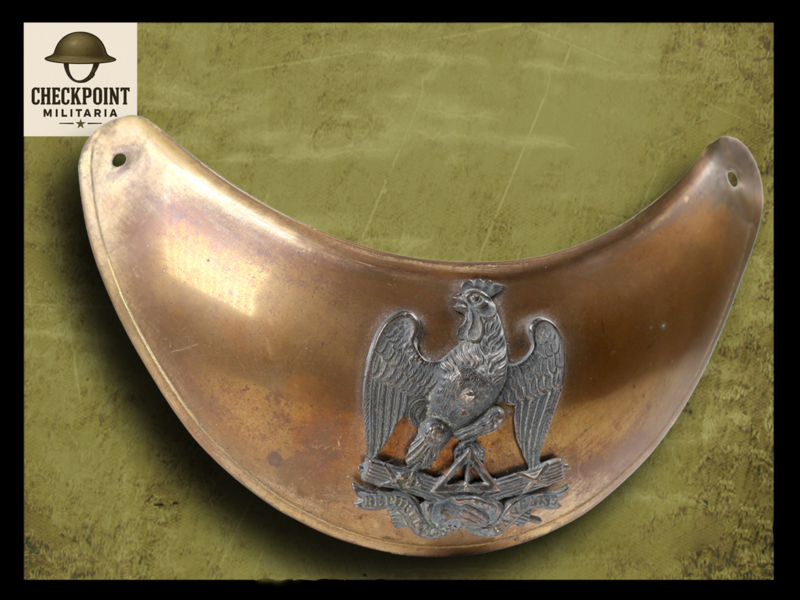
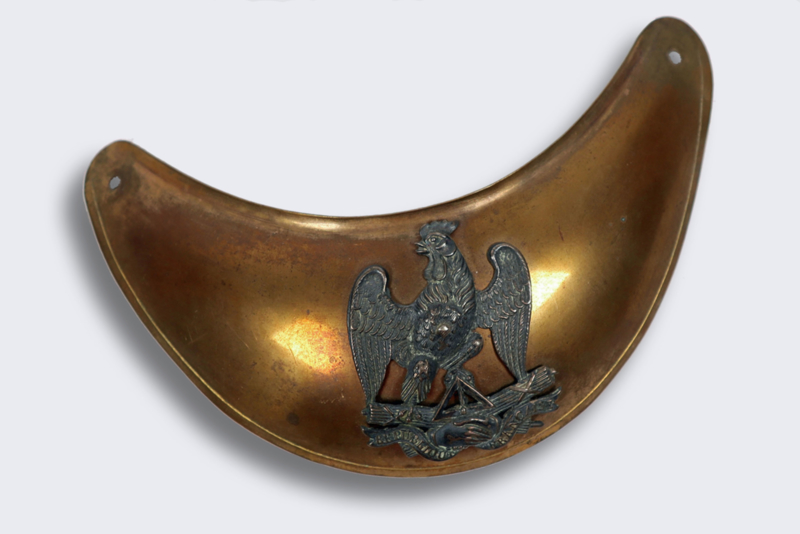
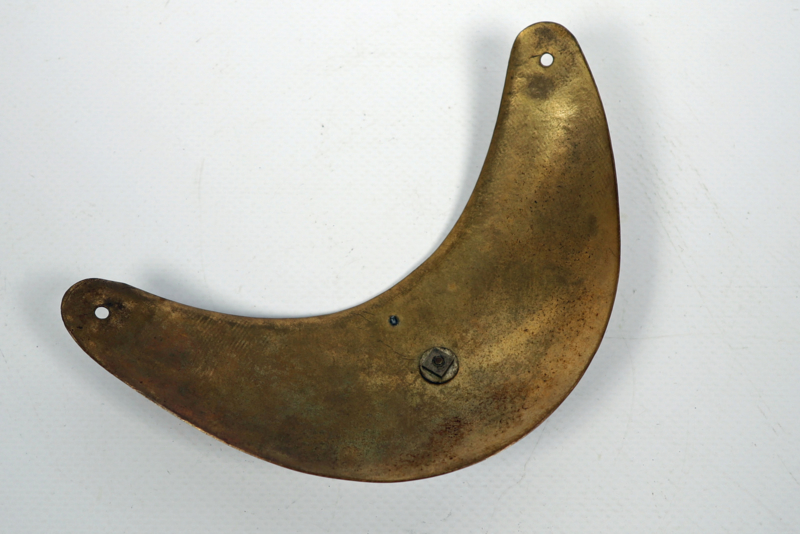

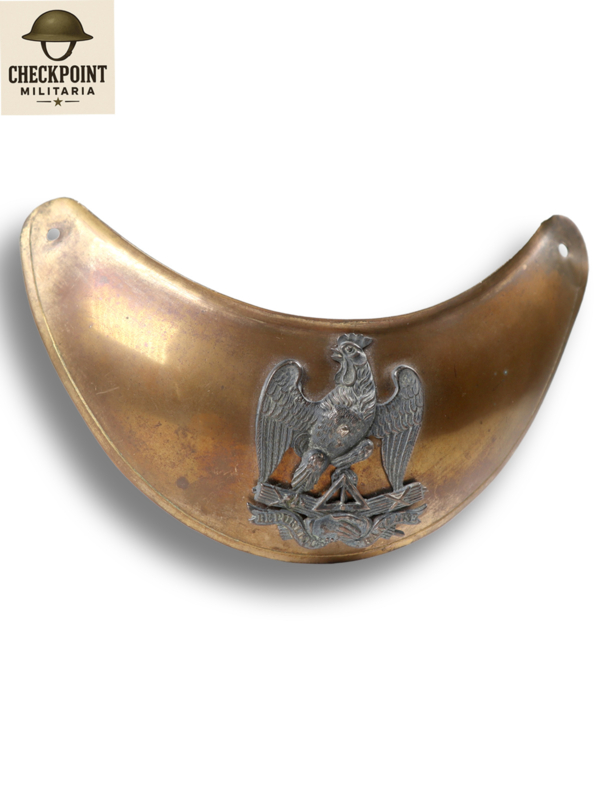
French officer's gorget from the July Monarchy
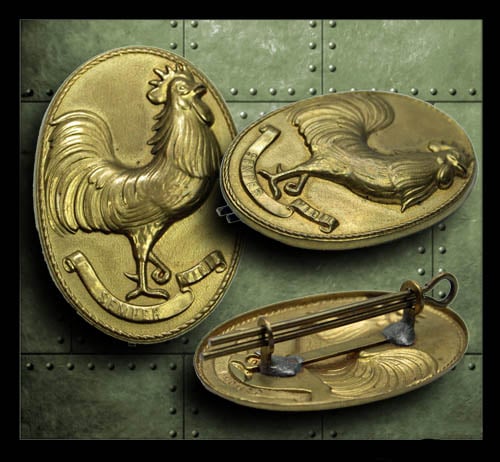
A French officer's gorget from the July Monarchy (French: hausse-col d'officier de la Monarchie de Juillet) is a ceremonial neckpiece worn by officers of the French Army and the National Guard during the reign of King Louis Philippe I (1830–1848).
Features and Design
Following the July Revolution of 1830, French symbolism shifted radically. This transition is directly reflected in the design of the gorget from this specific era:
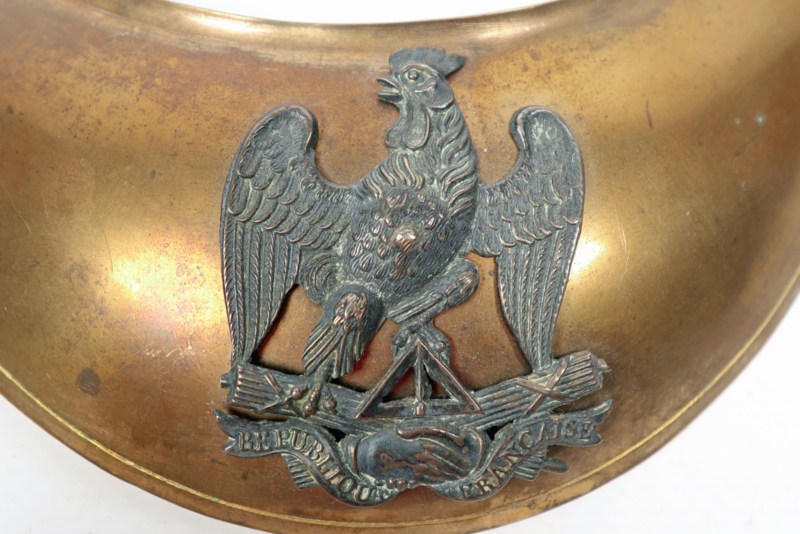
- The Central Emblem: The defining feature is the Gallic rooster (le coq gaulois), the new national symbol that replaced both the royal fleur-de-lis (Bourbon) and the imperial eagle (Napoleon).
- Material: The base plate is crescent-shaped and crafted from gilded brass or copper (laiton doré). The central motif—featuring the rooster surrounded by accents like oak or laurel leaves—is typically executed in silver or silver-plated metal to create a striking contrast.
- Variations: There is a clear distinction between the designs of different units:
- Line Regiments (Infantry): Often featured a more understated design, occasionally displaying the regiment number beneath the rooster.
- National Guard (Garde Nationale): This citizen militia played a pivotal role during the July Monarchy. Their gorgets frequently feature the rooster alongside the motto "Liberté Ordre Public"(Liberty Public Order) or the name of their specific municipality.
Historical Context
Just as during the Second Empire, the gorget in this era served strictly as a service insignia. Officers wore the plate suspended from a chain or ribbon around the neck, exclusively while on active duty or guard detail. Following the Revolution of 1848 and the establishment of the Second French Republic, the rooster was quickly phased out of military equipment.