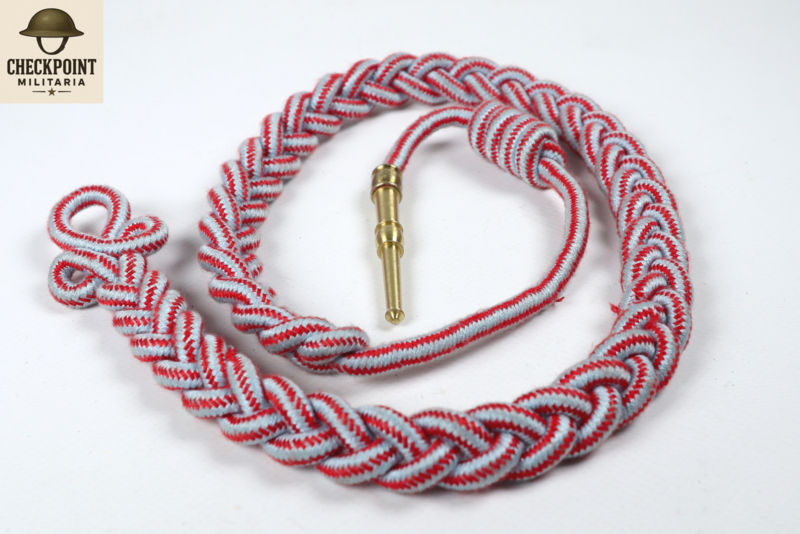
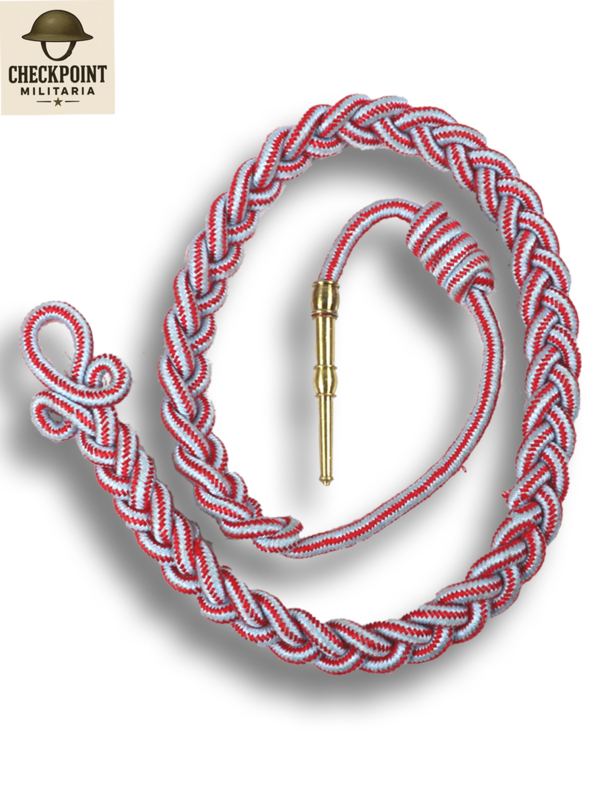
Fourragère of the War Cross for Foreign Operational Theaters
The fourragère of the War Cross for Foreign Operational Theaters (Fourragère de la Croix de guerre des Théâtres d'opérations extérieurs, or simply Fourragère des TOE) is an official collective French military decoration. It was established on July 9, 1925, to reward units that have received multiple collective mentions in dispatches (citations) during operations outside mainland France.
Characteristics and Design
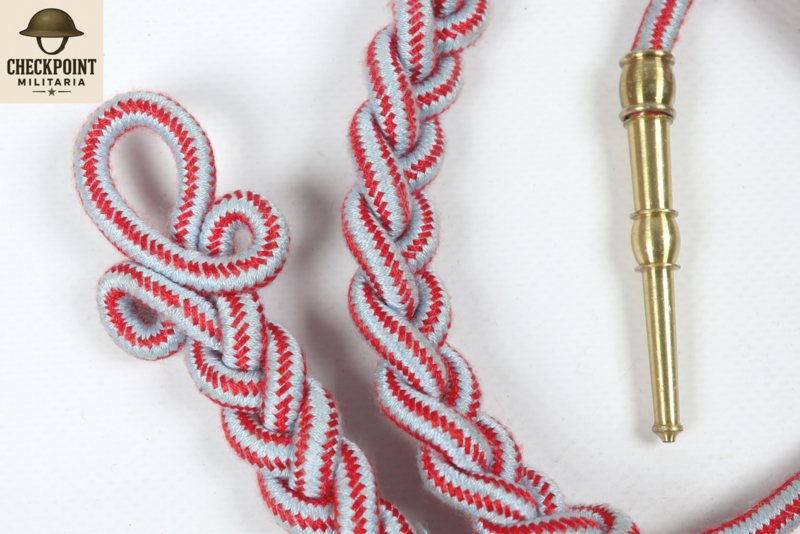
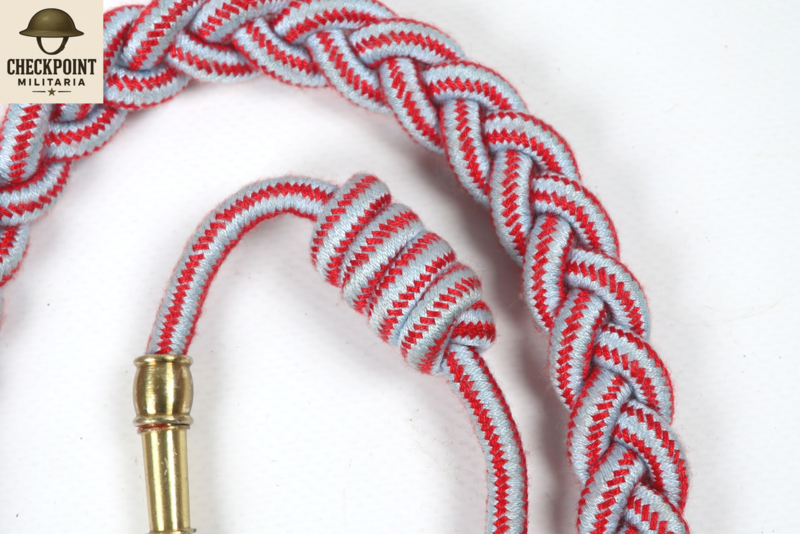
- The Colors: The braided cord features the specific colors of the corresponding medal's ribbon: sky blue and red (red with a wide light blue stripe in the center).
- The Metal Tip (Ferret): The cord ends in a metal point called a ferret. Its color depends on the branch of service or unit tradition (often gold/brass or silver).
- How It Is Worn: The fourragère is worn around the left arm, attached under the shoulder strap, and fastened to a button on the uniform.
🎖️ Award Criteria
A military unit (such as a regiment or battalion) is awarded the fourragère based on the number of citations it receives at the army level (citations à l'ordre de l'Armée):
- 2 or 3 Citations: The regiment receives the standard red-and-blue TOE fourragère.
- Higher Numbers: With even more citations, the unit can advance to a higher-class fourragère (such as that of the Military Medal or the Legion of Honor). In this case, it is equipped with a special "Olive" (a small oval wooden or fabric element on the cord) in the TOE colors to display the historical origin of the citations.
Historical Context
This decoration has been frequently awarded to elite units — including various regiments of the French Foreign Legion (Légion étrangère) and the Marine Troops (Troupes de marine) — for their service in intense overseas conflicts, such as:
- The Rif War in Morocco (1920s)
- The Indochina War (1946–1954)
- The Korean War (1950–1953)
- The Gulf War (1990–1991)