

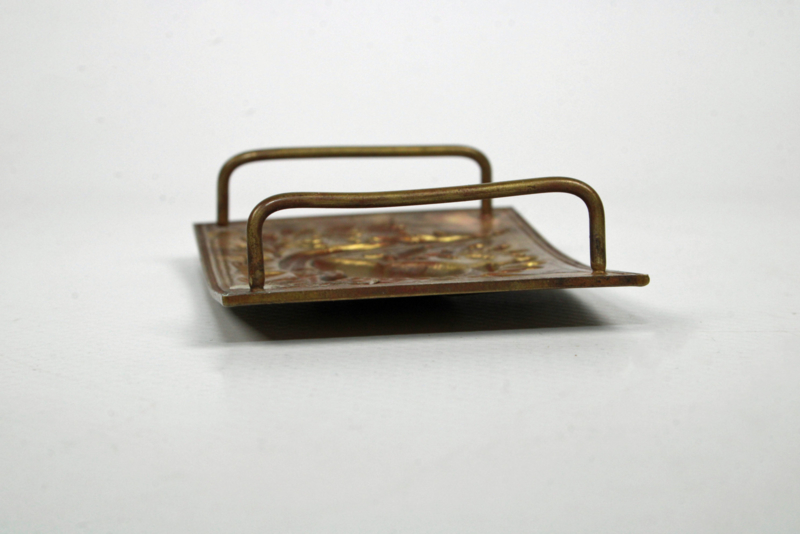
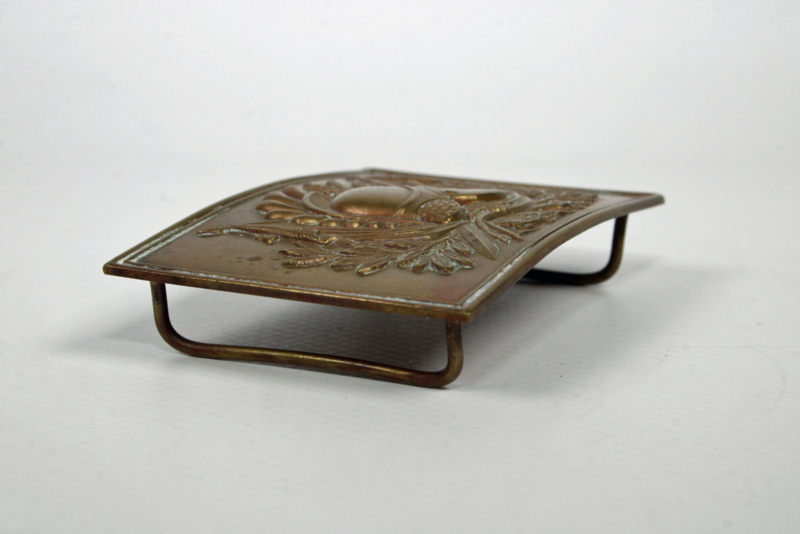
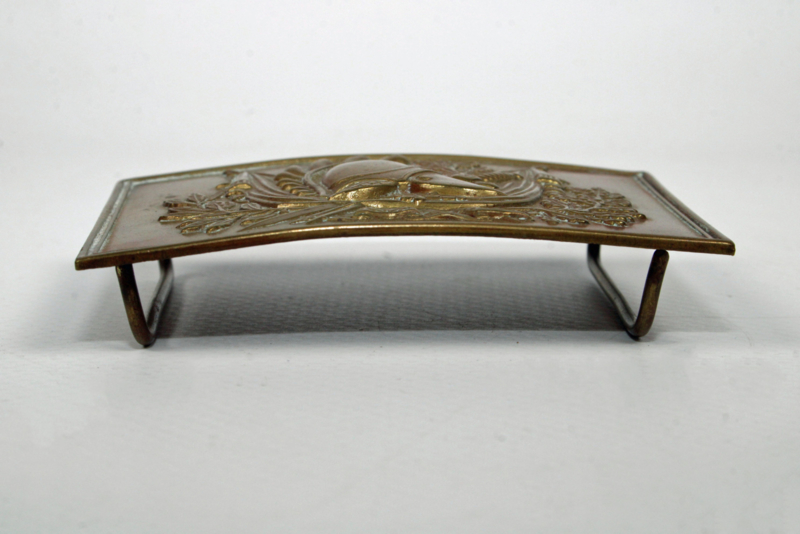


French Napoleonic Aide-de-Camp Belt Buckle
A French aide-de-camp belt plate (belt buckle for an adjutant or personal assistant to a marshal or general) is one of the most iconic and recognizable objects in Napoleonic militaria. Unlike regular officers who often wore the Imperial Eagle, aides-de-camp had a very specific, regulation design of their own.
The most sought-after model was regulated on 1er Vendémiaire An XII (September 24, 1803), just before the creation of the First French Empire (Premier Empire).
Symbolism and Characteristics
The belt plate of a French aide-de-camp stands out due to a unique combination of military symbols:
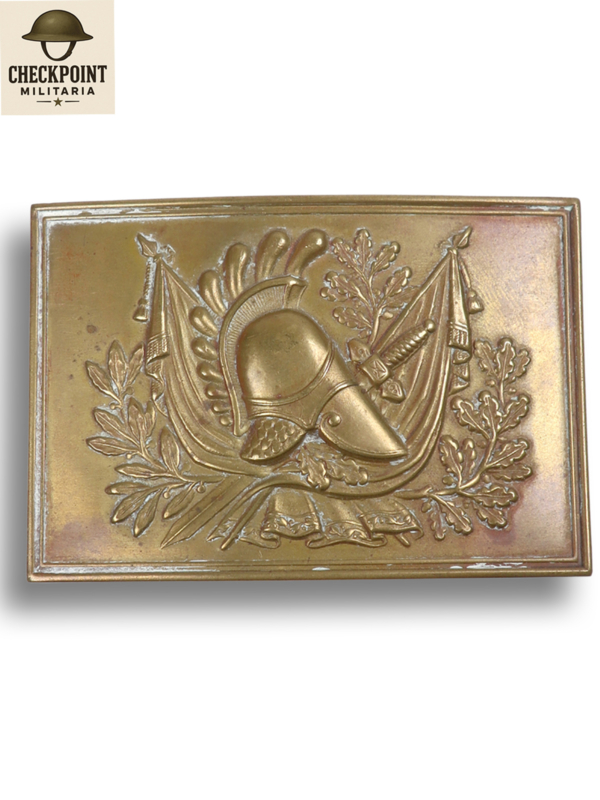
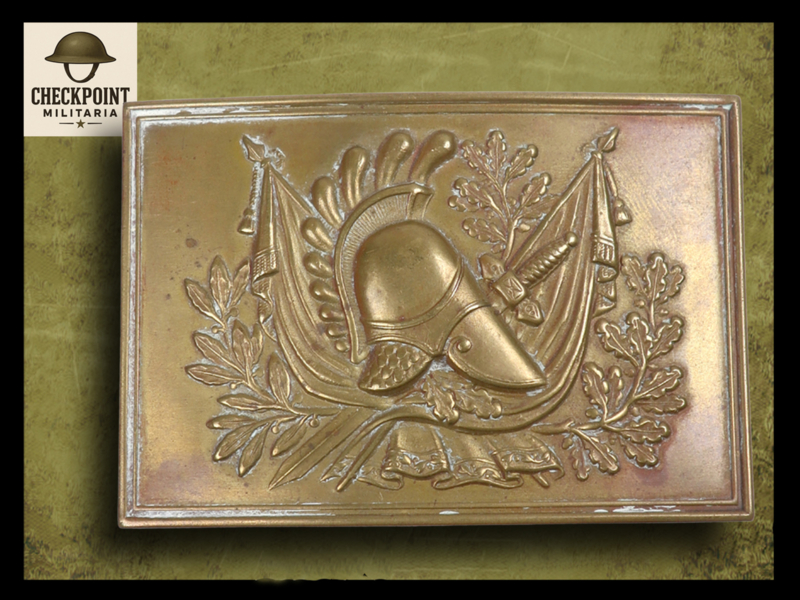
- Crested or Plumed Helmet: The absolute central feature is a classical (antique) helmet with a large plume of feathers (casque empanaché).
- The Sword and Flags: The helmet is positioned on top of or crossing a short sword or saber (glaive), supported by a bundle of army banners or flags (faisceau de drapeaux).
- Laurel and Oak Wreath: The entire central motif is surrounded by delicate branches of oak leaves (strength/fortitude) and laurel leaves (victory).
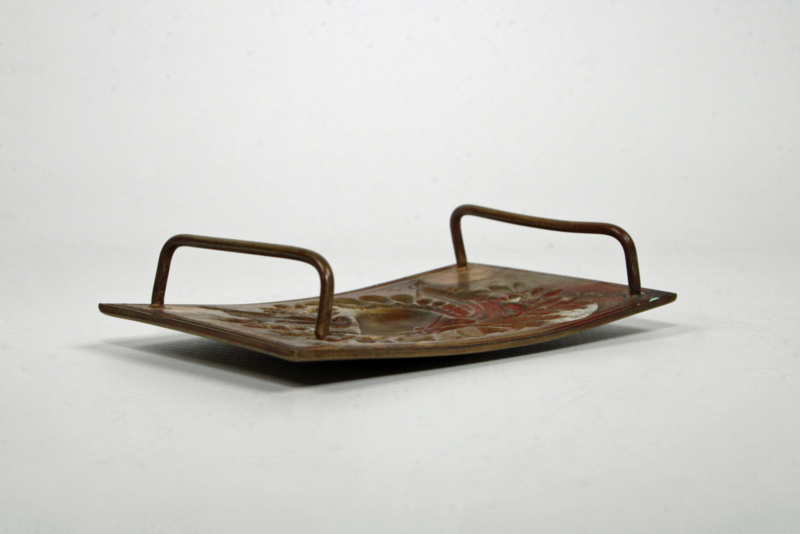
- Shape and Finish: The original plates from the First Empire are rectangular in shape with slightly rounded corners. They were cast in high-quality bronze or brass and then finely fire-gilded (dorure à l'or).
Later Periods and Evolution
Although the 1803 design set the standard, the symbolism of the helmet and bundle of flags was retained for the role of adjutant even after Napoleon:
- July Monarchy (1830–1848): During this period, the plate often transformed into a two-piece circular buckle instead of the classic rectangular plate, while retaining the helmet and flags.
- Second French Empire (Napoleon III, ca. 1852–1870): The plates returned to a rectangular shape (often with beveled corners). The central motif (the helmet and sword) was frequently stamped in solid silver and mounted on a gilded brass background.